BETHESDA, Md. _ In early April, experts at a military lab outside Washington intensified their search for evidence that a dangerous new biological threat had penetrated the nation's borders.
They didn't have to hunt long.
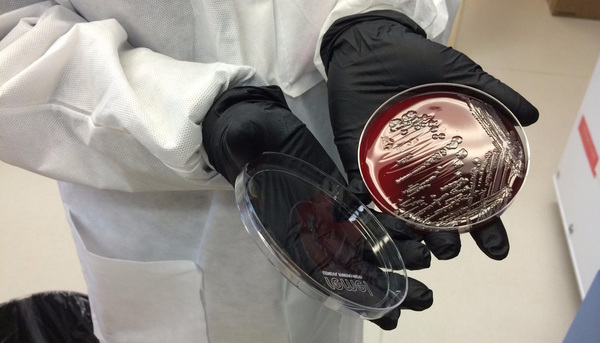
On May 18, a team working at the Walter Reed Army Institute of Research here had its first look at a sample of the bacterium Escherichia coli taken from a 49-year-old woman in Pennsylvania. She had a urinary tract infection with a disconcerting knack for surviving the assaults of antibiotic medications. Her sample was one of six from across the country delivered to the lab of microbiologist Patrick McGann.
Within hours, a preliminary analysis deepened concern at the lab. Over the next several days, more sophisticated genetic sleuthing confirmed McGann's worst fears.
There in the bacterium's DNA was a gene dubbed mcr-1. Its presence made the pathogen impervious to the venerable antibiotic colistin.
More ominous, the gene's presence on a plasmid _ a tiny mobile loop of DNA that can be readily snapped off and attached to other bacteria _ suggested that it could readily jump to other E. coli bacteria or to entirely different forms of disease-causing organisms. That would make them impervious to colistin as well.
It was a milestone public health officials have been anticipating for years. In a steady march, disease-causing microbes have evolved ways to evade the bulwark of medications used to treat bacterial infections. For a variety of those illnesses, only colistin continued to work every time. Now this last line of defense had been breached as well.
A second U.S. case of E. coli with the mcr-1 resistance gene was reported this month in the journal Antimicrobial Agents and Chemotherapy. Researchers are still working to determine whether it, or any of 18 other samples from around the world, contained the gene on an easy-to-spread plasmid.
The golden age of antibiotics appears to be coming to an end, its demise hastened by a combination of medical, social and economic factors. For decades, these drugs made it easy for doctors to treat infections and injuries. Now, common ailments are regaining the power to kill.
Harvard University infectious disease epidemiologist William P. Hanage said that "we will not be flying back into the dark ages" overnight. Hospitals are improving their infection control, and public health experts are getting better at tracking new threats. But in a race against nature, he said, the humans are losing ground.
"We're seeing more drug-resistant infections," Hanage said. "And people will die."