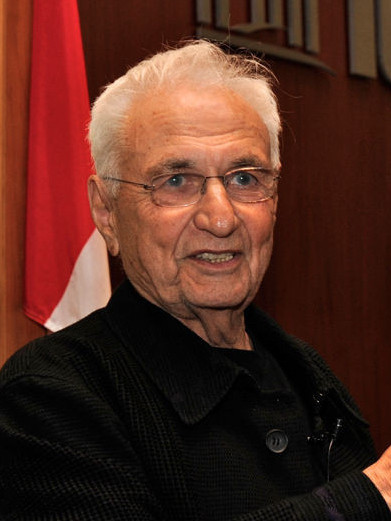
Frank Gehry, who passed away Friday at his Santa Monica home at age 96, didn't just design buildings—he choreographed them. For nearly seven decades, the Canadian-American architect reimagined what structures could be, transforming rigid geometric forms into fluid sculptures that appeared to twist, undulate, and shimmer in defiance of gravity itself.
His death marks the end of an era in which architecture transcended its utilitarian roots and became something closer to living art.
A Philosophy of Motion and Emotion
At the heart of Gehry's work was a radical conviction that architecture should do more than shelter—it should move us, literally and figuratively. Where modernism emphasized clean lines and rational order, Gehry saw an opportunity to inject chaos, emotion, and humanity into the built environment. His philosophy centered on transferring human feelings through materials that, by their nature, were inert and lifeless.
Buildings, he believed, shouldn't be faceless. They should express something essential about their time and place, about the people who would inhabit them. This wasn't architecture as engineering problem—it was architecture as emotional transaction.
Gehry approached each project as if it were a sculptural object, a three-dimensional painting. He drew inspiration not from other architects but from artists, from the Cubists who fractured perspective and reassembled it into something strange and new. His designs embraced what he called "undecidability"—that productive tension where there is no single right answer, no clear boundary between order and disorder.
The Guggenheim Bilbao: When Architecture Became Performance
If any single building captures Gehry's philosophy of movement, it's the Guggenheim Museum Bilbao. Opened in 1997 along the banks of the Nervion River, the museum doesn't sit quietly in its surroundings—it performs.
Clad in thirty-three thousand titanium plates arranged like scales, the building catches and reflects light with every passing hour, every shift in weather. The curves seem random, but they were meticulously designed to interact with natural light, creating a structure that appears to breathe and shift throughout the day. The titanium itself was a carefully chosen material—Gehry and his team tested stainless steel first, but found it went flat and lifeless in bad light. Titanium, by contrast, glowed with a warmth that felt almost organic.
The building has been described as resembling a ship, a flower, a fish—interpretations that pleased Gehry, whose childhood fascination with fish in his grandmother's bathtub had planted seeds of organic form deep in his imagination. But what it most resembles is motion itself: frozen energy, dynamic potential, a building that looks like it might unfold its metallic wings and take flight.
Architect Philip Johnson called it the greatest building of our time. Critics who had initially been skeptical were silenced by its impact. The museum didn't just house art—it became art, reshaping Bilbao's identity and economy in the process.
Defying Convention, Rejecting Labels
Gehry was often categorized as a deconstructivist, aligned with a 1980s architectural movement characterized by fragmented forms and violated expectations. He consistently rejected the label. He didn't read deconstructivist theory. He didn't follow philosophical manifestos. His approach was intensely personal, intuitive, rooted in sketches and cardboard models rather than in academic doctrine.
He worked from the inside out, considering how people would move through spaces, how sound would travel, how light would fall. Only then would he turn to the building's exterior presentation. His famous design process began not with precise blueprints but with quick, gestural drawings—sometimes on napkins—followed by elaborate physical models made from ordinary materials. These models allowed him to explore complex volumes in three dimensions, to feel his way toward forms that couldn't be easily described in conventional architectural language.
For the Guggenheim Bilbao, this iterative, hands-on process was essential. The building's complexity demanded new tools: Gehry's team pioneered the use of CATIA software, originally developed for aerospace engineering, to translate his organic forms into buildable structures. The technology allowed them to calculate stresses point by point, to automate the cutting of titanium plates, to make the impossible tangible.
Buildings as Stages for Human Life
Gehry never forgot that buildings serve people. He compared architecture to Shakespeare's observation that all the world is a stage—we are actors performing our lives, and the buildings around us form the backdrop for that performance. They should be, he insisted, human-friendly and respectful of the individuals who inhabit them.
This philosophy extended beyond individual structures to their urban contexts. Gehry designed the Walt Disney Concert Hall in Los Angeles with careful attention to how it would relate to neighboring buildings, how it would feel to musicians performing inside and audiences listening. He wanted to create spaces where reciprocal relationships could flourish—not buildings that competed with or diminished their surroundings, but ones that enriched the larger community.
At the Guggenheim Bilbao, he designed wide plazas and promenades that drew people in, connecting the museum to the city's daily life. Multiple entrances and pedestrian pathways ensured the building wasn't an isolated monument but a vital node in Bilbao's urban fabric. The museum existed in dialogue with its environment, responsive to the river, the hills, the industrial heritage of the Basque region.
A Language Without Words
What Gehry forged was nothing less than a new architectural language—one that spoke through curves and materials, through light and movement, through the visceral experience of encountering something that shouldn't be possible but is.
His buildings resist easy interpretation. They're abstract in their forms yet deeply emotional in their impact. They appear chaotic yet are rigorously engineered. They're rooted in specific places—Bilbao's industrial past, Los Angeles's cultural ambitions—yet they transcend their contexts to become universal symbols of creative possibility.
The "Bilbao Effect" became shorthand for architecture's power to transform cities economically and culturally. But perhaps the deeper legacy is what we might call the "Gehry Effect"—the demonstration that buildings can be expressive, emotional, alive in ways we hadn't imagined before.
He showed us that architecture could dance.
The End of an Era
Gehry's death comes as his firm continues work on projects worldwide, including the long-awaited Guggenheim Abu Dhabi. His influence extends beyond the buildings themselves to the very tools architects use—his pioneering work with digital modeling software opened new frontiers for design and construction.
Younger architects have inherited both his boldness and his questions: What is architecture for? How should buildings make us feel? What's the relationship between form and function, between individual expression and communal responsibility?
At his core, Gehry believed architecture was a quest to transfer the feelings of humanity through inert materials—to create experiences that were not only comforting but enlightening, not only functional but uplifting. He succeeded beyond measure.
The buildings he leaves behind continue their dance—catching light, drawing crowds, sparking debate, inspiring wonder. They remain in motion even as their creator has taken his final bow.