To truly grasp Thailand's current relationship with Russia, one must understand the core tenets of Thai diplomacy. In Thai foreign policy, fostering friendships, minimising enemies, and preserving room for strategic adjustment are enduring virtues. The bilateral bond between the two nations -- which will celebrate its 130th anniversary next year -- perfectly embodies these qualities.
In today's fragmented world, where major-power rivalries increasingly disrupt and reshape regional politics, the Thai-Russian diplomatic relationship has faced growing pressure. Yet, it has proven remarkably resilient. It has survived numerous coups, ideological shifts, and changing global orders. While the international environment has shifted dramatically, the foundation of this bilateral relationship remains unwavering.
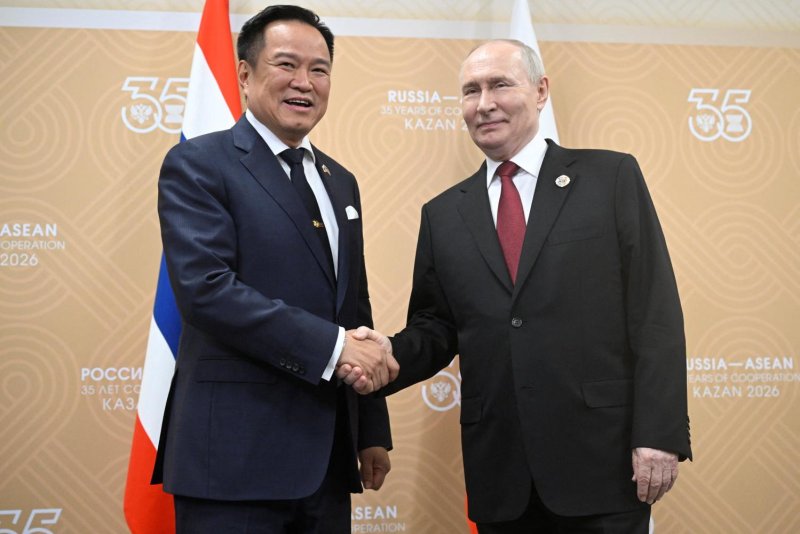
Prime Minister Anutin Charnvirakul's meeting last week with Russian President Vladimir Putin in Kazan illustrates this sustained continuity. Following their bilateral talks, Mr Anutin described the meeting as the "highlight" of his visit. Mr Putin reaffirmed Russia's commitment to expanding cooperation with Thailand and strengthening relations across multiple sectors. Earlier, in an unusual diplomatic gesture, Mr Anutin also attended the Russian National Day reception.
It is worth noting that the Kazan meeting took place at a time when many countries are reassessing their ties with Russia in response to its invasion of Ukraine. Like the rest of the Association of Southeast Asian Nations (Asean), Thailand has taken a pragmatic approach to managing its relationship with Moscow. While Bangkok officially supports UN resolutions and international principles, successive governments have carefully avoided policies that would isolate Moscow. Mr Anutin's visit demonstrates the Thai government's ongoing effort to maintain a balanced relationship with a long-standing partner.
The roots of these ties run deep. Any discussion of Thai-Russian relations inevitably harks back to the historic and deeply meaningful friendship between King Chulalongkorn (Rama V) and Czar Nicholas II. The iconic photograph of the two leaders sitting side by side in St Petersburg on July 15, 1897, remains one of the most enduring symbols of this relationship.
At the time, Siam faced intense pressure from the French and British colonial powers. To avert colonial rule, King Chulalongkorn sought support from global powers, and Russia's backing significantly strengthened Siam's diplomatic leverage at a critical moment. While later historians may debate the precise extent of Russia's influence, Thai leaders have never forgotten Moscow's support when the country's sovereignty was under threat.
This historical memory continues to shape Thai attitudes toward Russia today. Unlike many Western countries -- or even some of its neighbours -- Thailand does not view Russia solely through the lens of modern geopolitical disputes or Western-driven narratives.
However, this does not mean the relationship has been entirely without friction. A case in point was the 2010 extradition of Russian arms dealer Viktor Bout from Thailand to the US under the Abhisit government, which caused a serious bilateral rift. Yet, in retrospect, both governments chose not to let that single dispute permanently damage their broader ties.
More recently, just days before the Anutin-Putin summit in Kazan, a fresh controversy emerged. Russia's Foreign Ministry issued a travel advisory urging its citizens to exercise extreme caution when visiting Thailand. Moscow claimed that US authorities were increasingly targeting Russians abroad, warning that they could face arbitrary detention or extradition requests while in Thailand.
In response, the Thai Ministry of Foreign Affairs issued a measured statement noting that Thailand warmly welcomes Russian tourists, who make up the largest share of European arrivals. It reiterated that Thailand remains a welcoming and safe destination for everyone. However, it also emphasised that all tourists and foreign residents must abide by local laws, noting that past legal actions against foreign offenders have strictly followed due process under Thai law, without discrimination.
While the Russian advisory used unusually harsh language and created an awkward diplomatic moment for Bangkok, Russia still explicitly referred to Thailand as a "friendly country".
Thailand, for its part, avoided public confrontation and handled the matter quietly. Both sides chose to safeguard the broader relationship rather than escalate a temporary disagreement.
This approach reflects a broader state of affairs: Thailand has rarely viewed Russia as a threat. When problems arise, both governments generally seek to manage them discreetly to prevent them from destabilising wider cooperation.
On the economic front, bilateral trade remains underdeveloped and has significant room to grow. Trade reached approximately US$1.7 billion (56 billion baht) last year, and Russian investment in Thailand remains limited, totalling only US$6 billion over the past decade. Over the same period, Thai investment in Russia was estimated at just US$922 million.
Recognising this gap, Mr Anutin used his visit to actively promote trade, investment, tourism, and business cooperation. In many ways, he acted as Thailand's "chief salesman", seeking to convert political goodwill into tangible economic opportunities.
Tourism provides one of the strongest links between the two countries. In 2003, both nations agreed to a mutual visa waiver, triggering a massive boom in people-to-people exchanges. Before the Covid-19 pandemic, Russian visitors were among Thailand's largest sources of long-haul arrivals. Last year alone, approximately 1.8 million Russians visited the kingdom.
Thailand's approach toward Russia also mirrors broader regional thinking. Across Southeast Asia, governments have largely avoided taking sides in major-power confrontations. Asean members prefer strategic autonomy and seek positive relations with all major global players. The Kazan summit and its outcomes clearly demonstrated that both sides are highly aware of each other's potential and limitations.
Neighbouring nations like Cambodia, Vietnam and Laos have all maintained friendly ties with Moscow despite the war in Ukraine. This does not imply that Asean supports Russia's military actions. Rather, Asean members tend to decouple disagreements over specific global issues from their broader national interests. Having historically been a flashpoint for imperialism, World War II, and the Cold War, Southeast Asian nations are deeply reluctant to let distant geopolitical conflicts dictate their diplomatic trajectories.
Energy and commodity security are also critical factors. Russia remains one of the world's largest suppliers of oil, natural gas, and fertilisers to the region. At a time when global conflicts threaten economic stability, maintaining stable ties with Russia -- and ensuring access to its resources -- has become a primary objective for the region.
Moving forward, Thai-Russian relations are poised to accelerate, as the Anutin government increasingly views Russia as an indispensable partner for driving economic growth. Ultimately, these ties are not bound by shared ideology, military alignment, or a mutual opposition to the West. Instead, the bond is built on historical trust, mutual respect, practical cooperation, and a centuries-old diplomatic tradition.
By maintaining constructive ties with Russia, Thailand is not choosing Moscow over Washington, Beijing, or Brussels. It is simply doing what it has always done: keeping all doors open to its friends.