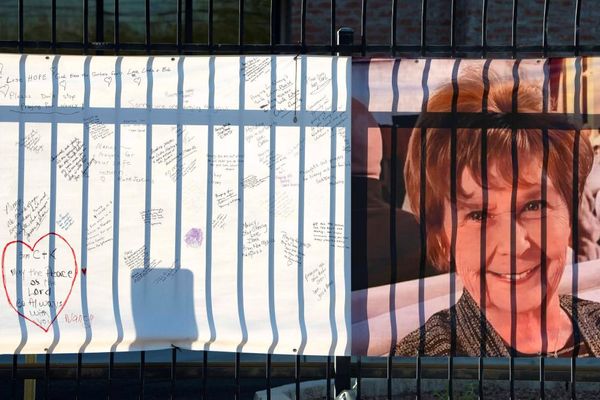
On September 30, 2020, as the photographer and I were driving towards Chandpa police station in Hathras district of western Uttar Pradesh, COVID-19 was the last thing on our mind. A Dalit girl, who had allegedly been raped and murdered by four upper-caste men, had been cremated by the administration without the family’s permission. It was a story that needed to be told. We didn’t stop to wonder whether the mother of the girl would open up about the crime from chhe foot ki doori (six-feet distance). And we were not going to tell her about the importance of wearing a mask when she was faced with the biggest crisis of her life.
Hundreds of anguished villagers, who crowded the courtyard, had no protection against the virus. Their immediate concern was that the administration had cremated their ‘daughter’ without their permission. A reporter, unlike a photojournalist who can capture the mood through a zoom lens, has to spend time with the protagonists to get the details — masks or no masks. This has been a dilemma for reporters for two years now.
I first faced this dilemma while reporting on the migrant workers as they started returning home in March 2020, when the virus was an unknown entity. My father was terminally ill. However, I had to report on the incident. And no amount of cleaning and bathing washed off my doubts and anxiety.
The pandemic has left reporters in a state of quandary. If we don’t go to the spot, it feels like our conscience will get seared. If we do, we put our family, particularly elderly parents, in danger. Recently, a leading filmmaker told me that when you are focused, your immunity is high. I agree but does this pass on to the family of the earnest journalist as well?
As the news from Hathras spread, the local administration tried to turn the village into a containment zone, possibly to keep the media out of a big developing story, but the ploy didn’t work. All the journalists descended there.
The farmers’ agitation also took place during the pandemic but the administration, which swooped down on the anti-Citizenship (Amendment) Act agitation after COVID-19 became a reality, refrained from stopping this one. They seemed equally lenient with political rallies and panchayat polls. At the morchas, farmers hardly wore masks. And once again, journalists had to spend time with them to understand their concerns.
Preventing journalists from doing their story, as the police tried in Hathras, is one method of controlling the narrative by the powers that be. The other is the attempt to manage headlines. In March this year, while reporting on the preparations of the Kumbh Mela in Haridwar, a senior official asked me why I was so concerned about the possibility of a holy congregation becoming a hotspot when hundreds of people are roaming in “your Chandni Chowk”. When I pointed out that in the case of the latter, no government money was being spent on putting up massive hoardings, inviting people to attend a religious assemblage during the pandemic, he asked for a favourable headline. “Rest we will manage,” he chuckled. I made it clear that a reporter doesn’t write the headlines.
Days later, the Kumbh Mela did emerge as a hotspot of the virus but, during my stay, a young barber at Har Ki Pauri suggested a way out to minimise the damage. He said the barber union had decided that only a select few young barbers would work for a month and they would share the income with the whole community. I wondered then if journalists too could share information with one another and do their jobs.
Confident about having survived the first COVID-19 wave, I returned to the ground to cover the migrant workers’ journey during the second wave. This time I was not as lucky. Perhaps that was because Delta was a stronger variant or perhaps it was because, as the filmmaker said, I was just not as focused to have high immunity.
anuj.kumar@thehindu.co.in