The rent, as the slogan goes, is too damn high. The one issue almost anyone who lives in an Australian city can agree on is that the price of housing is high, too high to be fair, too inaccessible to allow for economic justice. Almost everyone, from Coag to your local council, agrees that improving affordability, quality, and access to housing is a pressing issue.
But what do we mean when we say “affordable housing”? It’s a political goal, and a political and economic descriptor, but it means a lot of different things to different people.
First, there are people who have no access to housing. We have a disgracefully high number people in irregular housing in Australia on a wide spectrum of need – from people staying temporarily with friends and family, sleeping in cars and caravans, to improvising shelter around our cities.
Homelessness is a sector of extreme and pervasive need – mere structures aren’t all that is needed to solve this problem, it’s a social phenomenon. Homeless people often have an intricate web of problems: they can be victims of domestic violence or other forms of physical and mental abuse; they could have severe debt problems; or drug, alcohol and substance abuse issues; or an untreated mental illness. Their unmet needs shame our society, but it’s not just because there are too few roofs. It is a social, much more than an architectural and planning problem.
Second, there are people who have shelter, but not the kind they need or want. When people on low incomes search for a decent place to live near their work and can’t find a place they can afford, it’s clearly an “affordable housing” issue. Where should they live?
What we’re seeing in Australian cities is a centrifugal force for people on lower incomes, which includes, of course, old age pensioners, people on disability pensions, students, and others dependent on low wages and Commonwealth benefits. Entire classes of people, and whole occupations, are increasingly unable to afford housing near study or work.
Hospitals, schools, even the police, all face this problem of staffing: how do you provide essential services when your staff can’t afford to live close by? It’s a sector that the public housing market traditionally catered for, but the current consensus against any kind of government spending on public housing militates against this. This consensus needs to change.
Are we to build housing that will be cheaply priced, even though everything surrounding it is expensive? And once you’ve built it, how do you keep it cheap? This is a complicated question. Matt Cowgill’s “kipfler” metaphor is the perfect way to describe the interconnectedness of housing market sectors. It goes like this – the supply of luxury housing (kipflers) affects the price of less luxurious stock (regular potatoes), and vice versa.
It works because housing is transferable and necessary: everyone needs at least a basic level of it, and will go to great lengths to obtain it. It’s a compelling framework in which to view housing, even if, like any economic model, it’s necessarily simplified.
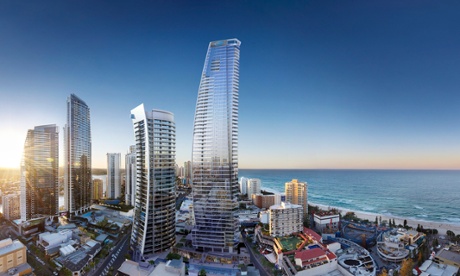
Inner-city councils and residents groups often object to the development of “luxury” flats, on the grounds that it’s unaffordable housing, and that it will price out existing residents. They have a point. New housing stock in desirable locations is expensive, for obvious reasons. The problem is that various forms of planning agreements and arrangements, like NSW Planning’s VPAs, under which large builders agree to provide “affordable” housing as a condition of development, don’t tend to last. Unless there’s some way of making these affordable houses “affordable” in perpetuity – and this is a very difficult problem – this stock tends to find its way back into the market proper.
What would happen if councils and residents groups got their way and that higher-end development were not to occur? Everyone accepts that we’re massively undersupplied in housing; this is the reason for the ludicrous cost of it. Here Cowgill’s model comes in: in conditions of undersupply, people in the market for housing with higher incomes simply outbid other potential residents. If you don’t like being outbid for ageing terraces by yuppies, the answer is quite clear: build them luxury flats to live in. The problem is basic supply. We simply need more housing, of all kinds, for all different kinds of people, living in all places.
Last of all, comes affordability of housing for those who want to buy. In one sense, housing is a means of satisfying basic shelter needs, but when you buy a house, it’s also a step on the ladder of capital asset accumulation. When, for instance, high-earning couples talk about the unaffordability of housing, they are talking less about access to a roof than access to a means of building wealth. Since the second world war, Australians have used housing as their major means of savings: undersupply knocks rungs out of the bottom of this ladder.
The frequent auction spectacle, at which the winning bidder of a $1m property wins because of their willingness to spend that extra $2,000, is a great introduction to marginal economics. It’s about squeaking past that next closest bidder. Affordability here isn’t about people on average wages (or lower), because the average non-winner doesn’t matter: you get beaten by whoever has better access to leverageable equity. It’s probably somebody who’s been saving it, or who’s family has been saving it, a lot longer than you.
We have a problem of redistribution up; the phenomenon of investment properties and speculative real estate buying is, in the most basic terms, a wealth transfer to people who own property away from those who do not. But the problem is less one of supply than of revenue. The phenomenon is encouraged by a bucket of taxation ills: from the perverse negative gearing, state government dependence on stamp duty, to the inability of political parties to get behind such sensible measures as broad based land and estate taxes.
We have a very confused political debate around “affordable housing” and we need to separate out what we mean, and how we describe a problem, when it comes to what means we choose to address it.