The tide had been peeled back from the beach by a cold wind, yet a blister of sun still burned in the pale sky. The beach was busy. Families stood in tense huddles, clad in shorts and T-shirts but silenced by the chill in the air. A warden patrolled the sand, keen to admonish any forgetful dog-walkers making use of the shore that pets were forbidden since high season had begun.
In search of a quieter stretch we headed to the gravelly strandline and took relief in searching for shells. We found the splayed, empty wings of common mussels, frilly pink cockles and the spiral towers of netted dog whelk.
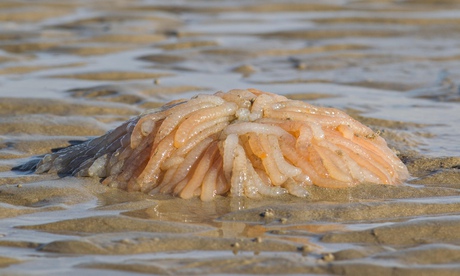
A ring of tall razorshells had been pushed into the sand by whoever had come before us; a miniature seahenge awaiting the return tide. I walked on alone to the boulder reef, built to protect the fragile coast from the worst of the sea’s waves. Glued in the gullies and crevices of the rocks were the scarlet plugs of beadlet anemones and warped shapes of starfish left high and dry by the low waters; usual coastal fare. Just in front of the reef, however, on a glistening plain of wet sand, lay what looked to be the beheaded remains of a jellyfish; twenty or so orange-pink tentacles gathered at one end by a viscid clot.
This was spawn left by a breeding common squid. A few gelatinous arms had been ripped off by the tide and I dangled one against the light of the sun. The blue pearls of squid eggs quivered inside. The peak time for common squid to spawn is in late summer when the sea has warmed, so these eggs had been expelled in a hopeful bid for spring-weather hatching.
Wanting to honour this fecund endeavour, I tried to refloat the flaccid body of eggs in the swash between the boulders. The spawn mass flailed its alien limbs and then half-sank beneath the lapping seawater. As I stood watching the squid-wreck my partner arrived from the strandline to show me what he had gathered. He opened his cupped hands, crowded with brown-blue mussel shells, the colour of a ripening bruise.
Twitter: @AggieRothon