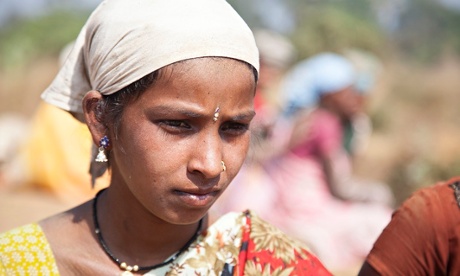
This short film follows the lives of several young Indian girls in early 2014, and the challenges they face to overcome the stigma and taboo associated with the natural biological process of menstruation.
Young girls wanting to go to school in India face a silent struggle. Lack of privacy, safety and proper facilities when they reach puberty are barring many from their right to an education.
Archana Patkar works with the UN’s Water Supply and Sanitation Collaborative Council (WSSCC): “They don’t have facilities in schools so they can’t change their cloths or pads easily. As a result they are wearing an over-soaked wet cloth or pad all day and they are unable to concentrate. Sometimes it’s so bad that they just leave and go home, missing school,” she says.
While the lack of facilities in schools is shocking, what’s worse is the social stigma surrounding menstruation. A culture of concealment and secrecy which leaves girls feeling ashamed and isolated.
“I did not know what was happening; I was frightened when I went to school. My clothes got stained then I was told to go home,” says Pushpa.
For Pushpa and her friends, trying to hide the signs became so difficult they dropped out of school permanently. Up to a quarter of school girls in India leave school when they reach puberty. At many schools, although in the curriculum, the chapter on menstruation is often skipped. In India, a country with a population of over 350 million women and girls who menstruate, this omission can have far reaching and profoundly negative effects.
Rahma and her granddaughter Rupali say the superstitions are passed down from generation to generation.
“My mother told us what to do and what not to do. She said do not touch anything while you are menstruating – no prayers. If you go into the kitchen, do not touch the oil as it can pollute the holy lamp. She would not allow me to touch the spice container.”
These myths may seem far-fetched, but they can do real harm. Girls who cannot wash privately, or who are too ashamed to wash their sanitary cloths, run a constant risk of infection. And with these taboos go hand-in-hand the problems of sanitary disposal.
“Very often, because it’s linked to shame and taboos, and the fact that nobody’s supposed to see you disposing of the used material, this is just dug into a little hole, or thrown into running water or a pond. We must look at it holistically and provide solutions – either incineration or composting – environmentally safe, satisfactory solutions,” says Patkar.
The WSSCC is working hard to end the silence, and to emphasise the practice of menstrual hygiene and safe disposal. The collaborative council has trained hundreds of project workers in menstrual hygiene management to work with girls and women throughout India. And in December 2013, the government of India approved WSSCC’s proposal to change policy guidelines. For the first time, menstrual hygiene management was recognised in the national sanitation policy, with an allocated budget.
“All girls should know about it before they get their first period so that they know how to manage it properly. The first one is always very scary. Girls will know what to expect and be more confident.”
“We must talk about it with pride and without shame. We must manage it hygienically, safely and with dignity.”
With the immense potential educated women and girls can bring to their country, it is essential to change the curriculum, for a healthier, safer and more prosperous India.
Content on this page is paid for and provided by WSSCC sponsor of the Guardian Global Development Professional Network.