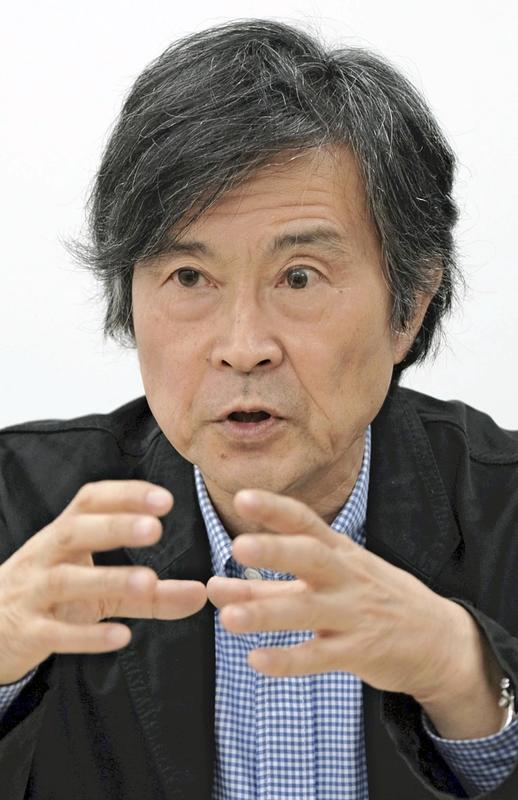
Why have so many Japanese complied with requests to stay home? Yomiuri Shimbun Staff Writer Takuya Itakura interviewed Naoki Sato, professor emeritus at Kyushu Institute of Technology, on the unique mentality of Japanese people in dealing with the spread of the coronavirus.
Naoki Sato: In response to the spread of infections, many people in Japan have complied with requests to refrain from going out and suspend business operations, even though there is no penalty for failure to comply. Why comply? My answer is simple. In Japan, there is a concept of "seken" (which is softly translated as society) that does not exist in the West.
I define seken as "dynamics that occur when Japanese people unite as a group." It involves peer pressure to be the same as everyone else, and people voluntarily regulate their behavior accordingly. In Japan, "the rules of seken" are separate from the law, and thus a "request" without penalties is both necessary and sufficient.
However, there is a negative side to seken.
There is a growing trend of discriminating against infected people, medical workers and their families and excluding them from seken (which, again, means society in this context). This is probably due to the strength of peer pressure. The trouble is that people infected with the new coronavirus sometimes show no symptoms. In other words, we don't know who is infected. I think that anxiety and fear are magnifying discrimination and attacks.
Recently, there has been a phenomenon called "self-restraint policing," in which people criticize those who go out or shops that do not close and expose their names on social media and through other methods. These "police" believe the public will not forgive such people even though they didn't cause any trouble to the "police" directly, and they criticize them excessively. Behind this there may be peer pressure to "kuuki o yome," which literally means "read the air" and is equivalent to "reading between the lines."
You won't be aware of the fear of seken unless you are actually criticized. We should realize that we live in seken and think about how it should be. By doing so, society will become a little more comfortable to live in.
-- Naoki Sato specializes in criminal law and social studies. He was involved in the establishment of the Japanese Sekengaku Society, which reviews academic and social phenomena from the viewpoint of seken.
Read more from The Japan News at https://japannews.yomiuri.co.jp/