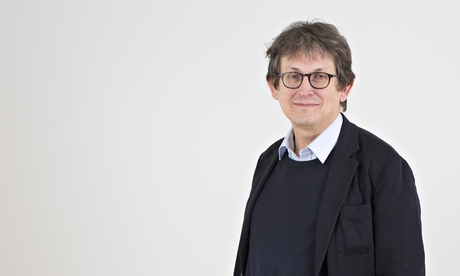
As much as the Guardian is an internationalist newspaper, the thoughts of editorial staff have been focused a bit closer to home in recent weeks. The search for a new editor-in-chief to succeed Alan Rusbridger moved to the hustings stage on Wednesday 25 February in preparation for staff to vote on a list of four candidates in an indicative ballot that will guarantee the winner a place on the Scott Trust’s final shortlist of six for the role.
Three internal candidates and one former member of staff who is now a journalism professor in New York answered questions in front of more than 400 journalists in the main hall at Kings Place, King’s Cross, home of the Guardian in London. It was filmed and will be available to all Guardian journalists around the world.
The meeting was organised by the National Union of Journalists, but all editorial staff will get a vote. Those eligible to vote are:
• All core Guardian/Observer staff journalists – including non-NUJ members.
• Freelances/casuals whose Guardian/Observer earnings are more than half their income.
• Overseas Guardian/Observer journalists including US and Australian journalists (ie locally hired colleagues as well as British secondments working in the US and Australia).
• Community coordinators, expected to be part of the union house agreement, and some others including moderators.
The four candidates at the hustings were: Emily Bell, director of the Tow Center for Digital Journalism at Columbia University and a non-executive director of the Scott Trust, which owns the Guardian; Wolfgang Blau, Guardian News and Media’s director of digital strategy; Janine Gibson, editor-in-chief of theguardian.com; and Katharine Viner, editor-in-chief of Guardian US. Each made a five-minute statement and then answered a set of prepared questions before an open question-and-answer session.
The concert hall, with its walls made from just one German oak tree and fabulous acoustics, was something of a contrast to the last time the hustings for an editor were held; then it was in a room above the Horseshoe pub a few hundred yards from the Guardian’s old Farringdon Road offices.
On that occasion scores of journalists crammed into the room to hear the four candidates – all men – including Alan Rusbridger. Then, all the candidates talked of the need to improve the prospects of women – and Rusbridger, immediately after his appointment, made Georgina Henry his deputy. This time around three of the four on the stage were women. It is also interesting to note that many of the issues foreshadowed as being key by the candidates on 23 January 1995 turned out to be as important as they predicted.
Apart from the role of women, the internet featured in the 1995 candidates’ ideas of the future. I am indebted to my predecessor, Ian Mayes, for the following from Rusbridger’s statement: “The old ink and paper Guardian isn’t about to disappear. But we should, in cooperation with the rest of the group, give serious attention to the need to develop electronically distributed versions of the paper. The Guardian has already been left behind in this area by the Times and the Telegraph. We should be attempting to recover lost ground.”
Last Wednesday the candidates were also keen to stress that print had a future, at least for the next few years.
Rusbridger then also identified one of the strengths of the Guardian that has been emphasised in the development of the web: “I am glad that the paper’s main relationship is with its readers rather than with its proprietor. Guardian readers are, by and large, intelligent, perceptive and well-informed. They are exacting in the standards they demand of the paper. They expect, and deserve, something closer to a dialogue than a monologue. In return they will be extraordinarily loyal.”
It was in that spirit that 20 years later a handful of letter writers raised the issue of whether readers would have an opportunity to express an opinion about who should be the next editor of the Guardian. In a letter published in the paper on 26 December, Richard Stainton from Whitstable wrote: “What plans are in place for a similar indicative ballot among readers? If nothing is yet planned, I’d suggest that each of the shortlisted candidates is required to write a letter to readers about how they would fulfil the role. These would then be published, anonymously, and readers invited to vote and/or comment. The Scott Trust would gather valuable feedback about how readers want the Guardian to develop; and the interview panel would be informed of readers’ priorities when making this vital appointment.”
Readers vote for the editor? Not this time perhaps, but next? And the readers’ editor too, I hear you cry.