Six decades have passed since a 200-strong racist white mob wielding bats and axe handles rampaged through Jacksonville. They beat young Black men with impunity under the noses of police officers in a downtown park named for a Confederate civil war veteran from a family of slave owners.
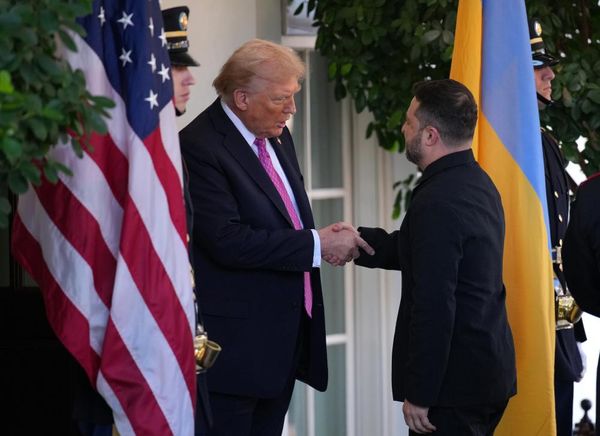
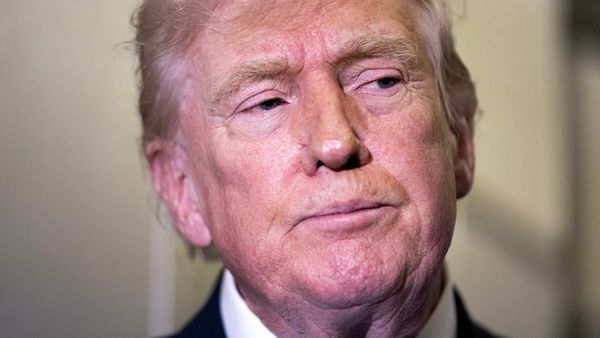
If Donald Trump had his way, he would have been in the Florida city on Thursday, not to commemorate the 60th anniversary of an infamous day dubbed Axe Handle Saturday, but to accept the Republican nomination for president at his party’s national convention.
The coronavirus pandemic ultimately forced Trump to retreat from those plans, and almost certainly staved off massive protests. But his desire to be in Jacksonville on the anniversary of one of the darkest days in the city’s racially troubled history was controversial.
“The timing couldn’t have been more awful, that’s what I had a problem with,” said Nat Glover, a retired former Jacksonville sheriff who, as a teenager in 1960, was among those chased by the mob that included members of the Ku Klux Klan.
“Personalities got involved with that, it could have gotten bad. Ordinarily a convention would be an opportunity for the city to show what it is made of, it would have been a good thing. But them coming at a time that was a commemoration of tragic events here, that had racial implications, it would have been awful,” Glover said.
Glover, 77, retired two years ago after a long career in public service, including 37 years in law enforcement and eight years as Jacksonville’s first African American sheriff. During his tenure, he introduced a level of community involved policing the city had never previously seen, and witnessed a sea-change in race relations from the days of Blacks being beaten for sitting at whites-only lunch counters.
“We’ve had an African American sheriff and mayor, we have an African-American schools superintendent, we have seven members on the city council. Back then no one would even have thought of that kind of progress,” he said.
Glover’s memories of the riot are still vivid. It was the culmination of two weeks of simmering tensions between whites and protesters from the local youth chapter of the National Association for the Advancement of Colored People (NAACP) who had taken to sitting in the segregated cafeterias of department stores downtown.

Such sit-ins were commonplace during the civil rights era but Jacksonville’s protest turned violent on 27 August 1960 when the white mob gathered in the central Hemming Park then invaded a Woolworths where the protesters sat. After dragging many of the youths outside and beating them, watched by members of the Jacksonville police department, the mob turned on any Black people in the vicinity.
Glover was a cafeteria worker in another store across the park, whose manager had closed early because of the unrest and sent his employees home.
“I got caught leaving and the individuals with the axe handles quickly encircled me and began to menacingly touch me, poking me with the axe handles,” he said. “They didn’t strike me with any force but it was quite traumatic. I saw a police officer watching the whole thing so I felt a little bit of, ‘Oh they’re not going to do anything too brutal with a police officer watching.’ But it was increasing in intensity.”
“When I got an opportunity I ran over to him and he told me, ‘You better get out of here before they kill you.’ And I ran. I ran the whole way home … it was just a frightening experience that’s had a lasting effect on me.”
In his own account of the riot, Alton Yates, one of the protest organizers, said lives were saved only by the intervention of members of a black street gang called the Boomerangs, who tried to stop the beatings. At that point the police stepped in, Yates said, but only to arrest the men defending them.
“You might wonder where the police were. They were there, but it appeared as though they were there to protect the people who were beating us,” he said.
Glover said the experience prompted him to follow a path into law enforcement. “It turned out to be a good thing but at the time it didn’t feel good. The lasting effect was I never wanted to feel that way again, and I didn’t want anybody else to feel fear the way I did that day.”
In recent months, the Black Lives Matter protests that swept the nation in the wake of the death of George Floyd have touched Jacksonville, as did the backlash against Confederate era monuments and memorials. A statue of a Confederate soldier in Hemming Park was removed in June, and the city council voted 10 days ago to rename two parks, including the one dedicated to Charles Cornelius Hemming, a civil war veteran who donated the monument.
“Just as you look around this country, it’s the same in Jacksonville,” Glover said. “That is we are headed in the right direction, but certainly we have not reached the destination yet.”