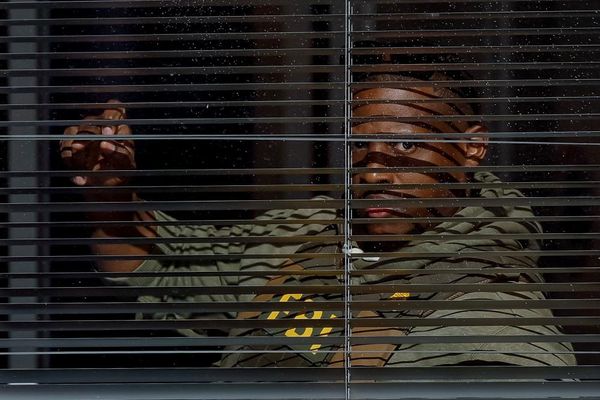
Clive Perry's Pitlochry seasons are famed for marrying tradition with a tectonically gradual attempt to move theatrical boundaries forward. The theatre's production of John Clifford's The Queen of Spades, set amid the decaying Russian aristocracy in the days before it is swept off in the rapids of revolution, displays all the nostalgic showmanship and incremental path-finding of its stronger productions.
The drama is based on a Pushkin novella in which a narcissistic army officer, Hermann, enters into a Faustian pact with the broodingly furious countess of the title. The denouement of their apparent deal takes us into Robert Louis Stevenson territory, as the countess exerts a power from beyond the grave. It would be all too easy to play the story for gothic effect, but Clifford and director Patrick Sandford take the sensible line, seeing the historic events reflected in the metaphysical goings on, rather than vice versa. In seeking financial gain with the countess, Hermann rejects the her great neice Liza; that choice of wealth over love is a fine motif for Russia's rulers in the midst of the revolution, as is the hopeless complacency of Liza's finace Yeletsky.
Although he tips his cap to Tchaikovsky, whose Pushkin-inspired opera strongly influenced his play, Clifford might also have acknowledged a debt to Oscar Wilde. The countess has a line in wit and reactionary cynicism that could in places have flowed from the Irishman's pen. This owes at least as much to the excellent Edith Macarthur's droll playing as to the writing. Elsewhere, however, the satire lacks subtlety and the comedy is too light. Yeletsky's post-revolution refusal of his former title of "prince" with the words "formerly known as, perhaps" is a moment of fine comedic chutzpah. But it shines amid the heavy-handedness of cartoon Bolsheviks who seem set to laugh demonically at any moment.
More damaging is Clifford's decision to insert Tchaikovsky's ghost into the play. Although beautifully acted by Michael Mackenzie, the sad tale of the composer's oppressed homosexuality is a structurally incongruous encumbrance that the drama cannot sustain. Indeed, the poignant sub-plot would have found a better outlet in a separate play entirely.
· In rep until October 16. Box office: 01796 484626