One is an ex-punk and passionate heavy metal fan who believes the BBC licence fee is worse than the poll tax. One is a former daytime TV presenter who has reportedly advocated legalising cannabis. A number have supported parliamentary motions in favour of homeopathy. And one was once employed as an “aristocracy co-ordinator” during the filming of Four Weddings and a Funeral.
In the hours after Michael Gove’s weekend appointment as justice secretary, much attention focused on a newspaper article he wrote in 1998 in which he advocated the return of hanging, “out of respect for democracy”. The punishment might be a “barbarity”, he suggested, “but the greater barbarity lies in the slow abandonment of our common law traditions”.
But as David Cameron confirmed further cabinet names on Monday, it was clear that Gove was not the only member of the new government to have expressed unorthodox or controversial views in the past — or to bring to the cabinet a colourful biography.
Gove has not publicly repeated the argument he made in the pages of the Times, so it is not clear whether the man now in charge of Britain’s criminal justice system still believes that abolishing the death penalty “has led to a corruption of our criminal justice system, the erosion of all our freedoms and has made the punishment of the innocent more likely”.

He is not alone in the cabinet in having expressed such a view. Priti Patel, who replaces the defeated Esther McVey as employment minister, said on Question Time in 2011 that she backed the return of capital punishment because “I do think we do not have enough deterrence in this country for criminals”.
Patel, who worked for the short-lived Referendum party in the late 90s, also previously worked as a PR consultant with clients including the drinks giant Diageo and British American Tobacco. She has robustly denied that this has influenced her opposition in parliament to both the smoking ban and the introduction of plain packaging.

The appointment of John Whittingdale, formerly chair of the Commons culture select committee, as secretary of state for culture, media and sport will raise concern at the BBC given his position on the licence fee, which he described last year as “unsustainable” and “worse than a poll tax”. Negotiations on renewing the corporation’s charter until 2026 will open this year.
Whittingdale, a Eurosceptic and a Thatcherite, voted against equal marriage, but he is not a typical Tory rightwinger: in terms of his own cultural interests, he confesses to a passion for heavy metal and to having been “a punk … for a time”. (He also likes ballet and classical music, he told the Guardian.)
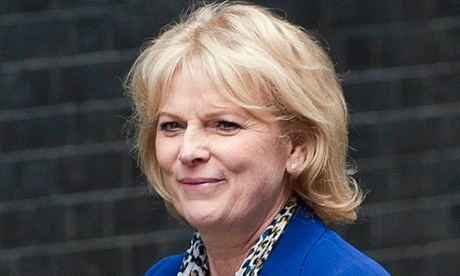
Not all of the new appointees come from the right of the party. Anna Soubry, the new minister for small business, is a former SDP member who once reportedly endorsed the legalisation of marijuana, telling a group of sixth-formers that she believed “certain types of cannabis are less harmful than alcohol and tobacco”.
An ex-TV presenter who worked on ITV’s This Morning, Soubry is a former shop steward of the National Union of Journalists.

Also pro-trade union is Robert Halfon, who becomes minister without portfolio attending cabinet. He was a member of Prospect when elected to parliament and has written that the Tories should embrace the union movement.
Halfon, who was born with a form of cerebral palsy and walks with the aid of crutches, is one of at least two new cabinet members to have signed parliamentary motions in favour of homeopathy, including one that called on parliament to recognise its use in treating breast cancer.

Greg Clark, taking over from Eric Pickles as the secretary of state for communities and local government, and a former science minister, has backed an early day motion welcoming the contribution of homeopathic hospitals to the NHS.
The former immigration minister Mark Harper, who resigned in February last year when his cleaner was found to be working illegally in Britain, has won a big promotion to chief whip. Before his resignation, Harper was the minister responsible for the introduction of the “Go home” poster vans that were later banned by the Advertising Standards Authority.

Cameron reinstated Harper as the disabilities minister in June, handing him the task of replacing Atos as administrator of the hated work capability assessment and reducing its enormous backlog. He has previously attracted controversy over comments he made during a radio interview in which he said: “There are definitely some people in our country, and everyone in every community knows who they are, who are able to work and don’t.”
To the relief of climate campaigners, Cameron’s appointment as energy and climate change minister, Amber Rudd, at least accepts the scientific basis of climate change, unlike the previous incumbent, Michael Fallon (who called climate change a “theology”, and who continues as defence secretary in the new government), and the former environment secretary Owen Paterson.

Rudd has said the evidence for climate change is “compelling” and has been described as one government insider as “really green and no nonsense”. However, she is a supporter of fracking. She will know her brief, having been a junior minister before her promotion to the full cabinet post.
Rudd is the sister of the PR man and Labour donor Roland Rudd, and was previously married to the Sunday Times columnist AA Gill, with whom she has two children. According to the film director Richard Curtis, she knows “a lot of dukes and earls”, a critical skill when he employed her to recruit posh extras for Four Weddings – aristocrats being in a position to bring their own costumes, he explained.