
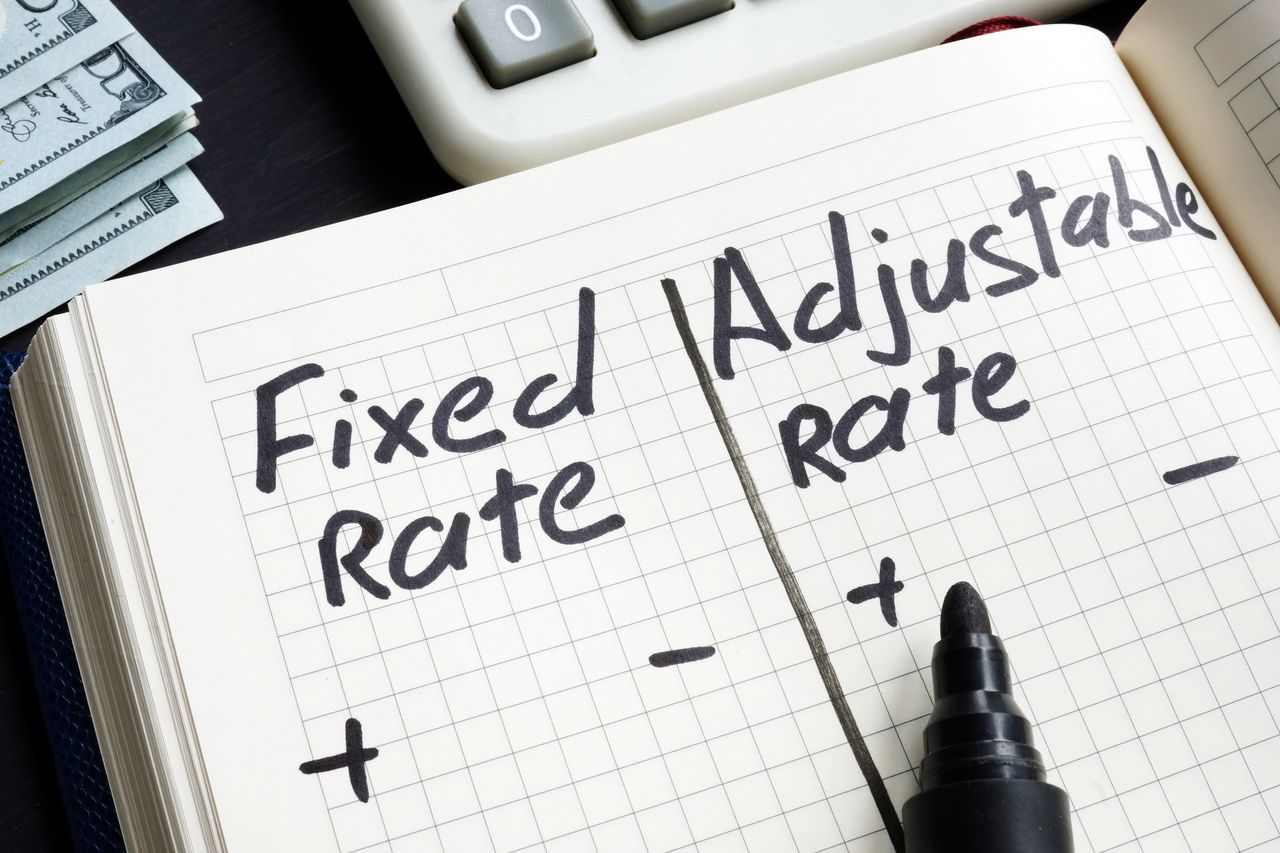
If you're in the market for a new home, one of the most important decisions you'll make — beyond choosing the right location — is selecting the type of mortgage loan that best fits your financial situation.
The kind of home loan you choose can significantly impact your monthly payments, the total amount of interest you'll pay over time and your long-term financial flexibility.
Among the many options, fixed-rate mortgages are one of the most popular, but are they right for you? Understanding how these loans work, along with their advantages and drawbacks, can help you make a more informed decision as you prepare for homeownership.
Here are three common loan types including the pros and cons for each:
30-year fixed-rate mortgage: Stability with lower monthly payments
The most common mortgage is the 30-year fixed-rate loan.
Pros. Predictability is the big plus. You know exactly how much interest you will pay over the term of the loan. Total monthly payment of principal and interest is fixed, and in the early years, it consists primarily of tax-deductible interest. Your payments will be lower than if you had a mortgage with a shorter term.
Mortgages without prepayment penalties permit you to shorten the term of the loan at will — and lower interest costs — by making periodic payments toward the principal.
Cons. The primary disadvantage is that you'll probably end up with a higher interest rate compared with a loan with a shorter term or an adjustable mortgage. That's the price you pay for long-term stability.
You'll spend more in interest over the life of the loan, and your monthly payments will be stretched out over a longer period of time. Home equity will accumulate at a slower pace.
15-year fixed-rate mortgage: Faster equity build-up and interest savings
Pros. Principal balance is reduced relatively rapidly compared with longer-term loans. The 15-year fixed-rate loan permits you to own your home debt-free in half the time, and for less than half the total interest cost, of a 30-year fixed-rate loan.
It offers some individuals a useful financial planning tool. Interest rates might be lower than those offered on 30-year fixed-rate loans.
Cons. Higher monthly payments make these loans more difficult to qualify for than longer-term mortgages. A 15-year mortgage locks you into making monthly payments roughly 15% to 30% higher than you'd make with a comparable 30-year loan.
There will also be less cash left over for renovating, investing, emergency funds and other expenses.
Biweekly fixed-rate mortgage: Accelerated payoff through extra payments
Pros. The biweekly payment schedule of this kind of loan speeds amortization, reduces total interest costs and shortens the loan term — usually from 30 years to about 24. You make 26 biweekly payments — which amounts to 13 annual payments — instead of 12 monthly payments.
Conversion to a 30-year fixed-rate loan is usually permitted. Payments are deducted automatically from your savings or checking accounts.
Cons. Private companies and lenders usually charge for this service. Registration fees and biweekly debit charges can make this a costly way to shorten the life of a loan and lower interest expense.
The same objectives can be accomplished with a 30-year mortgage by making an extra payment or two each year or by applying an additional sum to principal repayment when you make a monthly payment.
As with other kinds of rapid-payoff mortgages, you trade total interest-cost reductions for reduced tax-shelter benefits.
Bottom line
The term of your mortgage should be influenced by your ability to pay and consider other financial obligations you need to meet. Fortunately, you can always refinance if you want to change the term. A shorter term comes with higher payments, but you will pay significantly less interest over the life of the loan.
If interest rates are low, it could make sense to sign on to a longer term. You might be able to invest and get a higher return that will offset the additional tax-deductible interest you'll pay over the life of the loan.
Compare some of today's top mortgage offers with the tool below, powered by Bankrate: