The Prince of the Pagodas costume design, from sketches to stage – in pictures
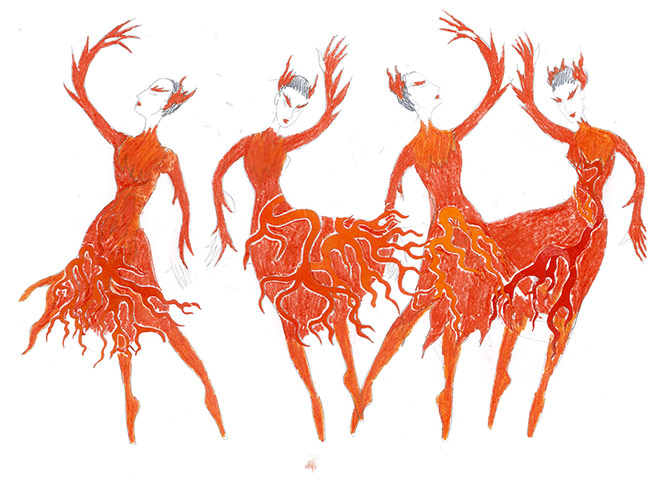
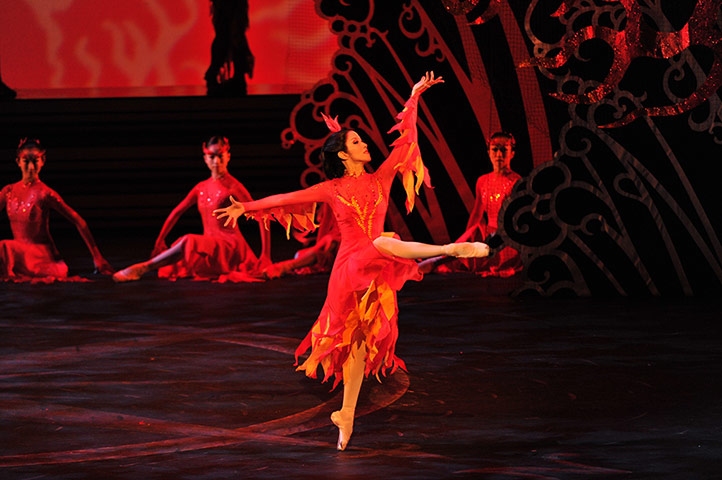
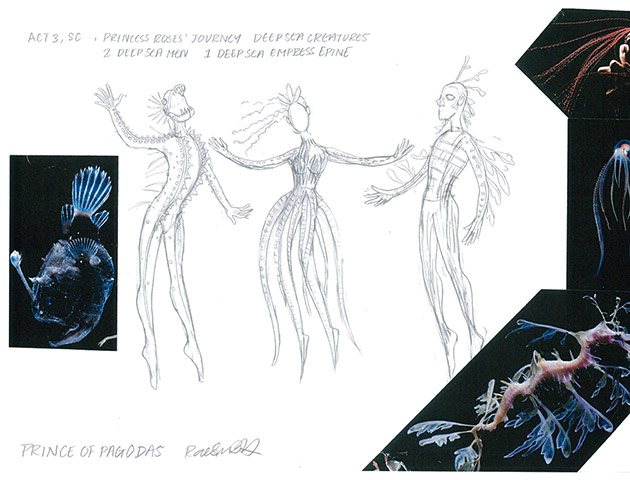
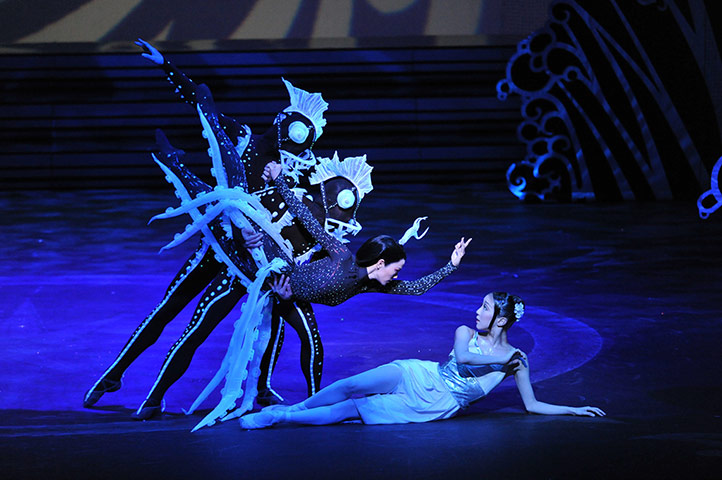
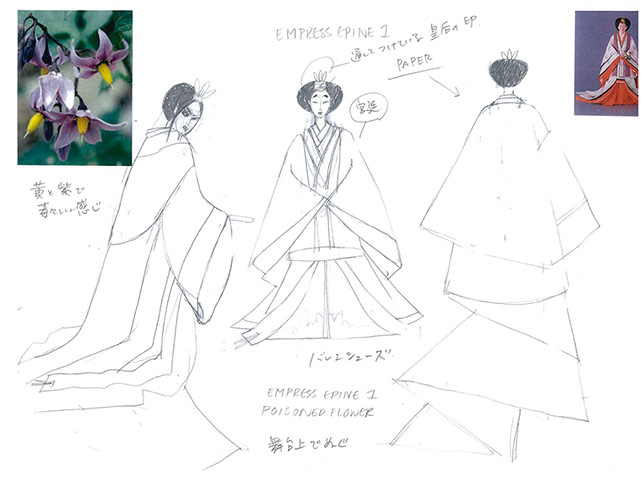
Rae Smith: 'Demons in Japanese culture often have big eyebrows - these are the ballet's flame demon women, who are envoys of evil led by the Empress.'Photograph: Birmingham Royal BalletMamiko Yukawa as Empress Epine. Rae Smith: 'The idea of the flame was taken from Japanese block prints. The dresses are made from lightweight silk so they create a flame-like movement.'Photograph: Hidemi SetoRae Smith: 'At one point, the Empress turns herself into an octopus – here she is in the middle. The other two are her bodyguards.'Photograph: Birmingham Royal Ballet
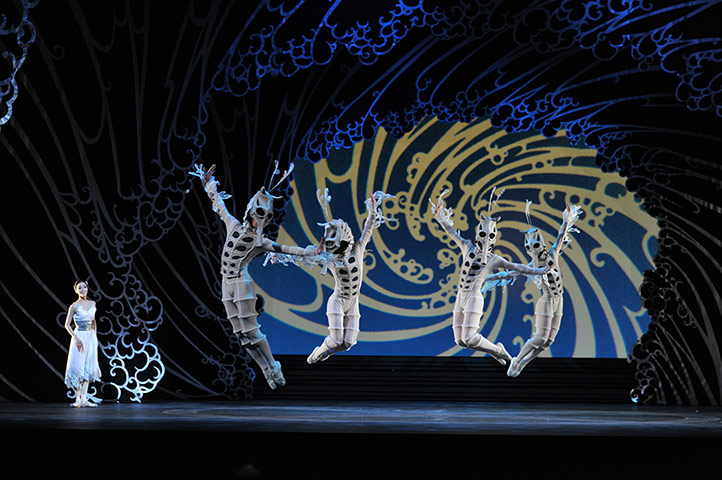
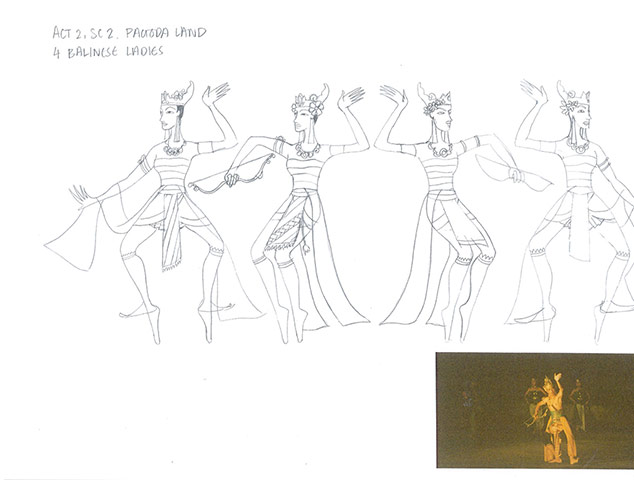
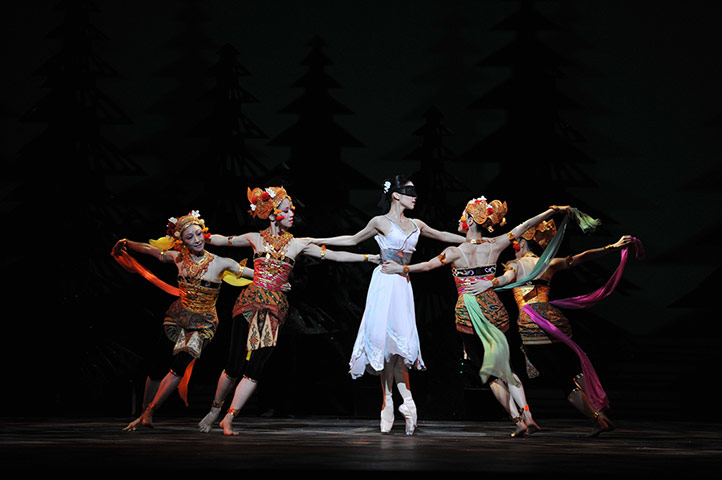
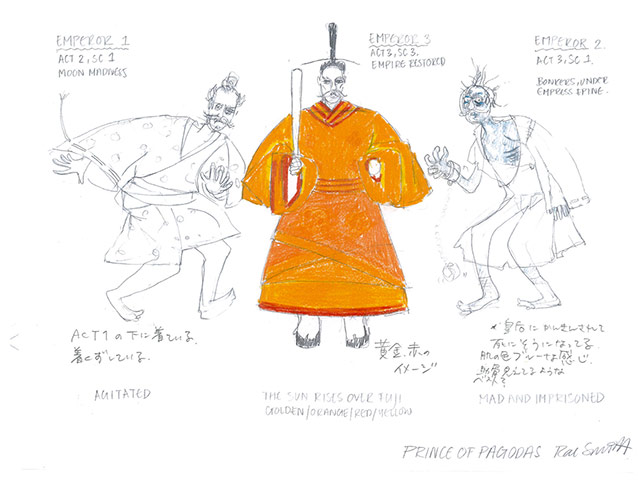
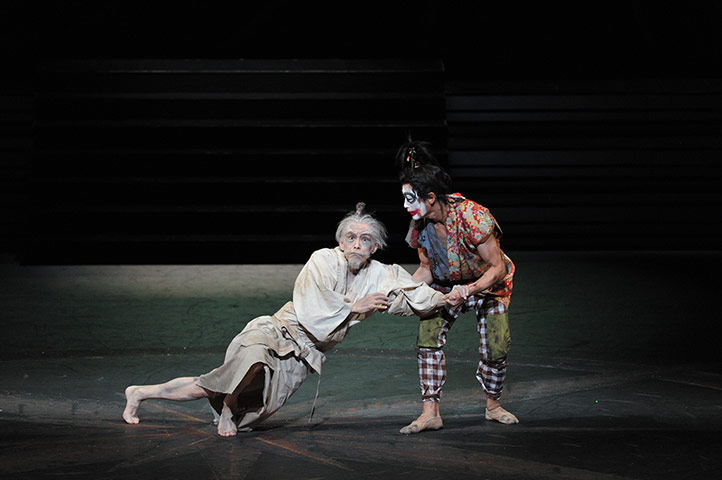
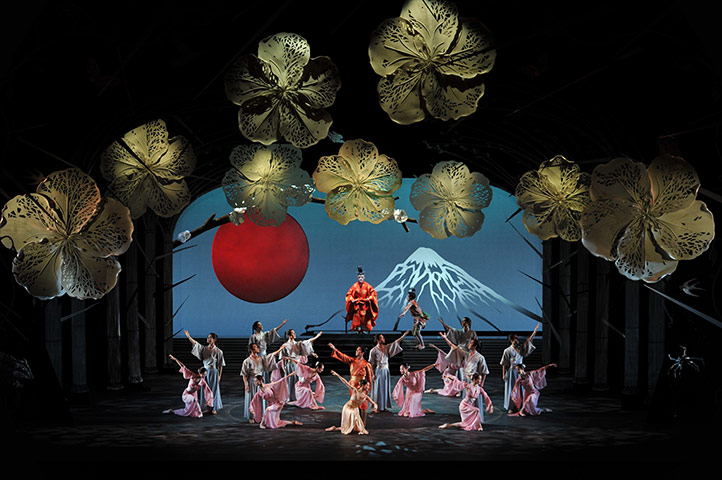
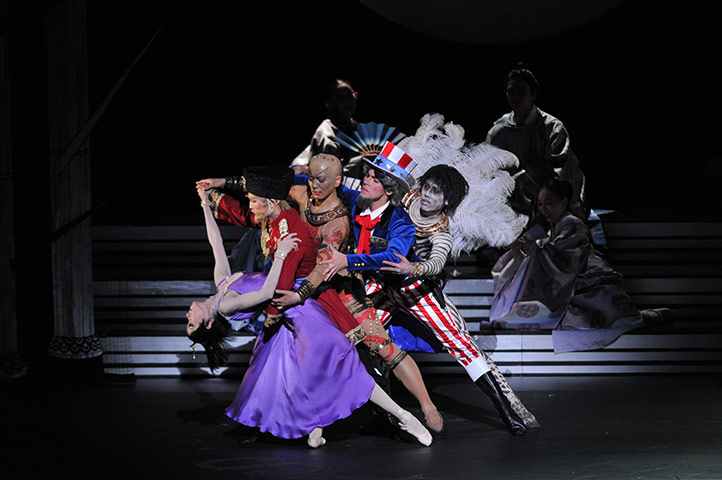
Rae Smith: 'The bodyguards started off as fishmen, but they were too sweet so I turned them into scary crabmen.'Photograph: Hidemi SetoAyako Ono as Princess Bell Sakura. Rae Smith: 'The princess starts as a classical princess of the Japanese court. Her costume changes throughout the show to reflect her journey. These seahorse costumes were made in Japan – I wanted them to match the creatures' spooky looks and hop-about movements.' Photograph: Hidemi SetoRae Smith: 'The princess gets washed up on the Balinese shore and meets the Pagoda People. These ladies are spirits of the forest.'Photograph: Birmingham Royal BalletRae Smith: 'The outfits for the Balinese ladies were inspired by the Ramayana.'Photograph: Hidemi SetoRae Smith: 'For this classical emperor outfit we used kimono material. Classical Japanese costumes are stiff and restrictive to a degree, which is a challenge if you're creating clothes for dancers.'Photograph: Birmingham Royal BalletNoboru Hori as the Emperor and Yasuhisa Yoshimoto as the Fool. Rae Smith: 'The Emperor in the ballet loses his power and goes mad, rather like in Ran, Akira Kurosawa's version of King Lear. The Fool wears two kimonos cut in half and traditional Japanese clown trousers. His makeup was inspired by Heath Ledger's Joker to add a popular culture reference.'Photograph: Hidemi SetoRae Smith: 'The Empress initially wears traditional robes which are stiff and papery.'Photograph: Birmingham Royal BalletRae Smith: 'The costumes worn by the Japanese court ladies towards the close of the ballet are different to the traditional costumes at the beginning. At the end there is a new air of springtime in the court.'Photograph: Hidemi SetoThe Prince of the Pagodas is at the Lowry, Salford, until 1 February 2014 and then tours to Birmingham Hippodrome, Theatre Royal Plymouth and the London Coliseum.Photograph: Hidemi Seto
Sign up to read this article
Read news from 100's of titles, curated specifically for you.