After a day of brighter skies, the rain returned overnight and kept at it until the thin grey light of dawn. In such watery conditions where else could I go except the river?
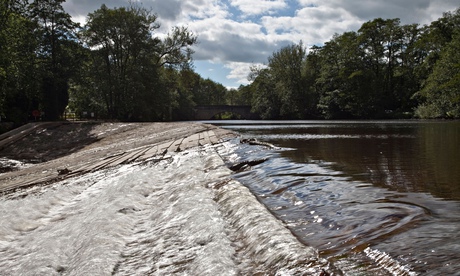
At Calver weir, the Derwent was muscling under New Bridge, full of power but speaking softly until it burst in a bubbling white rush over the weir itself.
Harnessing Derbyshire’s rivers to the rumbling wheels of industry took away a good portion of their wildness, but it wasn’t always plain sailing. Sometimes the river bit back. The Derwent had often flooded before industrialisation, and in 1799, an earlier weir and the bridge above it washed away after unusually heavy summer rain.
The owners of the cotton-spinning Calver mill just downstream, already mired in debt, rolled up their sleeves and built another one, only for the mill itself to burn down three years later.
Once again they rebuilt, and so robust and forbidding was the new seven-storey building that it made a brief but convincing appearance as a German prisoner-of-war camp in the 1970s BBC television series Colditz.
The current weir forms an elegant ogee across the river, and after years of dereliction has been restored in a laudable community project. There is talk of harnessing the river’s power again, this time for electricity, since the leat or “goit” still flows through the mill, now converted into flats.
Such small hydroelectric schemes have much potential in the Peak District, but the issue divides opinion. Whatever happens, due care will be paid to the thriving wildlife along the river.
As the rain came down, the riverbank was busy with coots and a couple of moorhens flicking their tail feathers at me. Two pairs of mandarin ducks made a garish progress upstream before, magically, the flat white sky was sliced open by a blade of electric blue as a kingfisher flitted ahead of me. It settled on a low-hanging alder twig thick with raindrops that trembled and then fell into the churning river.