As he was studying physics at the University of Saskatchewan in Canada, Mark Boots decided to put his engineering skills to good use. He applied to work with the Canadian organisation Engineers without Borders and was sent to northern Ghana to support local government officials as they gathered data to better understand and serve local populations.
The officials often found the task of assembling feedback from large numbers of citizens living in small villages challenging. As he worked with the officials, he realised the importance of effective communication systems within communities. He also realised the value of governments communicating and being more transparent about their work to the people they serve.

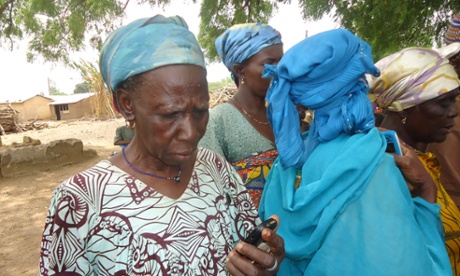
That is when it hit him: the majority of the people he was visiting with the officials had mobile phones. If someone really wanted feedback from, say, a mother of three in a remote village or, a farmer with no access to the main roads, they could simply call them. There could not be a simpler way to make every voice heard.
This defining realisation led Mark and Louis Dorval, his co-founder and a fellow engineer, to create VOTO Mobile. Based in Ghana, the social enterprise is using mobile phones to remove barriers to insightful communication and develop feedback loops between citizens in emerging markets and the organisations who serve them.
Boots and Dorval tested their solution through a series of pilot projects. The engineers’ first idea was to use SMS polling. They sent a simple question via SMS to a list of 19,000 phone numbers. They received fewer than 300 responses. This first failure helped the two social entrepreneurs re-think their approach and their vision. They understood the need to engage people in a language that worked for them. The second trial featured voice prompts, produced in five local languages, sending voice messages to people across Northern Ghana. The response rate went through the roof.
Since launching in early 2013, VOTO has been used by more than 250 organisations to engage with over 500,000 people across 72 countries. Recently, the platform was used by the World Bank to help raise voter turn-out levels in a participatory budget process in Brazil, increasing voter turn-out by more than 30%. In Northern Ghana, they just completed a two-year maternal health education pilot reaching 7000 expectant mothers, with 93% of women recommending the weekly service to their peers.
The Unilever Sustainable Living Young Entrepreneurs Awards is an international awards programme delivered in partnership with the Cambridge Institute for Sustainability Leadership and in collaboration with Ashoka, that rewards inspirational entrepreneurs aged 30 and under who have developed a product, service or application that helps make sustainable living commonplace.
This is an edited extract from an article that originally appeared on virgin.com.
Visit Unilever Project Sunlight for more inspirational stories from people making a difference in the area of sustainability.
More from the Unilever partner zone:
- The blackout that shed light on a national problem in India
- Unilever: eliminating all non-hazardous waste from factories - video
- New map shows Unilever’s global smallholder farmer footprint
Content on this page is paid for and provided by Unilever, sponsor of the sustainable living hub