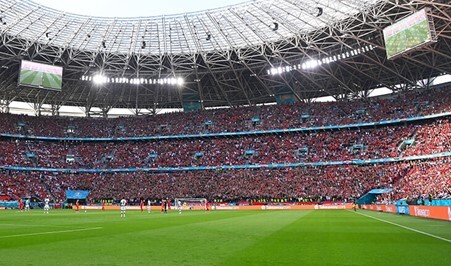
 In contemporary sport, not all wins are gained by muscle power or strategic genius on the field. More and more, the small edges of victory are decided off the play area in media talks, behind closed doors, by choices of ruling groups, or through quiet money deals. These secret plans make up what could be named the “Political Coefficient” a way to see how power, views, and moves change results in top-level sports. It’s the skill of beating others without holding the ball. From the World Cup bidding process to calculated media management by top football clubs, politics and sport have become deeply entwined. Just as in global diplomacy or high-stakes elections, success is no longer a mere function of capability. It requires the right positioning, timing, and even some strategic leverage.
When Sports Mirror Statecraft
It is not merely rhetorical, the relationship between top-level sports and international politics. States use sporting victories as soft power tools while clubs utilize international partnerships for economic and political gains. Hosting a major event such as the Olympics or the World Cup is also a geopolitical maneuver most times; it is an investment to indicate stability, growth, or even regional dominance.
See how Qatar hosted the 2022 FIFA World Cup. That meant more than football, it meant a calculated political gesture: displaying national ambition, technological innovation, and global relevance. Critics brought up human rights issues--no doubt--and questioned the motivations of FIFA’s executive committee. Infrastructure meanwhile was dazzling, backed by legacy plus retold Middle Eastern identity. That became the textbook of taking home a global narrative not from sporting alone but out of strategic foresight.
Coaches, Captains, and Cabinet Ministers
The language of sport has long borrowed from the lexicon of politics. Managers “campaign” for player signings, “lobby” referees during matches, and engage in “diplomacy” with the media. Similarly, captains often serve as spokespersons, tasked with both leadership and messaging akin to political party figureheads.
Consider the calculated press interactions of managers like Pep Guardiola or Jürgen Klopp. These are not spontaneous expressions; they’re crafted performances with tactical intent used to deflect pressure, influence referees, or psychologically engage opponents. It’s no surprise that several former athletes have crossed into political life. Their training in narrative control, discipline, and public performance makes them adept political players.
Strategy, Politics, and the Betting Ecosystem
There exists another arena where strategy and politics intersect with sport in tangible, lucrative ways: the world of sports betting. While betting may appear at first glance to be a matter of luck or statistical acumen, at the professional level it is a highly strategic discipline that accounts for political undercurrents, tactical patterns, and narrative signals.
Bookmakers adjust odds not only based on form or injury lists, but on deeper political contexts. A team playing after a national tragedy, a controversial managerial appointment, or tension within football associations can significantly affect performance and, therefore, betting outcomes. These socio-political layers form an invisible but critical part of betting analytics.
Moreover, access to reliable, responsive betting platforms enhances a user's ability to act on these nuances. For those seeking mobility and strategic engagement on the go, platforms like https://melbet-tn.com/ar/mobile offer streamlined, real-time betting capabilities. With user-friendly interfaces and extensive coverage, such platforms reflect the modern bettor’s need for both speed and depth. Here, strategy becomes personal where analyzing the ripple effects of political events on a game can directly influence one’s financial stake.
This triad politics, sports, and betting has formed a unique feedback loop. Political developments shape sports narratives; those narratives influence odds; bettors react, and the market shifts. In this ecosystem, the political coefficient is not just a theoretical tool, but a practical lever.
The “Invisible Game” in Global Tournaments
Major tournaments seem to be the most evident examples of the political coefficient in practice. Decisions about team selections, referee assignments or disciplinary actions hardly ever come without a broader context. Fairness is the ideal but the reality is something different.
In tournaments like the UEFA Euro and FIFA World Cup, "dark horses" are often met with overly stringent officiating or put at scheduling disadvantages. On the other hand, legacy status and federative muscle work to the advantage of traditional powers. Such disparities can influence results long before actual play begins.
Also, the post-tournament legacy – who gets money, who hosts next, who climbs the ranks – is usually set by how well teams and groups play the political game. Media pull, sponsor deals, and inside pushing can greatly change the path of whole national plans.
Game Theory: From Locker Rooms to Legislatures
The strategic mind that it takes to be able to succeed in elite sport closely resembles the decision trees found in diplomacy and warfare. Coaches use game theory to anticipate an opponent’s move that they will have to counter-strategy against. Political leaders do the same when engaged either in a negotiation or managing crisis escalation.
In either field, information asymmetry is used as a weapon. Think about it like this: a manager downplays a key injury to throw off the competition just as a state might want to downplay a capability or shift in policy so that it can maintain leverage at the negotiations table.
The only real difference is that in sport, it happens within 90 minutes while in politics, it could go on for decades. The tactical similarity between the two-that of obfuscation, and alliance-building, and misdirection-is stunning.
Conclusion: Winning Without the Ball
In today’s world, where perception often rivals performance, the ability to control narratives, shape expectations, and manage behind-the-scenes power dynamics has become as important as on-field excellence. The political coefficient isn’t a fixed number, but a living, shifting advantage wielded by those who understand the broader game.
In sport, as in politics, winning is no longer just about who runs fastest or jumps highest, it's about who plays the invisible game best.