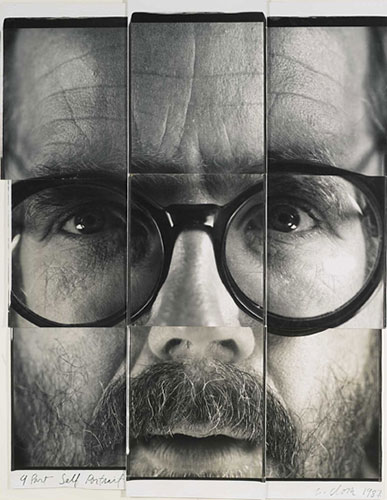
Chuck Close, 1987
collage of large-format Polapan prints
Estimate: $50,000-$70,000
Close began using photographs as sketches for painting. The images that emerged from Polaroid’s 20x24in camera convinced him that this was a medium with its own unique expressive possibilities. Larger than most people’s bodies, his head is an object of stupefied wonder: a man confronts the goggle-eyed oddity and absurdity of his own existence Photograph: Chuck Close/Courtesy Sotheby's New York
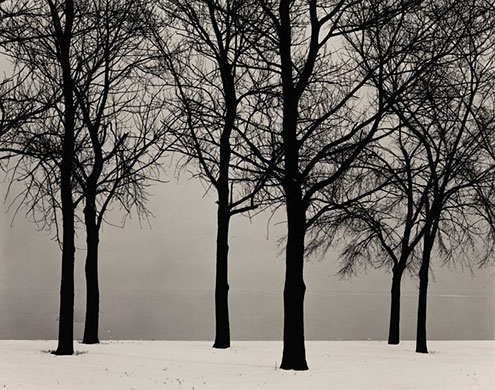
Harry Callahan
Gelatin silver print
Est: $70,000-$100,000 Photograph: Harry Callahan/Courtesy Sotheby's New York
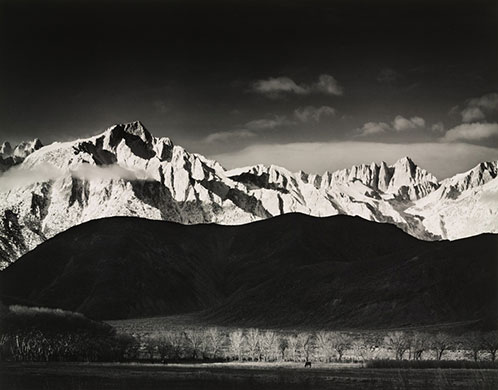
Ansel Adams, 1944
Est: $300,000-$500,000
David Hockney once said he couldn’t look at any photograph for more than 30 seconds. This one can be gazed at for as long as it would take you to cross the fields, meander up the foothills, and climb those mountains. American space is different: there is more of it, and heaven is just beyond the horizon
Photograph: Ansel Adams/Courtesy Sotheby's New York
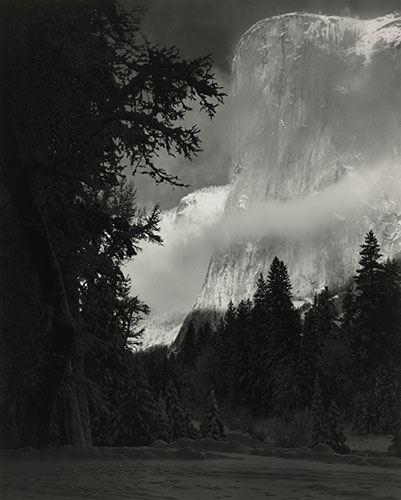
Ansel Adams
From a Polaroid type 55 negative
Est: $10,000-$15,000 Photograph: Ansel Adams/Courtesy Sotheby's New York

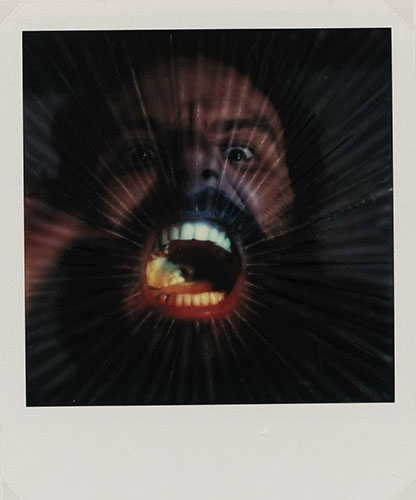
Andy Warhol, 1979
Large-format Polaroid Polacolor print
Est: $10,000-$15,000
Close’s self-portrait – monumental in size, sculpturally severe in expression – shows off the capacity of Polaroid’s largest camera. Warhol uses a smaller camera to reduce his face to a fuzzy, leering, acne-pocked mask. Close poses for eternity; the vampirish Warhol looks as if he were remembering, with a shudder, what he looked like when alive
Photograph: Andy Warhol/Courtesy Sotheby's New York
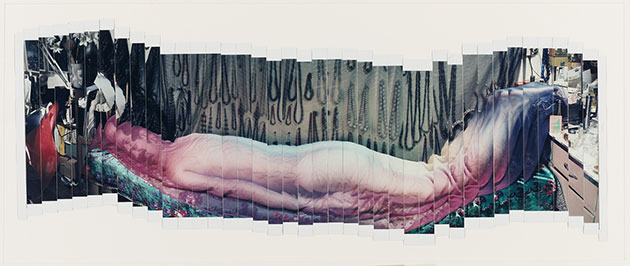
Lucas Samaras
Composition of forty 1⁄2–1 inch strips of Polaroid Type 808 prints
Est: $6,000-$9,000
Photograph: Lucas Samaras/Courtesy Sotheby's New York
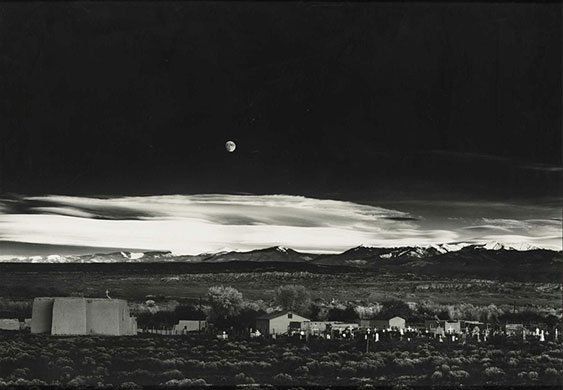
Ansel Adams
Mural-size gelatin silver print
Est: $250,000-$350,000
Photograph: Ansel Adams/Courtesy Sotheby's New York
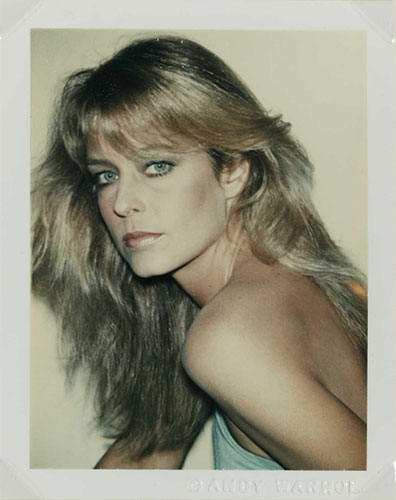
Andy Warhol
Polacolor Type 108 print
Est: $5,000-$7,000 Photograph: Andy Warhol/Courtesy Sotheby's New York
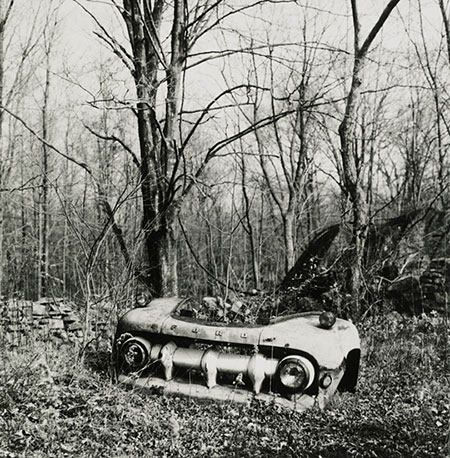
Walker Evans, 1973-4
From a Polaroid Type 105 negative
Est: $1,500-$2,500
Taken at the end of his life, Evans’s Polaroids brood morbidly over decay. It’s almost a relief, after the tacky consumerist trophies of Rauschenberg and Levinthal, to see nature gobbling up the corroded remnants of culture Photograph: Walker Evans/Courtesy Sotheby's New York
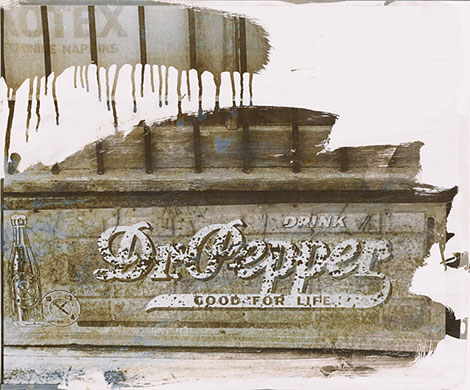
Robert Rauschenberg, 1991
Large-format Polapan print
Est: $20,000-$30,000
What do sanitary pads – euphemised here as ‘napkins’ – and a drink made from sassafras have in common? Nothing at all, which is why Rauschenberg combined them, brushing on a coat of kitchen bleach to help them blend. Adams thought of America as one enormous national park; for Rauschenberg it was an overstocked, casually wasteful supermarket
Photograph: Robert Rauschenberg/Courtesy Sotheby's New York
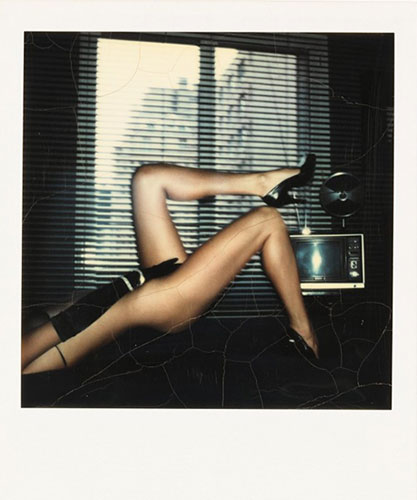
Helmut Newton, c.1975
Polaroid SX-70 print
Est: $5,000-$7,000
Polaroids, usually taken by holidaymakers with loved ones as their subjects, have a privileged intimacy. But this is no private memento: it’s a geometrical arrangement of human limbs, and the gloved hand that reaches for the groin is there to contribute to the diagram, not to produce a spasm of solitary pleasure
Photograph: Helmut Newton/Courtesy Sotheby's New York
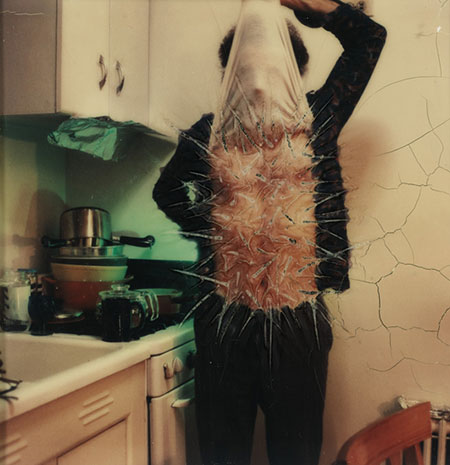
Lucas Samaras
Manipulated Polaroid SX-70 print
Est: $6,000-$9,000 Photograph: Lucas Samaras/Courtesy Sotheby's New York
Lucas Samaras
Polaroid SX70 print
Est: $6,000-$9,000 Photograph: Lucas Samaras/Courtesy Sotheby's New York
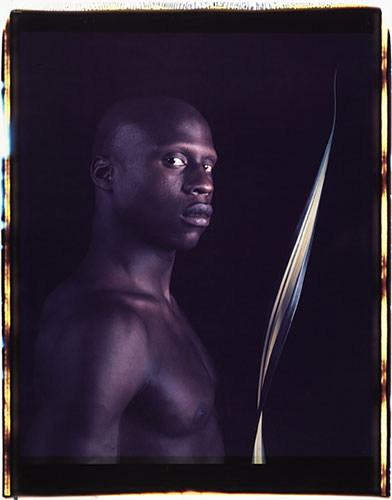
Robert Mapplethorpe, c1984
Unique large-format Polaroid Polacolor print
Est: $5,000-$7,000
A wicked specimen of political incorrectness, which explains why Mapplethorpe was disliked by liberals as well as conservatives. A black male body is frankly displayed for delectation, the Polaroid film even giving his skin a sheen of midnight blue. And since spears are not readily available in Greenwich Village, this urban tribesman brandishes a palm frond
Photograph: Robert Mapplethorpe/Courtesy Sotheby's New York
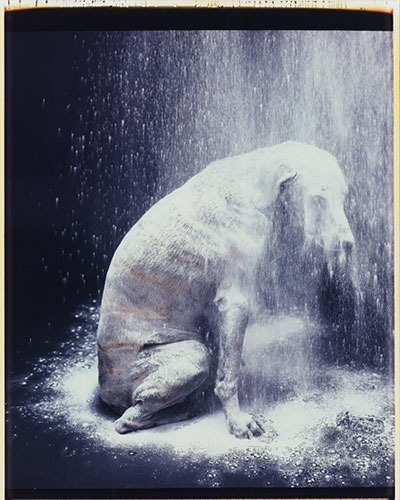
William Wegman, 1982
Large-format Polacolor print
Est: $7,000-$10,000
Wegman – who has almost as many prints as Adams in the sale – stages the sublime in his own solemnly jokey way. Adams celebrates nature’s endurance by photographing peaks of granite in Yosemite during snowstorms; Wegman tips a dry shower of flour on to his Weimaraner Man Ray, who is as stoically immobile as any mountain
Photograph: William Wegman/Courtesy Sotheby's New York
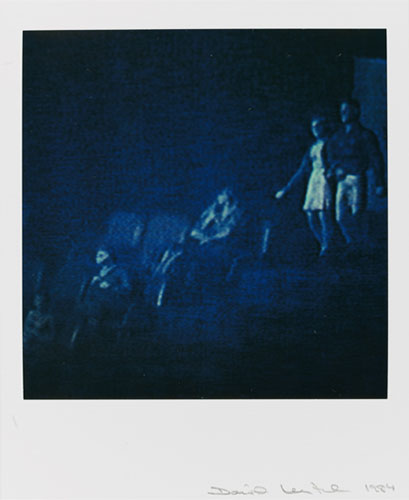
David Levinthal, 1983-85
One of five unique Polaroid SX 70 prints
Est: $5,000-$7,000
Photograph: David Levinthal/Courtesy Sotheby's New York
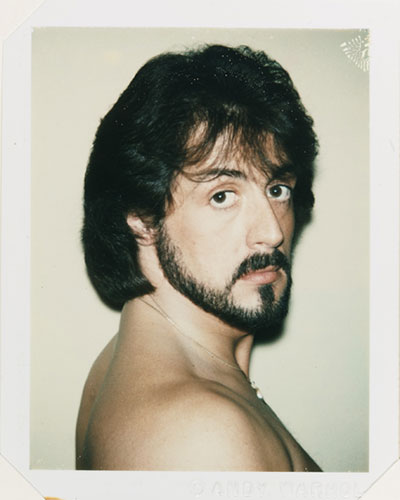
Andy Warhol
Polacolor Type 108 print
Est: $5,000-$7,000 Photograph: Andy Warhol/Courtesy Sotheby's New York
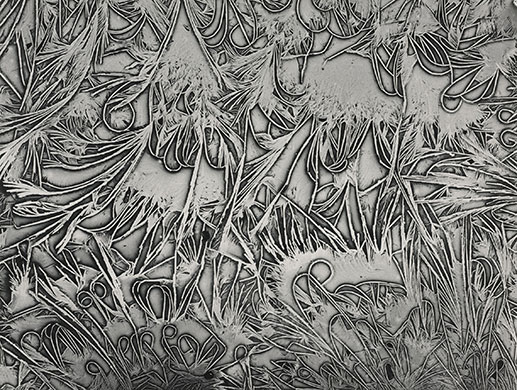
Ansel Adams, 1962
From a Polaroid Type 55 negative
Est: $10,000-$15,000
Here the Polaroid positive/negative film studies its own origins. After exposure, the sodium sulfite in these crystals washed away the black backing on the acetate film. Adams was photographing the science that made his art possible
Photograph: Ansel Adams/Courtesy Sotheby's New York
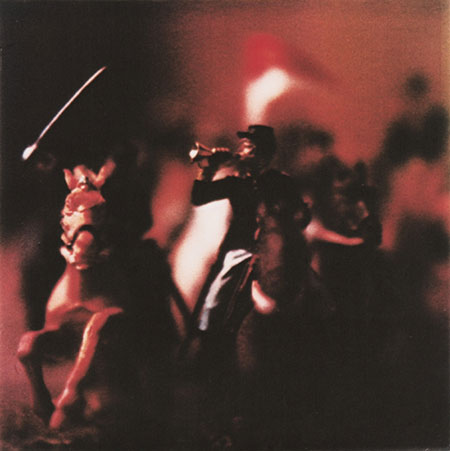
David Levinthal, 1988
Unique large-format Polacolor print
Est: $5,000-$7,000
Another Wild West, very unlike that of Adams – not God’s own country, freshly created, but a battlefield where stick figures re-enact a cavalry charge and culture wages war on unspoilt nature. The Polaroid SX-70 was often described as a toy, and here it is trained on some of its fellow playthings
Photograph: David Levinthal/Courtesy Sotheby's New York