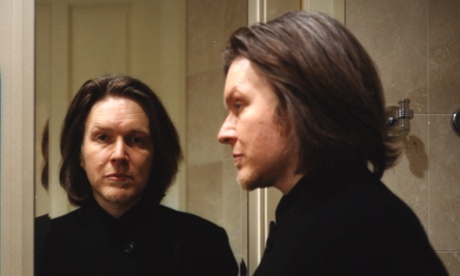
David Sylvian – The Good Son
Assuming you can remember who won this year’s actual Eurovision song contest – I’m not certain I can, as if it matters – this alternative list of Songs for Europe, songs to make you genuinely proud to be European, kicks off with the British entry. David Sylvian’s 2003 album Bleamish marked a fresh way of working for the one-time Japan frontman. He invited free improv guitarist Derek Bailey and electronic composer Christian Fennesz to feed him material which, via studio magic, Sylvian mulched and interwove around his emerging song forms. Bleamish, from which The Good Son is taken, documents the falling apart of Sylvian’s then relationship; the intimate yet disembodied counterpoint between the singer and his borrowed material was a powerful metaphor.
Georges Aperghis – Récitation No 11
Representing Greece, Athens-born (though Paris-based) composer Georges Aperghis writes music for vocalists that deliberately trips up the conventional puppet-on-a-string relationship between words and music. Aperghis manipulates the raw expressive data of syllables and phonemes, which allows him to bungee-jump inside the deep substructures of sound and language. His 14 Récitations date back to 1978 and have become something of a modern classic. Each Récitation slams the singer against an overload of notation – syllables, timbres, expressive contours all indicated to such a crazily fastidious degree that the vocalist is involved in a real-life drama: buckling under the strain is a real and present danger. Here, Sarah Maria Sun accepts the mission of Récitation No 11 gladly.
Sylvano Bussotti – Ultima Rara
The Italian entry is about sex. In fact, most pieces by Sylvano Bussotti relate to his erotic imagination: compositional techniques evolved from Webern, Cage and Nono transformed into an expression of gay politics. Bussotti describes Ultima Rara as a pop song for voice and guitar – albeit one that deploys all kinds of everything. The guitarist works off a score devised in graphic notation (symbols, icons and drawings instead of conventional notes), while the vocalist uses Bussotti’s own refinement of Sprechstimme (that halfway house between singing and speaking much beloved of Arnold Schoenberg). And the curtain opens on staged interactions between guitarist and singer: music as hidden theatre.
Jaap Blonk & Damon Smith – Live in 2014
Dutch improviser Jaap Blonk gave up the saxophone the night he found himself vocalising along to a record by the American free jazz saxophonist Archie Shepp. This duo improvisation with bassist Damon Smith, recorded last year in Houston, is a characteristic slice of Blonk. His whole body is used to modify and redirect sounds produced by his vocal chords. Blonk grasps at his throat, dances on the spot and distorts the shape of his mouth with his tongue while plucking rarefied harmonics from out of the air.
Tētēma – Tenz
If Eurovision can include a geographically inexplicable entry from Australia, then so can I. Tenz is from the 2014 album Geocidal by the collaborative duo Tētēma – Mike Patton and Anthony Pateras. Melbourne-born Pateras is known for crunchy orchestral and percussion pieces that reflect his absorption in Xenakis, Cage and improvised music. Mike Patton, lead singer of Faith No More, came across Pateras’s work via an album released on John Zorn’s Tzadik label, and Tenz tells of a unified approach to sound. Patton’s serrated-edge vocal cuts into Pateras’s rough-hued sonic backdrop, the stuttering rhythms of the beginning culminating in a climactic holler.
Maggie Nicols – Live at Mopomoso, July 2014
Scottish singer Maggie Nicols arrived in London in the late 60s, and between stints working as a dancer at the Windmill Club, began her creative life as a bebop singer before immersing herself in free improvisation. Today, as in this performance, recorded live at the Vortex in Dalston, east London, last year, Nicols structures her improvisations as inner dialogues, with melodic lines interrupted and cross-examined by separate trains of thought. Abstract vocal sounds smudge into snatches of half-revealed pop or folk songs.
Klaus Hübler – Hörsermon/Klitterung
Written for voice, cello and piano, Hörsermon/Klitterung by the Munich-born composer Klaus Hübler focuses on the relationship between vocal utterance and breath: how exhaling during a note alters its timbre; how inhaling while producing vowels or consonants changes their intonation and direction. Hübler composes breathing at the same complex level as he composes intentioned sound.
Gerald Barry – The Importance of Being Earnest
If you fancy a punt, the Irish entry has often proved a favourite. Gerald Barry would eventually make a whole opera from The Importance of Being Earnest, but in 2009, contributed this short song on texts by Oscar Wilde to the NMC Songbook, an anthology of British song devised to mark the NMC label’s 20th anniversary. Barry’s lovely hoarse voice depicts both Lady Bracknell and Jack in a dazzling song that sounds rather like Kurt Weill’s harmonies and rhythms have been put through a salad spinner.
Peter Ablinger – A Letter from Schoenberg
Austrian composer Peter Ablinger’s A Letter from Schoenberg is one of a series of pieces created by pixellating the speaking voice, then associating each pixel with a note on the piano, resulting in what he calls a “speaking piano”. Here Ablinger applies the process to a vociferous letter of complaint written by Arnold Schoenberg to his publisher – the contours of Schoenberg’s sweary lines (“You are not only a bugger, You are not only a man who disregards an artist’s wishes, his artistic beliefs, you are also a man who does not care to keep a contract”) heard as realtime sounds.
Pelle Gudmundsen-Holmgreen – Triptycon
Scandinavians suffer mixed fortunes at Eurovision, Abba’s 1970s triumph overshadowed by numerous nul points since. But, as Danish composer Pelle Gudmundsen-Holmgreen shows, perhaps figurative dance is the way forward. Gudmundsen-Holmgreen is renowned for the vigorous boom-bang-a-bang rhythmic smack of his compositions, and here choreographs some tasty moves against his displaced beats and monolithic orchestration.