A doctor desperately performs chest compressions to keep a young girl alive. In another hospital room, an intern nervously slices into a patient’s abdomen. Around the corner, one brave medic donates their own blood to save a woman who’s bleeding out. Out in the waiting room, scores of sick, frustrated people demand to know when they’ll be seen. These are typical scenes in the uber-realistic medical drama The Pitt, a mega-hit success story from the team behind juggernaut ER, starring one of its original cast members, Noah Wyle.
Awarded multiple Emmys, The Pitt – now available in the UK on HBO Max – has drummed up a feverish fanbase since its US debut in 2025. When viewers aren’t creating a myriad of memes based on the show, they’re bellowing quotes at the cast as they walk the streets of LA. More importantly, though, it’s raised significant awareness of subjects ranging from organ donation and dementia to the dangers of TikTok beauty trends.
Each season of The Pitt tracks a 15-hour stint in the heart of a busy Pittsburgh emergency room, with each episode focusing on one hour in the lives of the doctors and nurses being pushed to their limits. Whereas ER often followed the medics home after they clocked off, The Pitt keeps the action firmly on the wards, thrusting viewers into the heart of the thrilling, heart-wrenching and whiplash-inducing cases thrown the characters’ way. TV this exhausting has never been so watchable.
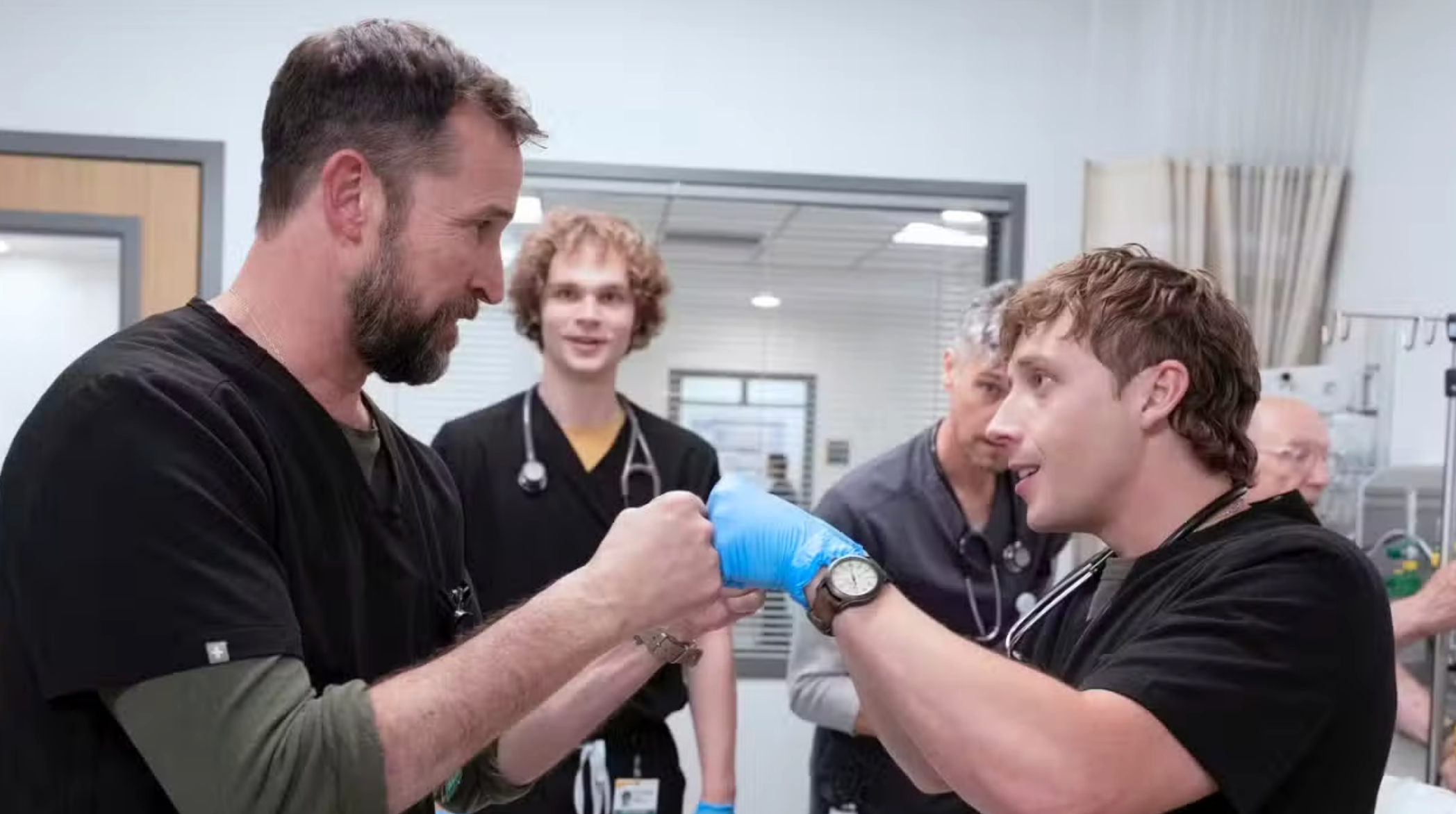
At the centre of it all is Dr Michael “Robby” Robinavitch (Wyle), a seasoned doc whose reassuring smile buries the mental health struggles he’s experiencing following the death of his mentor. Wyle, 54, is perfect casting for the role, having first played ER’s wide-eyed junior doc John Carter when he was 23.
Wyle starred in 11 seasons of ER, before going on to roles in post-apocalyptic sci-fi series Falling Skies and fantasy adventure show The Librarians. He wasn’t keen to return to the medical genre at all – until Covid happened. It was sitting around “feeling useless” while first responders were tirelessly pushed to their limits that made him consider putting on the white coat again. But if the pandemic hadn’t struck, he’d never have considered it.
“I actively avoided playing a doctor,” he tells me. “I thought it was both travelled road and hallowed ground, and that it would be the lowest hanging fruit for me – that if I was gonna go and take advantage of that built-in association, it was almost the hallmark of a career in decline.” Quite the opposite occurred: the show, which Wyle also co-writes and directs, has made him a powerful Hollywood player and a poster boy once again. Rather than signifying an end to Wyle’s career, The Pitt has given it a powerful adrenaline shot.
Ahead of auditions for the show’s ensemble, Wyle sent out a mission statement emphasising the seriousness of the operation. For Gerran Howell, the Welsh 35-year-old who plays doe-eyed medic Dennis Whitaker, it served as a “kick up the arse”. “It was almost like a warning,” Howell remembers. “He basically said, ‘We’re putting together something here that is going to be really, really intense. It’s not for everyone, but we’re giving you the opportunity to be part of something that matters.’ You never get stuff like that.”
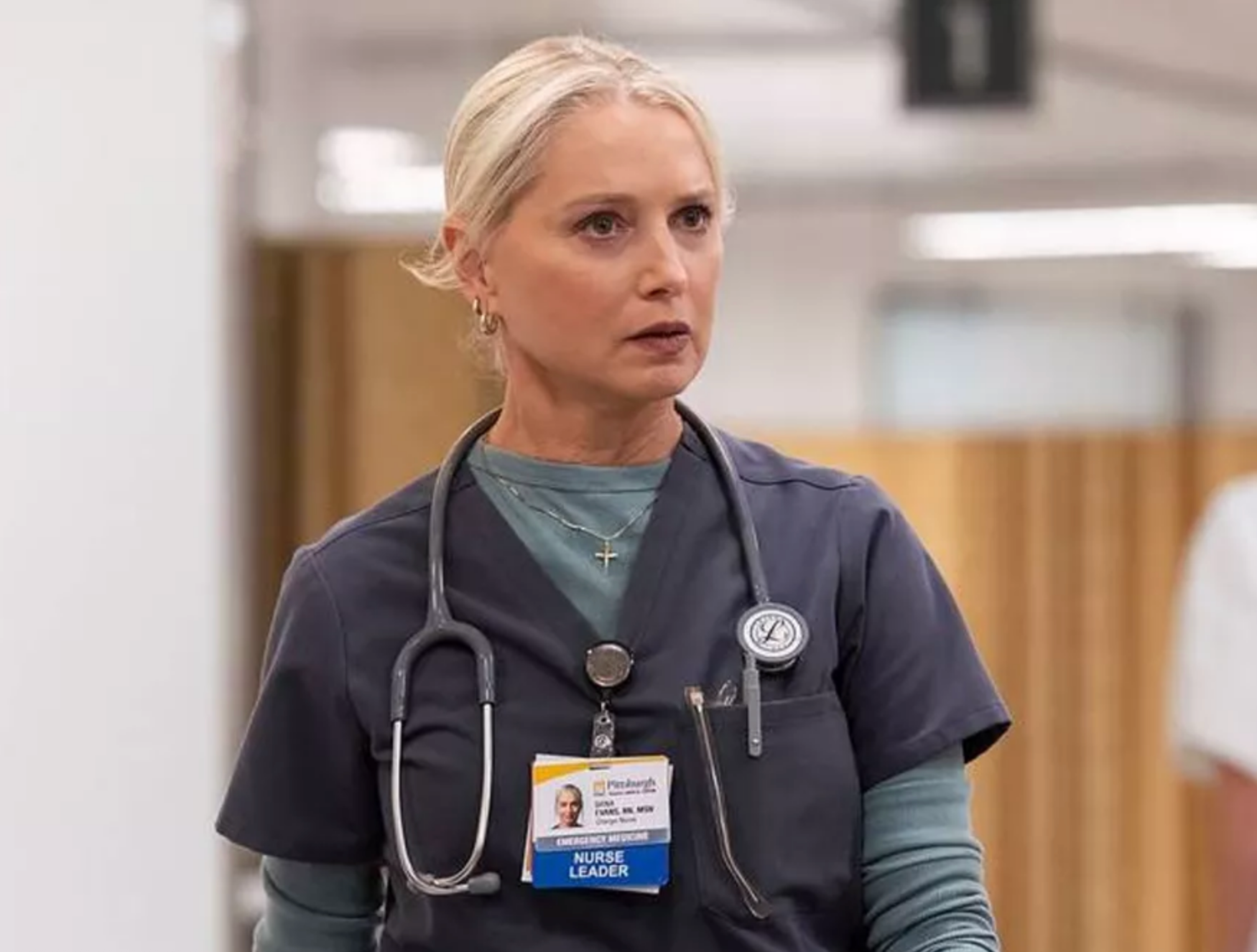
Katherine LaNasa, the actor behind no-nonsense charge nurse Dana Evans, found the audition was a chance to be herself – a first for the 59-year-old who’s been waiting for her big break since 1990. “I had a harder time when I was starting because I was leading-lady-looking in a weird girl’s brain. Networks didn’t know what to do with it. Dana made me feel like I could be myself; that I could be really outside the box and bring all my quirkiness.” LaNasa won an Emmy for her role in September 2025 and it’s no wonder; the actor brings a trustworthy worldliness to Dana. Her sarcastic one-liners land like gunfire, her hard-earned compliments like a warm embrace.
The set of The Pitt is different to most in modern television: there’s a strict no-phone policy enforced and cast members are expected to stick around while co-stars shoot their scenes. Things have come full circle for Wyle, who is now in the position his elder ER co-stars were in when he first walked on set three decades ago. He’s now the one who, to borrow an ER quote, “sets the tone”. But while actors like Anthony Edwards and George Clooney were mentors of sorts for the burgeoning star back then, it was someone else entirely who provided him with the encouragement and empathy he’s a purveyor of today.
“The attitude in which I welcome someone to a set was something that I learned from Rob Reiner, who passed, obviously, this year,” Wyle says. “And so he’s been on my mind and heart a lot. I was in [the 1992 thriller] A Few Good Men and I remember I got to set early, and he saw me and gave me this big hug. He said, ‘Hey man, I’m so excited you’re here. Your audition was amazing. We’re not gonna get to your stuff today, but I’m so happy you’re here.’ It took 15 seconds to make me feel welcome and comfortable. It was just a lesson that I took to heart – everybody wants to do a good job and is terrified that they’re not going to be enough. And so you want to dispel that as quickly as possible.”
The Pitt’s cast members are aided by a team of medical experts, as well as cheat sheets and video recordings phonetically spelling out some of the more challenging medical jargon. And if you’re wondering whether the cast know the meaning behind the phrases they’re throwing around, you bet they do. “I have to know what I’m saying – that way I know the severity of a patient that I’m talking about,” LaNasa explains. Wyle concurs: “I don’t think that you can organically deliver a line if you don’t really understand what it means.” To pull off the trauma scenes, the stars learn their moves like a dance routine – and are often required to get up close and personal with the supporting actors playing the patients.
Howell recalls “this poor kid who had five different instruments in his mouth”. “I was trying to remember the choreography and also trying not to hurt this actor. There’s only so much you can fake! It’s a wacky situation. At the end of it, you don’t know what you’ve done. It’s just siphoned off somewhere in your brain.”
Playing fast and loose with medical terminologies and procedures on TV is a slippery slope – if we say it on the show, you can believe it’s true
Back in 2001, a survey found that one in five doctors were asked about diseases or treatments by patients who had learned about them on ER. Seventeen years since that series ended, The Pitt is striking the same chord: a study by the USC Norman Lear Center found that 27 per cent of the show’s viewership sought information about organ donation after an episode on the subject, with 39 per cent exploring end-of-life planning as a result of another plotline. Crucially, The Pitt aims for accuracy where other medical shows (ahem, Grey’s Anatomy) prefer entertainment. Is there room for both?
“I think there was a lot more leeway to have both when objective medical facts weren’t being debated in the public forum,” Wyle says, a smile masking his frustrations. “And if we’re having medical misinformation spread almost deliberately to keep a population misinformed, then playing fast and loose with medical terminologies and procedures on TV is a slippery slope. Once upon a time, you could go to your doctor and say, ‘Hey, I saw this on ER. Is that true?’ and your doctor would say, ‘Absolutely.’ It became a point of connection, and you could triangulate a conversation through what you saw on the show and what you wanted to talk to your doctor about. That was something we kind of got away from in the past 17 years. We wanted to be able to do that again. If we say it on the show, you can believe it’s true.”
In other words, The Pitt doesn’t take any shortcuts. This goes for the politically contentious topics it tackles, too – season one touched upon vaccine conspiracy theories and gun ownership, while season two looks at the influx of AI tech in hospitals and the increasingly volatile behaviour displayed by Immigration and Customs Enforcement (ICE) agents in the US. Some viewers felt that this latter storyline offered a more nuanced take on the subject than ICE agents deserve. But this was intentional – Wyle tells me that if the show wants to make a stance, “you at least need to give an organic point of view to the opposition”.
“If you honour everybody’s POV and you present it as it is, then it becomes a bit of a Rorschach test: if you’re offended, it says more about what you feel on the subject than what we’re trying to say. And as long as we stay in the perspective of the practitioners, they don’t get to weigh in on politics; they have to treat the injury. So it’s not about what religion you are or who you voted for or what colour of skin you are, it’s about your medical problem. The ER is one of the few environments on the planet where the lines that divide us are not applicable, and everybody is the same. To me, that makes a ripe place for storytelling, but it reminds everybody of our common humanity, right? That we are all, at the end of the day, biological beings with a time clock on us.”
The Pitt isn’t just interested in challenging viewpoints via hot-button issues; it also corrects misconceptions people might have about working in an emergency room. For example, nurses aren’t an appendage, but the lifeblood that keeps the hospital’s heart pumping. “I just really appreciate being on a show that gives so much respect to nurses and hopefully changing the way people see them when they go into the hospital,” LaNasa says. Howell adds that the show has helped the masses learn what medical workers endure daily. “These people can now say, if you want to have a little peek into my life, which I can’t necessarily share with you because it’s so emotionally taxing, just watch an episode of The Pitt and maybe you can understand better.”
The show is about to conclude its second season in the US, and a third is being written. It will premiere in January 2027. A fourth is surely guaranteed. But what does the future have in store for Wyle’s involvement? Recent rumours suggested he might be stepping away, but fear not – it seems like Dr Robby is going nowhere. “I’m committed, not only contractually, but also emotionally, to exploring this for several more seasons,” he says. “I have felt that we’re doing a hospital show that has embedded into it a very specific mental health journey of one individual, and we’re not even to the halfway point of that journey. So I’m really curious and committed to seeing it through.”
‘The Pitt’ season one is available to stream on HBO Max in the UK and Ireland, with episodes from season two airing weekly
Cosby Show alum pictured working at Trader Joe’s catches a break with guest star role
HBO Max has launched in the UK. Accessing its content should not be this complicated
Frenetic, mega-hit medical drama The Pitt finally arrives in the UK – review
The Pitt accused of being ‘too kind’ to ICE agents in latest episode
Adam DiMarco: ‘Filming The White Lotus can be a bit like Survivor’
Kate Mara: ‘Me and the kids live and breathe Arsenal – whether we like it or not’