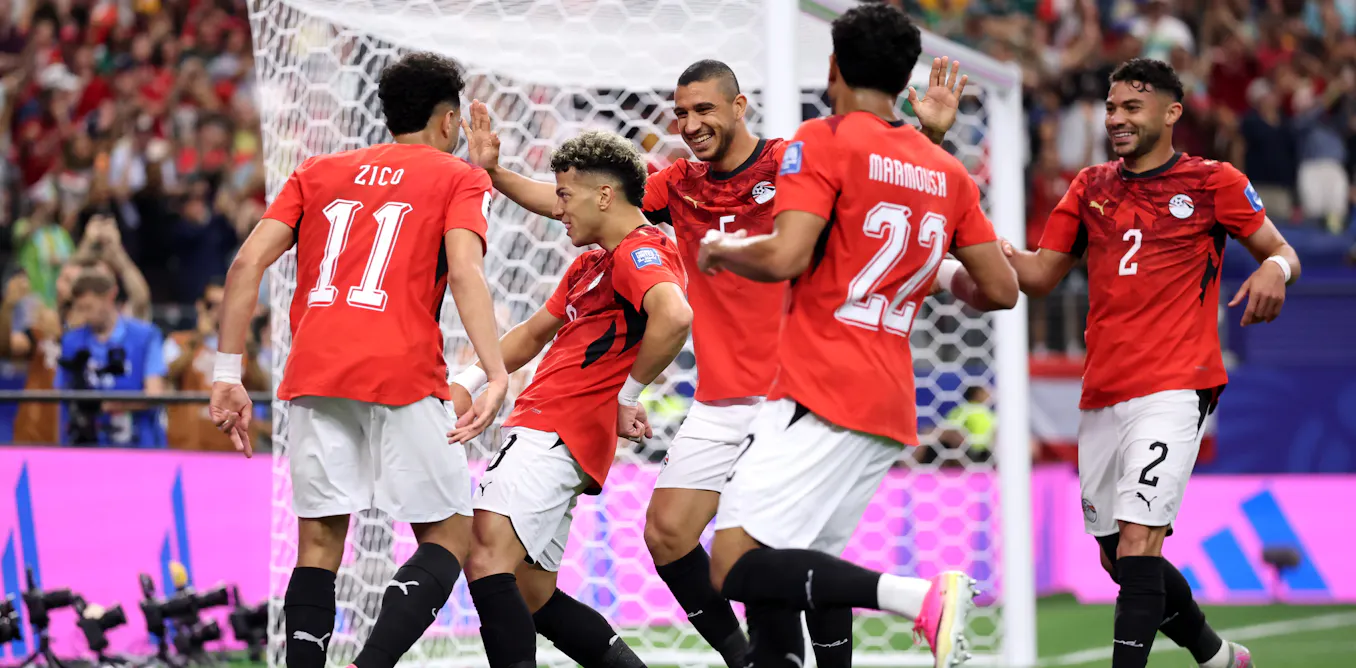
For more than 3,000 years, the Pharaohs ruled one of history’s greatest civilisations. In Dallas, Egypt’s modern-day Pharaohs ruled once more, bringing the Socceroos’ World Cup campaign to an end with a disciplined performance and an emphatic penalty shoot-out victory.
Australia coach Tony Popovic kept faith with the side that had performed so effectively in the third group-stage match against Paraguay. This was the first time in the tournament Popovic’s team selection had done something orthodox.
Popovic’s great mentor, former Socceroos coach Eddie Thomson, always claimed, “Never change a winning team”. Perhaps Thomson’s words still echoed in Popovic’s mind. This time, he resisted the temptation to tinker.
The big news for Egypt was that charismatic captain Mohamed Salah, who had been under an injury cloud, started the match. The Pharaohs also had two forced changes; but on paper had a formidable frontline.
Before the match, Australia’s Jackson Irvine pledged to “give the best version of ourselves”, while Popovic thanked the Australian public, declaring, “thank you whole heartedly […] They (the Socceroos) feel the support and they want to do everyone proud.”
The first half
Australia had the first chance in the fourth minute when Cristian Volpato struck the crossbar with a shot from 30 metres out. But disaster struck when there was a lapse in concentration by the Socceroos defence, and Emam Ashour surged into the box to get on the end of a cross from Karim Hafez as they went up 1–0 in the 13th minute.
Australia looked dangerous from set pieces, but Egypt had the majority of possession.
Australia had a lucky run late in the first half but lacked the quality up front. The Uruguayan referee did Australia no favours, the Egyptians guilty of time-wasting and some clear “roughing”, which wasn’t penalised.
At the stroke of half-time, Australian left-back Jordan Bos was carried off after a shocking tackle which wasn’t penalised. At the half-time break assistant coach Paul Okon was seething about the challenge on Bos and lamented a “cheap goal from a set piece”.
The second half
For the second half Kai Trewin came on for Bos, and within seconds of the second half start, Omar Marmoush produced the miss of the tournament by missing the target one-on-one with the keeper metres out. It should have been 2–0 to the Pharaohs and perhaps game over.
Immediately after this miss, the Socceroos moved into a high press, where the team not in possession defends high up the pitch, and this seemed to rattle the Egyptians. In the 54th minute, Australia received a free kick. The ball was whipped in, and Egyptian player Mohamed Hany scored, heading the ball into his own net. It was 1–1 and Australia was level and back in the game.
Up until the second-half hydration break, it was all Australia. After the break, Egypt started building again, so Socceroos Ajdin Hrustić and Mohamed Toure came on and replaced Volpato and Irankunda in the 73rd minute. By bringing on these attackers, Popovic saw an opportunity to take the game.
It was end-to-end play, with both teams threatening, but in the final two minutes of added time the Egyptians created a number of chances after a couple of amazing crosses by Salah.
If Marmoush gave us the miss of the tournament, Patrick Beach gave us the save of the tournament after Rami Rabia’s rocket header. The Socceroos were lucky to survive the Egyptian onslaught in these final few minutes of normal time.
Extra time
The match moved into extra time, and Popovic made further changes, bringing on fresh legs with Paul Okon-Engstler for Aiden O’Neill and Awer Mabil for Connor Metcalfe.
Immediately after the break, Salah missed the kind of chance we have seen him score dozens of times for Liverpool.
The first half of extra time was an open game with desperate tackles. It was even, and both sets of players were finding space in midfield although the defences were stacked.
The second half of extra time produced much of the same, but with fewer opportunities. Although clearly Egypt had the ascendancy with some poorly executed corners by Salah.
In the final minute of extra time Socceroos goalkeeper Beach was replaced by Mathew Ryan, whom Popovic had decided would be the one to face the Egyptian penalty-takers.
Penalty shoot-out
The Socceroos got off to a terrible start when Harry Souttar sent one into the grandstands. Later, Australia’s youngest player Lucas Herrington did the same, sending his shot against the crossbar.
Ryan didn’t save a penalty.
Much of the narrative this World Cup revolved around Popovic’s selections. It worked well for two matches, and poorly for the other two. The big question will be whether Beach should have been given the chance to face the shoot-out penalties.
World Cup hopes dashed – this time
Popovic entered this World Cup campaign with the focus on the block defence, and it worked well (against Turkey and Paraguay). This approach is based on results and not flamboyant football.
Popovic was a different coach to previous coaches Graham Arnold and Ange Postecoglou. By playing this style he was critiqued both inside and outside the Australian soccer tent. When they conceded early goals (as against the United States and Egypt), the plan went out the window. Once the team went down, they found it hard to pull one back.
Even in this match, the equalising goal came from an Egyptian player who seemed to have been concussed ten minutes earlier. The Socceroos needed to show more in attack.
While this is a crushing loss for Australian players and fans, we should be reminded that among Asian nations, Australia was one of only two to make it to the knockout stage, alongside Japan.
And here too, it’s important to note several of our up-and-coming young players announced themselves on the world stage, including Herrington, Beach, and Nestory Irankunda.
This is a reminder this squad will likely peak in four years’ time. So we look forward to the next tournament with great anticipation.
This article was originally published on The Conversation. Read the original article.