The deadline for initial World Cup ticket applications passed on Tuesday, with many England fans having no idea what they’ll end up paying, despite having to commit. The difference could end up being thousands of dollars, but they now can’t cancel.
Some fans eligible for the limited $60 (£44.75) “category 4” tickets will still be sitting near relatives in the same section, facing thousands of dollars in difference. There have been many similar stories. A number of supporters naturally rushed to book already expensive hotels and flights when the schedule was confirmed on 6 December, only to make the difficult decision to cancel once prices were actually announced a few days later. A new system, which represents an inexplicable shift from all recent tournaments, has ensured some tickets have gone up to five times the price of Qatar. The initial backlash forced Fifa into a minor climbdown, where 10 per cent of tickets for all qualified teams – the Participating Member Associations (PMA) – were brought into a fixed $60 “category 4”. There’s an immense jump to category 3.
Discussion groups involving members of the England Supporters Travel Club (ESTC) feature comments like “obscene”, “blatant exploitation”, a “preying on loyalty and the feeling this is priceless”, and ultimately: “Fifa can stick it. They’ve ruined the best tournament in the world.”
All of which represents a doubt and uncertainty that cuts a very different tone to Fifa’s bombastic press release about “500 million ticket requests” and how this set “a new benchmark for demand in the history of world sport”.
Supporter groups have nevertheless expressed cynicism at those figures, and the manner in which they escalated over the 33-day application period, despite Fifa stating that unique credit card data has been used for validation.
Such claims don’t mesh with experience on the ground. Data from Football Supporters Europe (FSE) – who represent fan groups across the continent – suggests that the level of interest is comparable with Qatar. That tournament barely saw any major fan group travel outside Argentina, Mexico, Morocco and Saudi Arabia. That might end up a concern given that Fifa said on Tuesday the highest number of applications outside the hosts came from Germany, England, Brazil, Spain, Portugal, Argentina and Colombia.
It is certainly a concern as regards how this tournament will feel, look and sound, and whether there will be enough emotionally invested fans to create the atmosphere that really amplifies a World Cup. Essentially, what Argentina brought to 2014 and 2022.
Fans who actually have confirmed orders laugh wryly at the Fifa sign-off – typically underneath figures reaching around $7,000, potentially breaching many credit limits before hotels and flights – that reads: “Thanks for being a true fan!”
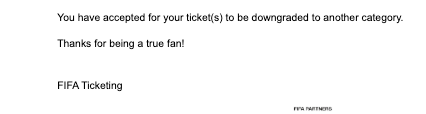
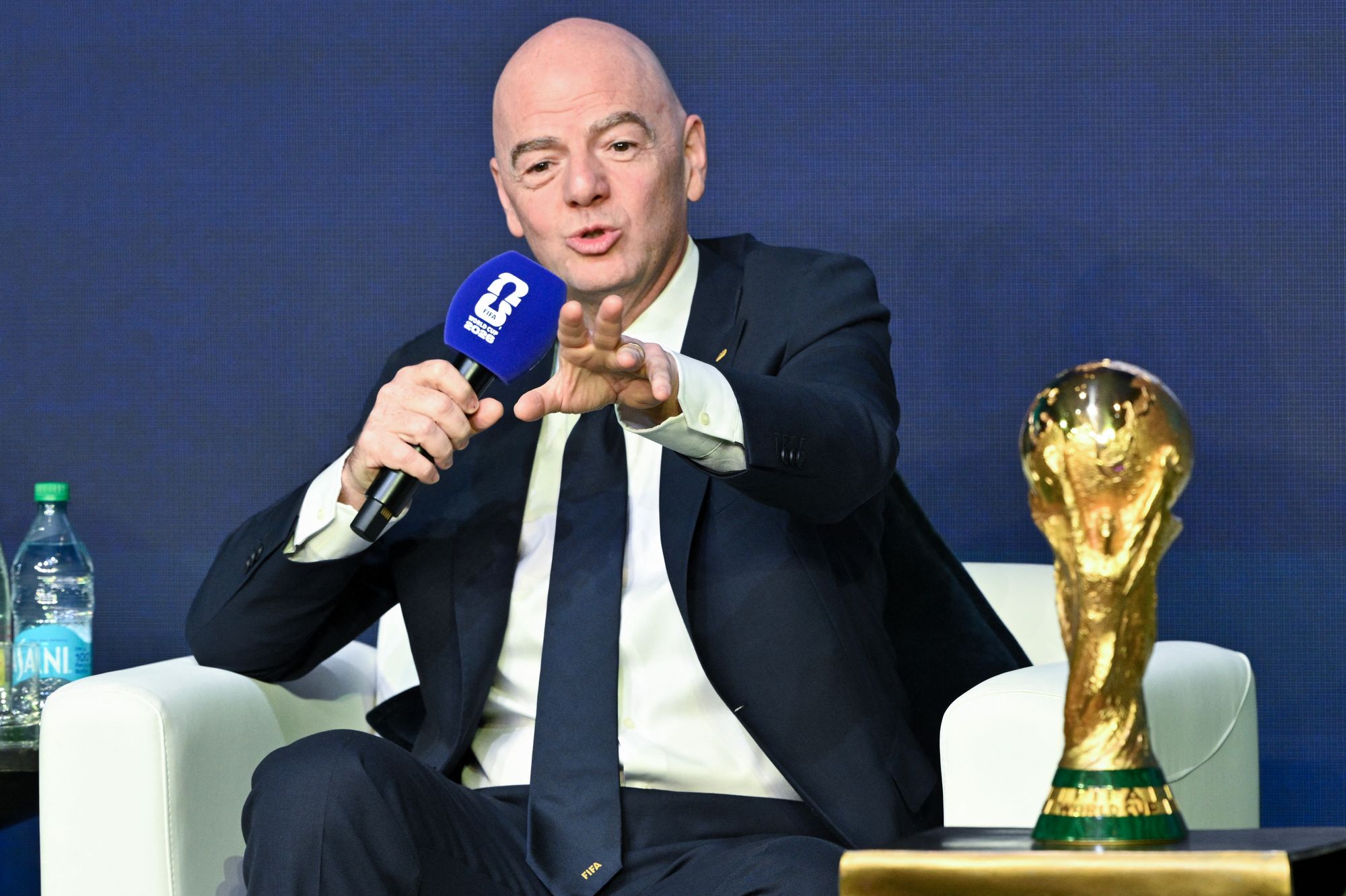
Such marketing speak was echoed by president Gianni Infantino in Tuesday’s statement: “I would like to thank and congratulate football fans everywhere for this extraordinary response. Knowing how much this tournament means to people around the world, our only regret is that we cannot welcome every fan inside the stadiums.”
Except, this gratitude is apparently expressed in prices that ensure only a certain tax band can actually afford to be welcomed inside the stadiums, in a system that doesn’t seem to truly recognise this “meaning”.
As written in The Independent before, the entire story articulates a central tension in 2026 football, which is that between its cultural importance and the will to make it a mere entertainment commodity. Fifa, officially a not-for-profit charity, seems to very much be leaning towards the latter.
Duly, there is a deepening anger at the lack of attention to a genuine social issue within this. The Independent has already reported how the normally protected accessibility tickets are appearing on Fifa’s own resale site at six times the price, amid the controversy that carers will also be charged in a decision that goes against the body’s own statutes on human rights.
By Tuesday's deadline, fans requiring accessibility tickets had no idea if they were paying $60, or if their carer would be forced to pay thousands more. The extra cost was last week criticised by Level Playing Field for fostering further “exclusion”, as they also accused Fifa of a “delay and ignore” approach insofar as neglecting to answer FSE questions.
Those within Fifa privately stress that the US hosting has thrown up more legal complications than any previous World Cup, especially with how legislation prevents requests for proof of disability, leading to the current system.
Fan groups counter that this is another case of “a pinch of truth being expanded to justify the whole ticketing policy”. They argue that Fifa knew all of this years in advance, so could have come up with multiple different solutions or guardrails, and that there’s nothing to prevent making a companion ticket free of charge or putting accessibility in the cheapest category.
They proffer that the same applies to the ongoing debate over the US “secondary market” – in other words, legalised touting – that Fifa insiders say “throws up completely new challenges than anything we’ve faced before”.
.jpeg)
Again, multiple proactive solutions were possible, including protecting PMA tickets from transfer. There’s instead a feeling that Fifa is just seeking to earn resale differences themselves rather than tackle the issue.
That runs alongside ongoing frustration that the FA are not more outspoken on behalf of England fans. The body’s general stance is that the idiosyncratic top-down nature of football politics means they can be most effective in raising issues behind the scenes. It’s understood the FA did relay concerns to Fifa amid the initial backlash, and that this played a part in the creation of category 4 tickets.
However, the highly limited number has created a headache for the FA, as travelling fans who fall just outside the caps needed for $60 tickets face ballots to see whether they are in the much more expensive category 2 rather than 3. Such fans pay £70 every two years to be a member of the ESTC and generally go to at least 11 away games over four years, in the hope that such loyalty will be rewarded, only to be faced with what they feel is “exploitation”.
That has fostered further frustration with the FA strategy, and questions like “what results can they actually point to?” Ultimately, the big nations have never even tried to properly challenge Infantino’s Fifa as a bloc.
For the FA’s part, they have been more proactive than many of their counterparts, amid a lament that the initial backlash has waned. Belgium and Denmark have instead parroted Fifa’s lines about raising money for the global game and the need to conform to the US market.

Such responses also cut to the core of all this, Fifa’s power structure, and how it was decided. Pricing ultimately came from those close to Infantino, with very little information dispersed – even to the Fifa Council.
When pressed, insiders ultimately resort to those same justifications: raising money for the game, and “demand”.
That’s despite Fifa’s immense surpluses coming from the old pricing system, and the key point that they just do not have to concern themselves with demand. What’s more, no previous World Cup has conformed to the host market.
But what of the future? As one senior official said, “the sad part is that it’s probably done”. In other words, the prices are set for this tournament. Just one of many further questions is what happens if it’s a commercial success.
‘Alarm bells should be ringing’ at Fifa as England fans snub World Cup ticket prices
How Trump’s attack on Venezuela backs Fifa into a corner over World Cup
Trump’s latest travel ban leaves fans unable to travel to support their World Cup team
Thomas Tuchel says he will not pick England World Cup squad on pure talent
Trump’s latest travel ban leaves fans unable to follow their World Cup team
FIFA urged to intervene as Israel prepares to demolish West Bank football field