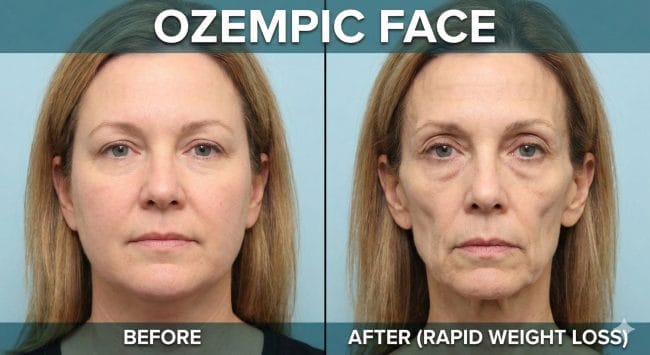
We see the before-and-after photos everywhere. The transformation is always celebrated—the dropped sizes, the defined jawlines, the newfound confidence. But look closer. Look at the texture of the skin around the mouth, the hollows under the eyes, and the crepey quality of the neck. There is a new phenomenon sweeping through medical aesthetics, and it has a name: “Ozempic Face.” It is not a side effect of the drug itself, but rather a biological consequence of speed. When you lose weight faster than your skin can retract, you aren’t just shedding fat; you are collapsing the structural scaffolding of your face. And honestly, no amount of moisturizer is going to fix it.
The Speed vs. Structure Problem
Your skin is an elastic organ, but it has limits. Think of it like a rubber band that has been stretched around a watermelon for ten years. If you slowly shrink the watermelon, the rubber band might be able to shrink with it. If you instantly swap the watermelon for an orange, the rubber band hangs loose.
Drugs like Semaglutide (Ozempic/Wegovy) cause such rapid fat loss that the skin’s elastin fibers simply cannot keep up. You are losing the subcutaneous fat pads that act as the “filler” for your face. These fat pads support your cheeks and keep your under-eyes looking youthful. When they dissolve in a matter of weeks, gravity takes over immediately.
The Loss of Collagen Is Accelerated
Here is the science part that most clinics gloss over. Rapid weight loss puts the body into a state of stress. When your body thinks it is starving (which is essentially what happens when you slash calorie intake drastically), it prioritizes vital organs. It diverts nutrients to your heart, brain, and lungs.
Your skin? That is considered non-essential luxury items by your survival biology. Production of collagen and elastin slows down significantly. So, at the exact moment your skin needs *more* repair resources to shrink, your body is giving it *less*. This is why the gaunt look happens—it is a resource allocation failure.
The “Gaunt” Look Is Hard to Reverse
Many people think, “I will just lose the weight first, and then I will fix the face.” It is not that simple. Once the skin has been stretched and then deflated rapidly, the internal structure is damaged. You can’t just eat a sandwich and have the fat go back to the exact right places in your cheeks.
Nutrient Deficiencies Play a Role
When you are on these medications, your appetite is suppressed. You are eating less. But are you eating *better*? Most people aren’t. They are eating significantly less protein and fewer healthy fats. Your skin requires protein to build collagen and fats to maintain its moisture barrier.
If you are living on 800 calories of crackers and diet soda because you feel nauseous, you are starving your skin from the inside out. The dull, gray complexion often associated with rapid weight loss is a direct result of malnutrition, not just fat loss.
It’s Not Just the Face
While the face gets all the attention because it is what we see in the mirror, this elasticity issue is happening everywhere. We are seeing “Ozempic Butt” (a flattening and sagging of the glutes) and loose skin on the arms and stomach that usually only happens after bariatric surgery. The speed is the enemy here. The drug works so well that it outpaces your body’s natural ability to remodel tissue.
The Hidden Cost of the “Quick Fix”
This isn’t to say you shouldn’t prioritize your health or weight loss. But you need to go into it with your eyes open. The “miracle” comes with a price tag that might be paid to a plastic surgeon later. If you are using these tools, you have to fight for your skin. You need to prioritize protein intake aggressively. You need to hydrate more than you think is necessary.
Preserve Your Glow
We have to stop treating weight loss as a race. The goal is health, and part of health is maintaining the integrity of your body’s largest organ—your skin. Slow down. Your face will thank you for it.
Join the Discussion
Have you noticed changes in your skin after weight loss that no one warned you about? Share your experience in the comments to help others prepare.
What to Read Next…
- 8 Supportive Strategies: How to Encourage Weight Loss Without Being Annoying
- 8 Weight Loss Tips That Can Have You Down 20lbs In 90 Days Without Ozempic
- Preventing Muscle Loss After 40: Key Strategies
- 9 Fitness Tricks That Keep People Over 50 in Shape Without a Gym
- 9 Fitness Habits Women Swear Work But Men Roll Their Eyes
The post The “Ozempic Face” Reality: What Rapid Weight Loss Is Doing to Skin Elasticity appeared first on Budget and the Bees.