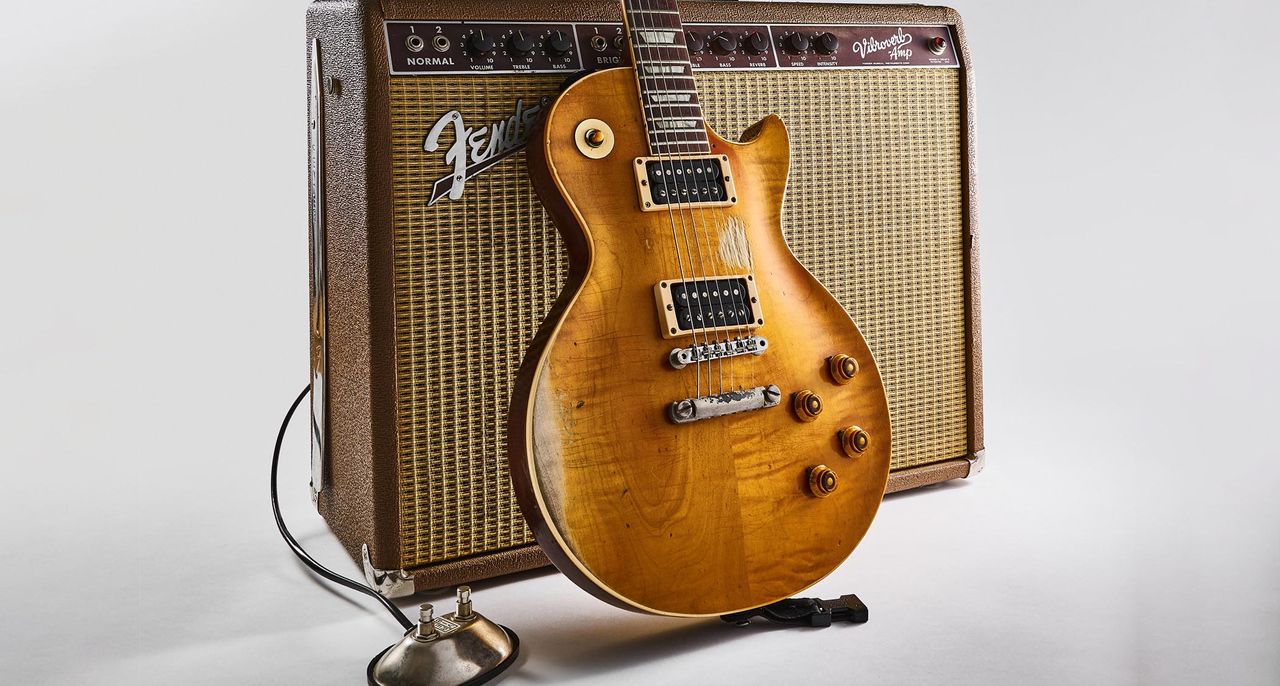
“Stripe? Oh, my God, was that something else!” Steve Clarke chuckles, referring to Gary’s well-played and honey-toned ’59 Les Paul Standard, which does not form part of the Bonhams auction of Gary’s gear per se but is being offered for private sale POA via Bonhams instead, at the behest of the estate.
The origins of its nickname ‘Stripe’ remain obscure, but, thankfully, the rest of its particulars were easier to pin down.
“Well, firstly I can give you some pickup measurements,” Steve says. “The bridge is 7.74k and the neck is 7.36k. That’s what they come out at,” he observes, agreeing that this is incidentally similar to how manufacturers would balance the windings of a pickup set today; typically, if you have a neck and bridge pickup of equal output, the neck will sound louder due to the greater stridency of string vibration near the end of the fretboard as opposed to closer in to the bridge.
“Thus, modern balanced sets of pickups often feature a bridge pickup that’s wound slightly hotter to compensate and avoid a volume mismatch with the neck.
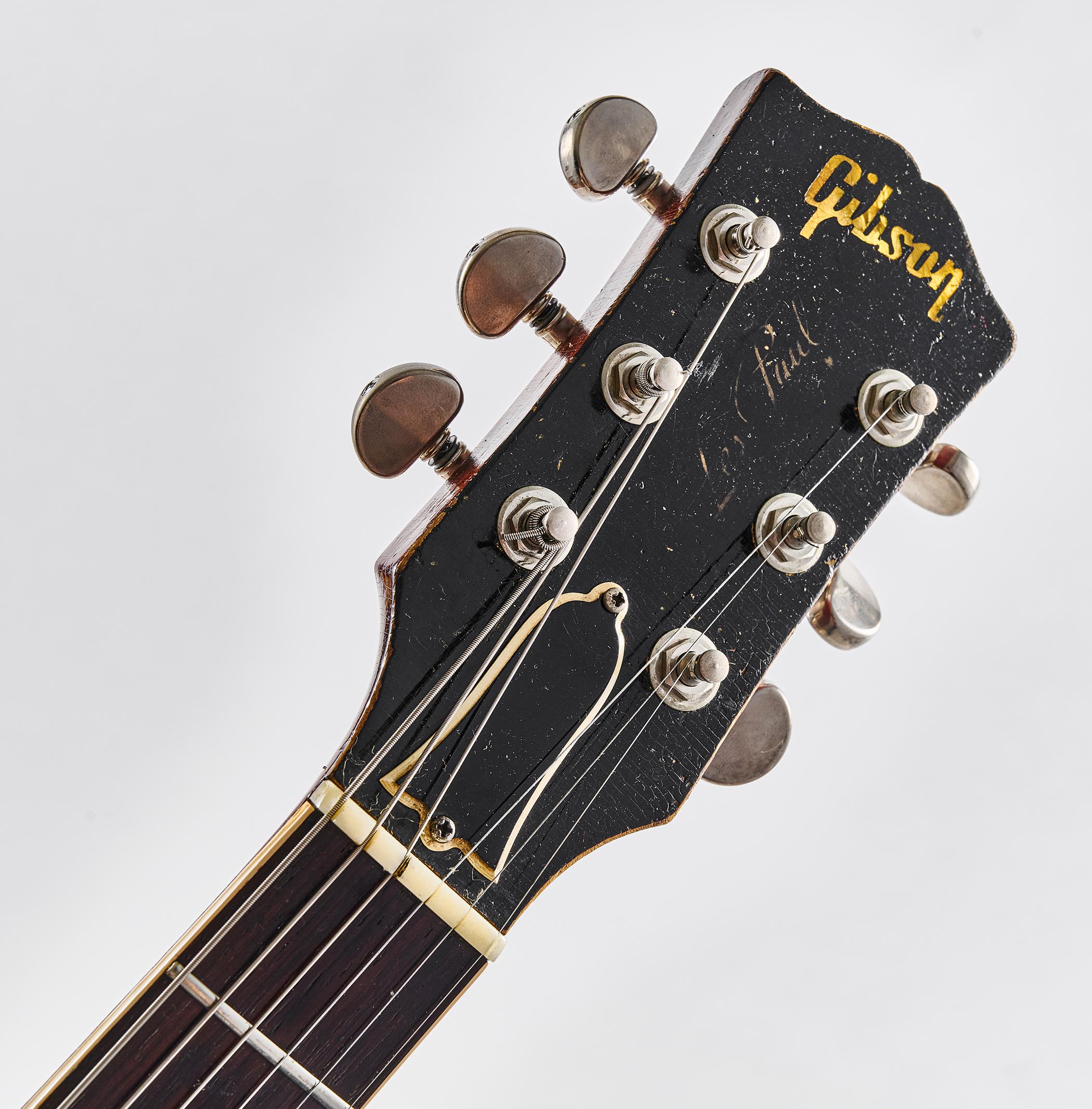
Steve’s measurements also shed light on a lesser known feature of some ’Bursts of the era. The headstocks often taper longitudinally, being slightly thicker at the nut than at the ‘logo’ end to add a little extra strength to the notorious weak spot where the neck transitions into the headstock.
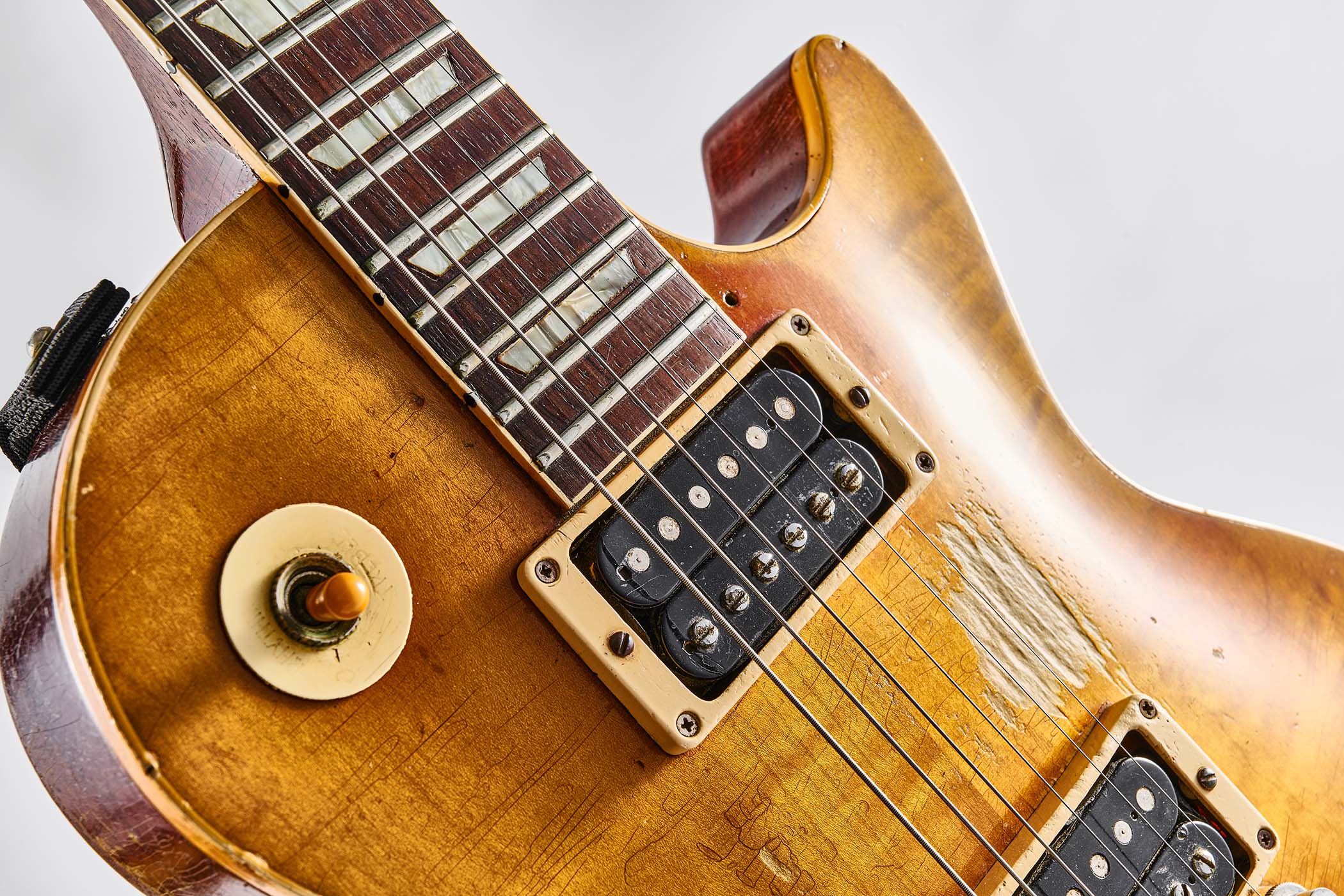
“I took a measurement from the headstock thickness on the low E tuner side, and it was 16.56mm, tapering to around 15.9mm by the D tuner on the same side,” Steve explains.
“It’s got Grovers on it, obviously, and it’s got a later-type ABR-1 bridge on it [post-1962], the one with the retaining wire over the saddles. So that had been changed from the original. But it’s clearly been a long time [since the update] as it’s quite worn out.”
Steve adds that, like many guitars that have been played hard in a professional context, some of the electronics have been swapped out for replacement parts, presumably due to component failure on the road or in the studio.
“The neck volume and tone [pots] have been replaced. But the bridge volume and tone are original; they’re the ones.”
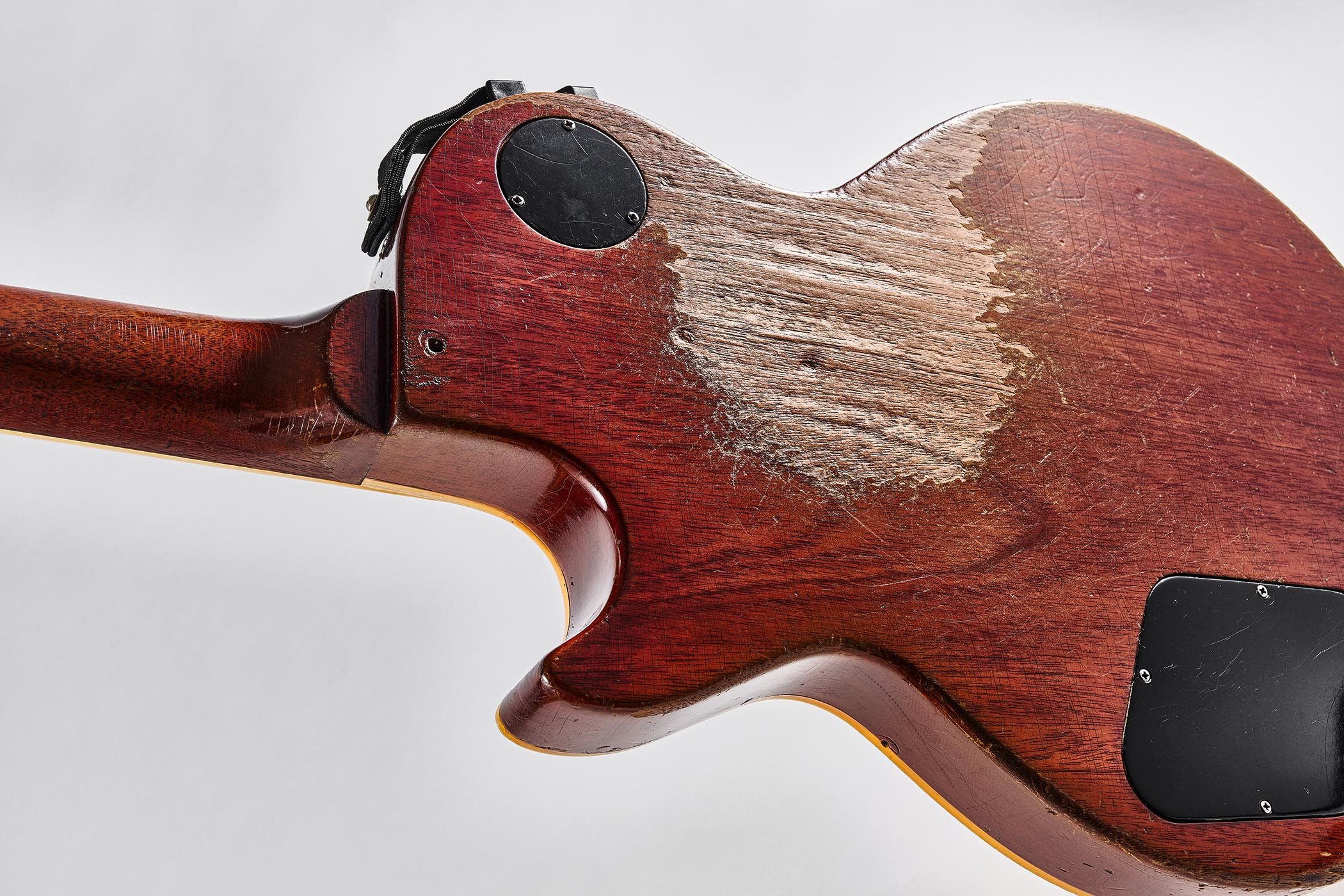
Steve adds that preparing such historic and valuable guitars for auction often involves sympathetically (and very carefully) attending to minor faults that prevent the guitar being used and enjoyed – always providing its provenance or originality isn’t adversely affected by any remedial work.
Such was the case with Stripe’s neck pickup. But while completing minor repairs, he does get the chance to further record subtle idiosyncrasies of the guitar’s construction.
“When I picked it up, the neck pickup wasn’t working – very intermittent, it just wouldn’t come on. So I took it apart and looked, checked all the parts. There was a lot of gunk in there, the usual thing. But I got it working in the end, after cleaning it up.
“But in the process I made a note that the neck pickup has got the early brass bobbin attachment screws, whereas the bridge pickup has got the steel screws on the plate at the bottom. So two different [screw types] and, again, that was a transitional thing.”