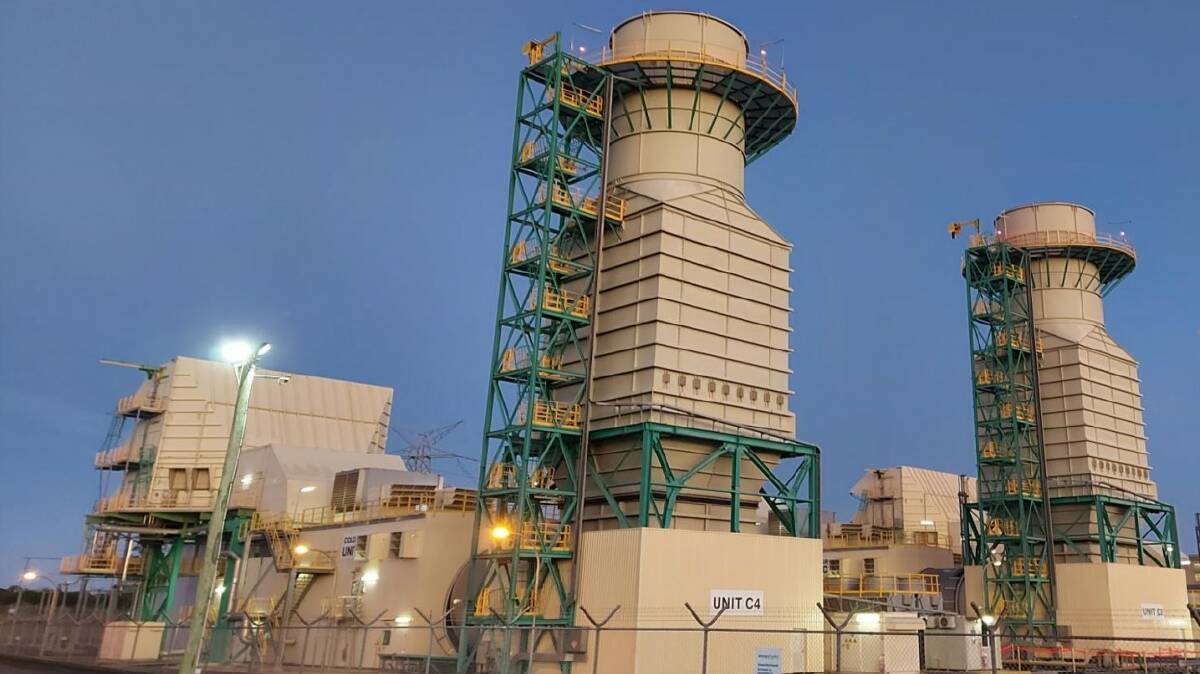
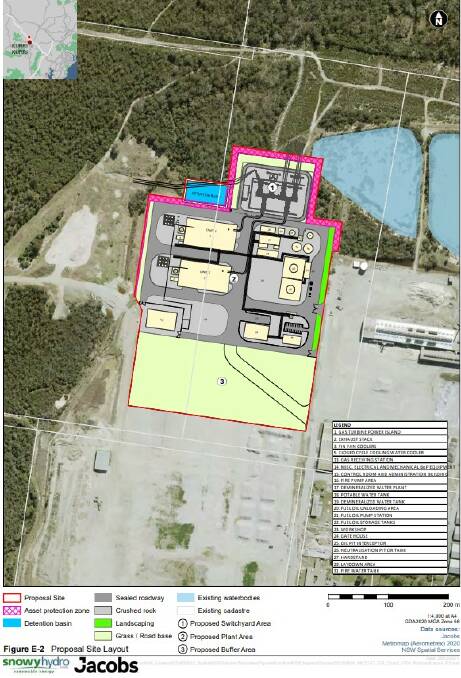
ALTHOUGH the government is yet to commit financially to the project, the release of an Environmental Impact Statement for the Kurri Kurri gas-fired electricity generator can be read as a sign the federal government is serious when it says it will intervene if the private sector cannot provide sufficient reliable power to replace the Liddell power station, scheduled to shut in April 2023.
Bizarre as it will seem to many, this is a $610-million plant being built to run for an average of a week a year. That's why such plants are called "peaking plants" or "peakers". They are designed to run only at times of extreme power shortage.
Similar mathematics already apply to the Colongra gas peaker, built by Delta Electricity in 2009 and sold to Snowy Hydro - which would also operate Kurri - in 2014.
The China Light and Power owned EnergyAustralia also recently announced it will double the size of its gas power station at Tallawarra in the Illawarra, although only after government subsidies of more than $80 million were promised. Tallwarra B is also described as a "peaker" plant.
Peaking plants operate, financially, on the basis that wholesale power prices charged by generators to distributors are demand driven.
Long-run average prices are about $35 to $70 a megawatt-hour, varying from state to state, but prices can rise to a cap of $15,000 a megwatt-hour - hundreds of times the usual cost - in times of shortages.
This is when peaking plants make their money. It may also help explain why just 10 full-time jobs are needed to run the Kurri plant.
Critics of gas as a transitional fuel say we can move directly to renewables, but as we have observed previously, Australia has nowhere near enough battery or hydro capacity to provide power when the sun is not shining or the wind not blowing.
Even so, the climate-change driven political pressures to shut down the coal-fired stations that still provide 80 per cent of our power in NSW will only increase.
As we report today, the brown coal power towns in Victoria's Latrobe Valley face existential threats to their livelihoods, and the parallels with the Hunter and Central Coast coal and power communities are obvious.
Yet as boosters talk of the new gas stations as being "hydrogen capable", the reality is that gas shortages mean they must run at least some of the time on highly polluting diesel.
The ironies, all too sadly, abound.
ISSUE: 39,525