Iceland mosquito discovery : For most people across the world, mosquitoes are a part of life. They buzz around on warm evenings, leave itchy bites behind, and seem to appear almost everywhere. Iceland, however, has long been known as one of the few places where mosquitoes had never been recorded.
That is no longer the case. The Icelandic Institute of Natural History has confirmed the country's first recorded mosquito finding after three mosquitoes were discovered in Kiðafell, Kjós, during mid-October, as per a report. While the discovery does not mean Iceland is suddenly facing a mosquito problem, it marks a significant first for the island nation.
The Discovery That Ended Iceland's Mosquito-Free Status
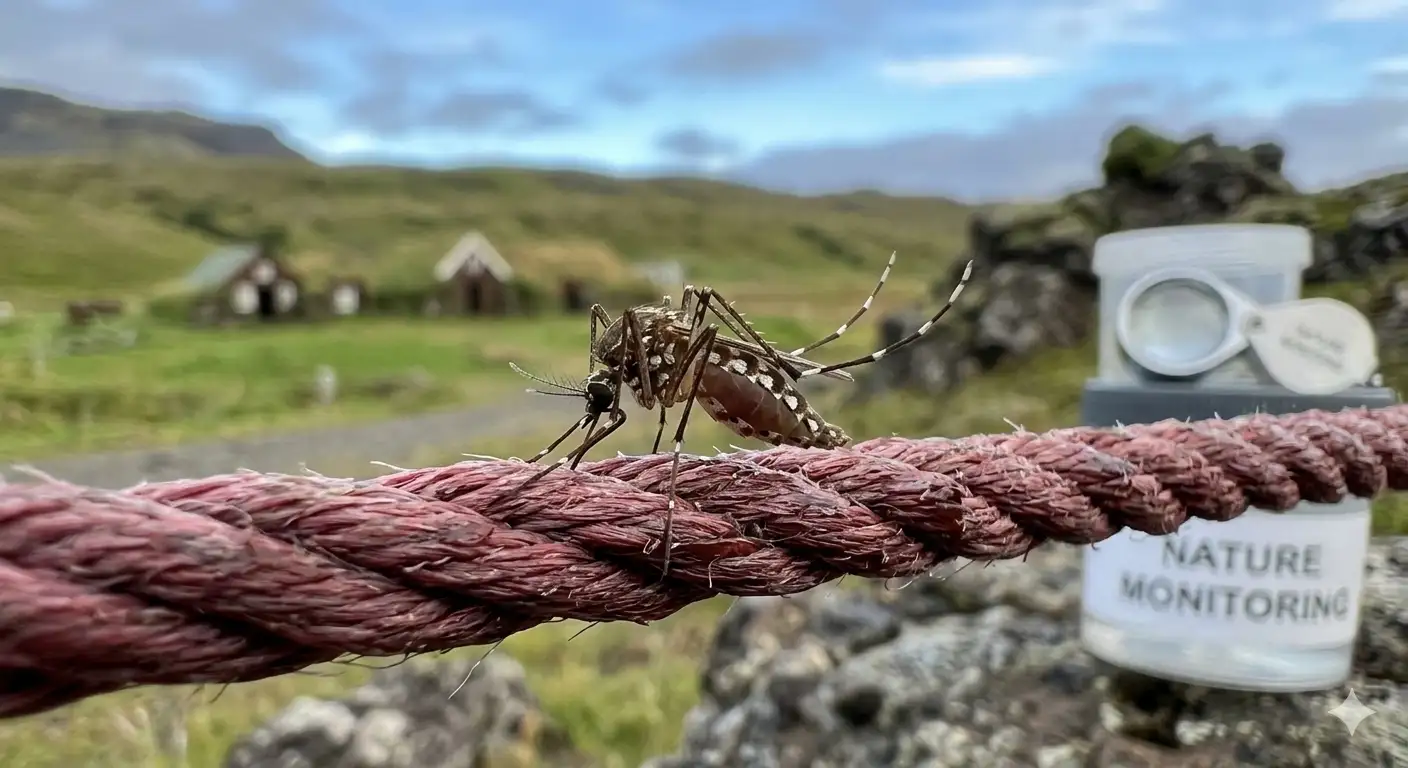
The insects were found between October 16 and October 18 on a red wine rope that had been set up to attract moths at a farm in Kiðafell, as per an Eco News report.
The mosquitoes were later examined by specialists, who identified them as Culiseta annulata. The group included two female mosquitoes and one male.
The insects were collected by Björn Hjaltason after he noticed an unusual insect at dusk and decided to have it identified, as per the report.
Scientists say the finding of both male and female mosquitoes makes the discovery particularly noteworthy, even though it remains unclear whether the species has established itself in Iceland.
What We Know About the Mosquito Species Found in Iceland
The species identified, Culiseta annulata, is already found across much of Europe, including colder northern regions, as per the Eco News report.
According to the Icelandic Institute of Natural History, the mosquito is well adapted to cool climates and can survive winter as an adult by sheltering in places such as barns, basements, and other protected structures.
That ability helps distinguish it from mosquito species that are more commonly associated with warmer climates.
Why Scientists Believe It Could Survive
Iceland's environment contains ponds, marshes, and damp areas where mosquito larvae could potentially develop if water remains unfrozen for long enough, as per the Eco News report.
Because Culiseta annulata is already capable of surviving in colder regions, researchers believe it has characteristics that could allow it to persist under suitable conditions.
Climate Change May Be Part of the Picture
Researchers say the finding fits with broader environmental changes being observed across northern regions.
Studies have shown that the Arctic has warmed nearly four times faster than the global average in recent decades. Warmer conditions can extend thaw periods and create longer stretches when standing water remains available.
For mosquitoes, standing water is essential because it serves as a breeding habitat for larvae.
While experts are cautious about linking a single event directly to climate change, they note that warmer conditions can make survival easier for cold-tolerant species, as per the Eco News report.
How Did the Mosquitoes Reach Iceland
Scientists do not yet know exactly how the insects arrived. According to the Icelandic Institute of Natural History, freight transport is considered the most likely explanation, as per the Eco News report. Small insects can travel inside cargo shipments, containers, and transported materials moving between countries.
However, arrival alone does not guarantee survival. A species must also find suitable conditions if it is going to remain in a new location.
Is There a Health Risk
The institute says there is currently no reason for alarm. Although Culiseta annulata does bite humans, it is not known to carry relevant diseases in the region. For now, the discovery is being treated as an ecological development rather than a public health concern, as per the Eco News report.
Scientists Continue to Monitor the Situation
Researchers say it remains too early to know whether the species has become established in Iceland.
The institute noted that several new insect species have been detected in the country in recent years, partly linked to increased transportation and a warming climate.
Scientists have also asked the public to report possible mosquito sightings and provide photographs or samples to help with future monitoring efforts, as per the Eco News report.
FAQs
Where were the mosquitoes found?They were discovered in Kiðafell, Kjós, in Iceland.
Are these mosquitoes dangerous?
The species is not known to carry relevant diseases in the region.