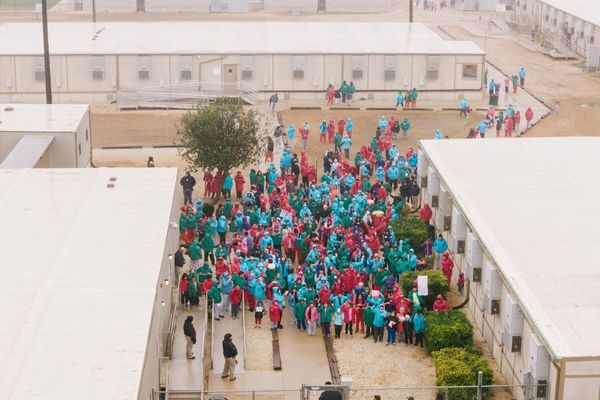
It is today’s children and young people who will suffer the worst long-term consequences of this pandemic on their lifelong earnings, job prospects and mental health. Yet they have consistently been consigned to the bottom of the priority heap.
From its botched reopening of schools, to its abject failure to provide structured activities over the summer for children who have missed out on three months of school, to its lack of solutions for young people starting university in a time of social distancing or trying to get a first job in a hostile labour market, this is a government that has consistently shown a lack of care, creativity and willingness to invest in minimising the scars this pandemic will leave on a generation.
Last week’s fiasco over the allocation of A-level grades is the latest episode to illustrate this government’s callous disregard for the impact these past few months have had on young people. It was always going to be difficult to design a process for assigning grades to young people who have been out of school for months and who have been denied the opportunity to sit these exams; this has been made trickier by this government’s move from coursework and modular tests towards a heavier reliance on final exams. Yet given the weight placed on them for university entry and future employers, ministers had to find a way of assigning grades in as fair a way as possible.
There was never going to be a perfect way to do this. It was right that the government took into account teacher-predicted grades, an individual’s past performance and historical school performance. But an algorithm was always going to produce deeply unfair anomalies. To reduce these, Ofqual should have allowed for a generous amount of grade inflation for this group of young people and implemented a robust moderation system that would have allowed schools to appeal against unfair outcomes before the results were made public, and in good time for university applications.
Instead, it relied on a crude and rigid algorithm that placed too much emphasis on class-level teacher rankings, which unfairly awarded Us to students not even given a chance to take the exam and which – by Ofqual’s own admission – is estimated to have at best got only six in 10 grades correct. In a stratified university system where the difference of one or two grades can make all the difference as to whether someone gets into their preferred – or even backup – university, this was not good enough. While the government says that, on average, the attainment gap between young people from disadvantaged backgrounds and their peers has remained steady from last year, there are plenty of examples of highly able and lower-performing students from disadvantaged backgrounds who have had their grades significantly downgraded as a result of the way the algorithm works.
Justifying this with reference to “on average” shows a misunderstanding of the impact this risks having on some young people who have worked hard and the terrible injustice they rightly feel has been done to them. That the algorithm effectively ignored teacher ranking for small classes also gave an advantage to socially exclusive private schools. And, unbelievably, it has emerged that Ofqual rejected advice on its algorithm from statistical experts recommended by the Royal Society of Statistics on the basis that they would not sign a non-disclosure agreement.
The lack of clarity about any appeals system made things worse: Gavin Williamson was clearly making up policy on the hoof last week that later had to be amended as it was revealed as unworkable. Schools and young people still do not know how and over what timeframe the appeals process will work, even as young people are at risk of losing university places or are applying for jobs. It is an utter shambles.
What makes this so astounding is that these issues were entirely predictable and that they played out just a week earlier in Scotland. It displays rank incompetence and/or a lack of care for the impact on young people who have already suffered hugely that neither the education secretary nor prime minister intervened to avoid this happening.
The government must prioritise three things this week to try to address the huge problem it has created. First, it must ensure that young people from disadvantaged backgrounds are not held back. This might involve upgrading their A-level results to teacher predictions or working with universities to ensure that all those who have conditional offers have them honoured on the basis of their predicted grades. Second, it must work up a fair and timely appeals system. And third – even if this means delaying the publication of GCSE results this Thursday – it should reduce the crudeness of the algorithm based on feedback from this last week and only publish these results once the appeals process is crystal clear.
Two months ago, we set out a manifesto for children and young people to try to minimise the impact this pandemic will have on them for the rest of their lives. The government has continued to display outrageous levels of negligence towards the next generation. There has been none of the creativity, imagination and investment that we have seen in relation to the economy. And so Boris Johnson will – rightly – long be held to account for the decades of problems his lack of action is storing up for many of today’s children and young people.