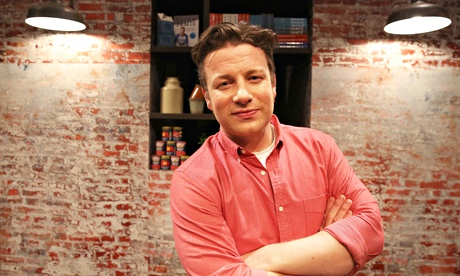
A decade on from his school dinners campaign, Jamie Oliver is back fighting a new war, this time against unhealthy levels of sugar in the nation’s diet. Once again, Oliver’s battles against vested interests and public ennui makes for an entertaining narrative. As Oliver acknowledges, if school dinners was Star Wars, then Sugar Rush, his documentary to be broadcast this week, is The Empire Strikes Back.
Oliver is genuinely alarmed by the impact that sugar is having on the young – and with good reason. That there is an epidemic of bad teeth and type-2 diabetes, costing the NHS billions a year, is not disputed. That it is on the rise is equally accepted. What is up for discussion, however, is the best way of combating these problems.
Oliver’s favoured weapon is a 20% levy on sugar-sweetened drinks, something that in places as diverse as Mexico, Finland and Hungary is credited with encouraging consumers to switch to healthier beverages. Not everyone agrees. The Food and Drink Federation counters that, after an initial fall when a similar measure was introduced in France, consumption of soft drinks rose.
There will be plenty such counter-arguments thrown at Oliver as the soft drinks industry seeks to destroy his arguments. Nevertheless, many experts, including the Royal College of Paediatrics and Child Health, now believe a tax is one of many measures that should be considered if the UK is to lose its sweet tooth.
Historically, the sugar industry has proved adept at portraying any attack on it as an attack on consumer freedom, a strategy employed by big tobacco. But for too long the industry has successfully obfuscated the debate around what constitutes healthy levels of sugar in a diet.
It seems astonishing, bordering on the archaic, that the UK has maximum sugar guidelines for adults but no specific equivalent for children. Oliver’s latest crusade encourages us to ask important questions. May the force be with him.