In the early summer of 1975, thousands of people lining an avenue in central Madrid witnessed an extraordinary moment of history. Propped up in the rear seat of an open, horse-drawn carriage, surrounded by trotting cavalry, sat a gaunt, wizened old man wearing military uniform and a too-big hat. His appearance was greeted by clapping and cheers. But he seemed unable, or unwilling, to respond to the crowd.
Perhaps Francisco Franco, civil war general, fascist dictator, collaborator with Hitler and Mussolini and the all-powerful caudillo of Spain for the preceding 36 years, felt it was beneath him. Or perhaps he felt unwell. Only months later, Franco was dead and the Spanish people began another long march, towards democratic rule and an uncertain, slow-motion reckoning with a terrible past.
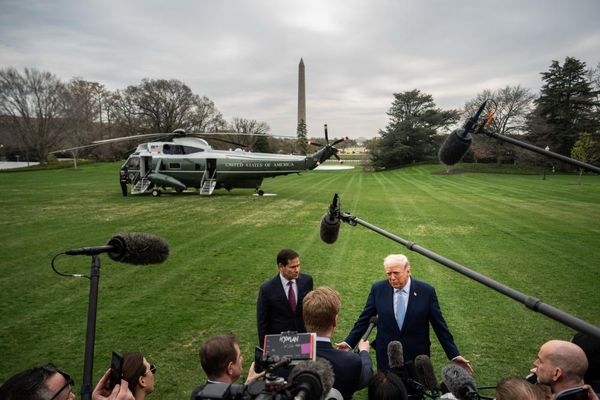
A hugely significant step along that twisting path came last week. Franco’s corpse, interred for the past 44 years in a grandiose mausoleum in the Valley of the Fallen north of Madrid, was dug up and transferred by helicopter to a family tomb in an ordinary cemetery, with no flags or honours. His oppressive memorial had become an intolerable symbol of unaddressed injustice and unassuaged pain. It had to fall.
Reburying the dictator will not bury Spain’s past. The reckoning that was put off in the early post-Franco years for fear of stirring up old ghosts, in what has been described as an unwritten “pact of forgetting”, has long since arrived. The Law of Historical Memory, passed in 2007, gave added impetus to public pressure for greater transparency and debate about what really happened, and to whom, in the fascist era. This process has a long way to run – and an unrepentant rightwing minority resents it intensely.
Finding the courage to face up to the past, in the name of reconciliation and forgiveness, is a challenge many countries and societies still prefer to duck. If they do not avoid such self-examination altogether, they make half-hearted, grudging stabs at apology and amends, while dodging responsibility and admitting little. There are notable exceptions. Post-apartheid South Africa’s Truth and Reconciliation Commission, founded by Nelson Mandela, is often cited as a paradigm of restorative justice.
Postwar Germany provides another instance of a people trying hard to come to terms with a dreadful legacy. As Susan Neiman makes clear in her new study, Learning From the Germans: Race and the Memory of Evil, it was never easy. In the years following 1945, denazification was a haphazard and flawed business.
But slowly, through public education, war crimes trials and Holocaust memorials, the process of Vergangenheitsaufarbeitung – literally, working through the past – has bought a degree of closure. Less persuasive is the record of Germany’s former ally, Japan. Its leaders have repeatedly apologised for past crimes. But not unlike Franco’s mausoleum, Tokyo’s Yasukuni shrine commemorating Japan’s war dead is seen by China and others as symbolic of a qualified remorse.
Countries such as the US and Britain, perhaps because they habitually place themselves on the right side of history, find it even harder to accept or account for old wrongs. Recent controversial decisions to remove Confederate flags and statues deemed offensive to black Americans contrast oddly with the bigger failure to offer a formal national apology for slavery – and offer reparations.
Most British people appear to believe, meanwhile, that the British empire, the biggest skeleton in the national closet, was an unreservedly good thing, despite much shameful evidence to the contrary. When Justin Welby, the archbishop of Canterbury, apologised last month for one of its most notorious excesses, the 1919 Amritsar massacre, he was criticised at home. Britain badly needs a dose of Spanish-style candour about its history, if only because, as William Faulkner warned: “The past is never dead. It’s not even past.”