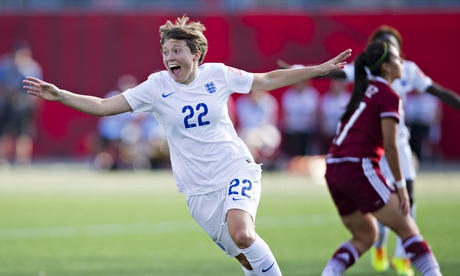
One-hundred-and-twenty-eight footballing nations competed for a place in the 2015 Women’s World Cup. England was one of the 24 to qualify for the finals and, tomorrow, they are in the final 16, playing Norway. We wish them well. The team, including Fran Kirby and Karen Carney, give inspiration to the thousands of girls who love football but who, according to a poll for the FA, still don’t have the confidence to admit to their passion.
England player Alex Scott was scouted by Arsenal at eight and went on to play for the club and in the United States. In 2011, she set up the country’s first football academy for girls , based at Kingston College in London. It is part of a growing picture that shows how women’s football is flourishing against the odds. Social media and Twitter have played their part, as have websites such as SheKicks.Net.
The FA, after years of inertia, has declared its intent via a campaign, We Can Play, to make women’s football the second most popular participatory sport in the country, after the men’s version. It has provided some investment for professional women players, yet they still earn less in a year than many of their male equivalents earn in a week.
Around the world, 30 million girls and women play football, yet in its long history, it took until 2013 for the the now tarnished Fifa to elect the first woman – Burundi’s Lydia Nsekera – to its executive. In 2014, the winning team in the men’s World Cup was awarded $35m. The champions of the women’s world cup this year will receive $2m.
Inequality counts in terms of social justice, but it also dictates the size of the platform that women’s football is given in every country. For those who fancy watching the game tomorrow, in the UK, for instance, they will find it on BBC 3 at 9pm.
It’s hardly Gary Lineker and primetime viewing on a Saturday night, but once legions of female football fans find their voice, as they will, it’s only a matter of time.