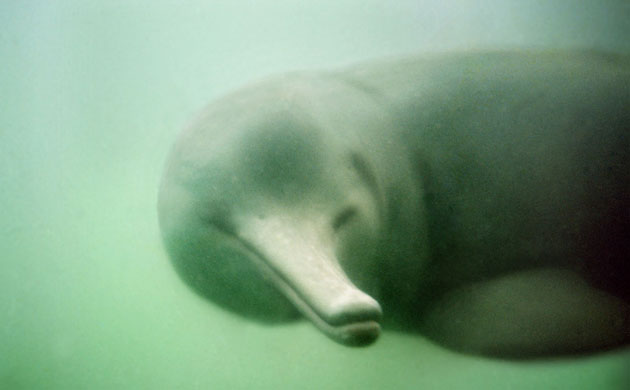
Also called Changjiang, Chinese lake, white flag, whitefin or Yangtze River dolphin - is probably the most threatened cetacean species in the world. The last documented sighting of the species was in 2002 and surveys in 2006 failed to find any individuals in its native Yangtze River in China. The species has been listed as critically endangered since 1996, but in 2007 it was reassessed as and flagged as possibly extinct. Entanglement in fishing gear, electric fishing practices, boat propeller strikes, dam construction, river siltation (from deforestation and agricultural expansion), and pollution have all contributed to the dramatic declines of this species Photograph: Nick Gordon/Ardea

Listed as critically endangered (possibly extinct). The total population of this species almost certainly numbers less than 50 mature individuals, and in fact may already be extinct. Recent surveys throughout much of putative range in northern Cameroon have failed to record any individuals but found widespread evidence of poaching. Like most other black rhino populations, this subspecies has undergone a decline exceeding 80% over the past 50 years or so, and it is feared extinct.
International Rhino Foundation
Rhino Resource Center Photograph: Tim Davis/Corbis
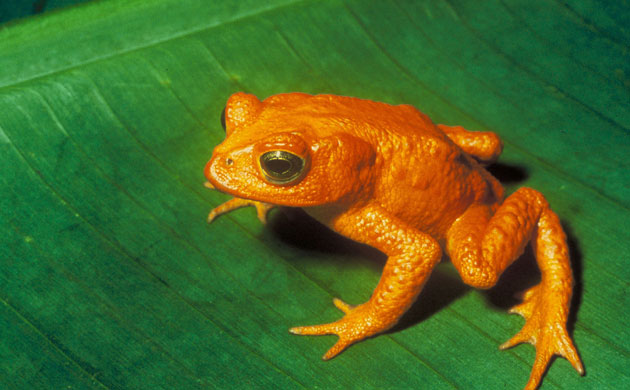
Once a common species, no specimen has been seen since 1989 in Costa Rica. It last bred in normal numbers in 1987, and its breeding sites were well known. In 1988, only eight males and two females could be located. In 1989, a single male was found, and was the last record of the species. Extensive searches since this time have failed to produce any more records (as of August, 2007) Photograph: U.S. Fish and Wildlife Service

Listed as extinct in the wild after the last two known individuals disappeared from Hawaii in 2002. Habitat alteration, collecting and shooting, introduced predators (including rats and the Indian mongoose) and predation from the native Hawaiian hawk, and avian malaria and pox carried by introduced mosquitoes have contributed to the crow’s decline. Some individuals remain in captive breeding facilities and a reintroduction plan is being developed Photograph: U.S. Fish and Wildlife Service

Regionally extinct in the Seychelles. Range contraction has been observed since 1972 and no pure specimens have been located since 1994 despite careful searches Photograph: Dr. Justin Gerlach

A tree endemic to St Helena and now extinct in the wild. After settlers arrived on the south Atlantic island, the species was heavily exploited for its excellent timber and bark which was used for tanning hides. By 1718, the species was already extremely rare. Further losses occurred when flax plantations began in the late 1800s. By the mid 20th century, only one redwood survived and this single tree is the source of all the redwoods known in cultivation today. Inbreeding depression and a limited gene pool form the most serious threat to the future survival of this species Photograph: ARKive/Andrew Darlow

The Po'o-uli, also known as the black-faced honeycreeper, is endemic to Maui in the Hawaiian islands, where it was discovered in 1973. The species has been listed as critically endangered (possibly extinct). Of the three known individuals in 1998, one died in captivity in 2004 and the remaining two individuals have not been seen since 2003 and 2004. Continuing surveys in all areas of potential habitat are needed to confirm that no other individuals survive Photograph: Paul E. Baker/USFWS
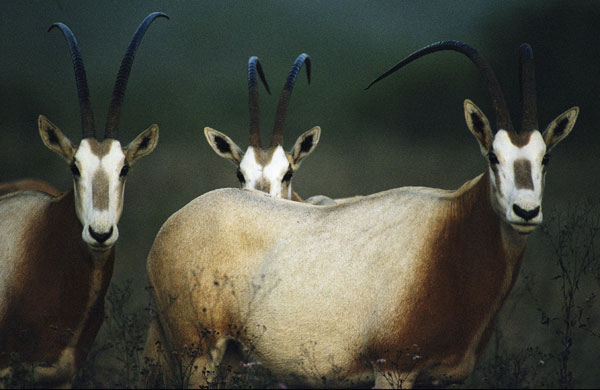
Once one of the most common large mammals of northern Africa. Overhunting for the animal’s meat, hide and magnificent horns, combined with habitat loss, caused major declines in the species. By the end of the 20th century none were known to remain in the wild. Currently listed as extinct in the wild, the species is now part of a major captive breeding and reintroduction programme Photograph: Joel Sartore/NG/Getty Images
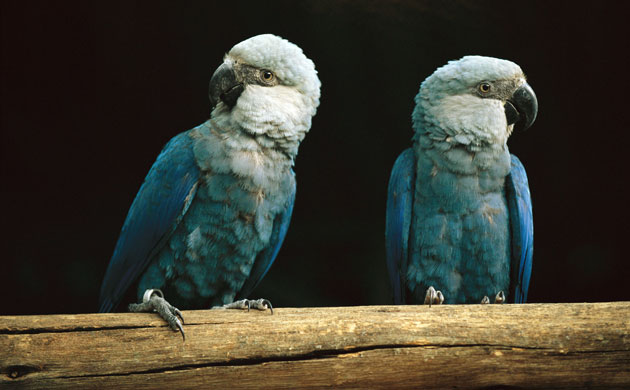
Listed as critically endangered (possibly extinct), it was found in Brazil, in parts of the Brazilian state of Bahia. Although this species exists in several captive populations, the last known individual in the wild disappeared at the end of 2000, and no others may remain, primarily as a result of trapping for trade and habitat loss. However, it cannot yet be listed as extinct in the wild until all areas of potential habitat have been thoroughly surveyed Photograph: NG/Getty creative
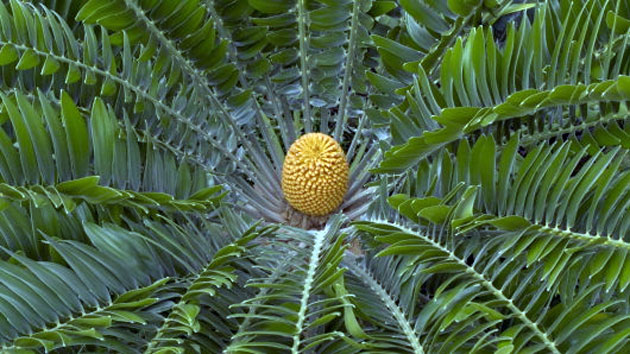
Listed as extinct in the wild. Only a single plant of this species was ever found in South Africa. Its extinction may have been a natural event, although the final end of the wild population may have been hastened by over-exploitation for medicinal purposes by local people. In 1916 the last remaining stem was removed for cultivation in botanical gardens. There is no likelihood of ever reintroducing the species back into the wild as there are only male plants in existence, and the risk of theft would be too great Photograph: Andrew McRobb/RBG Kew