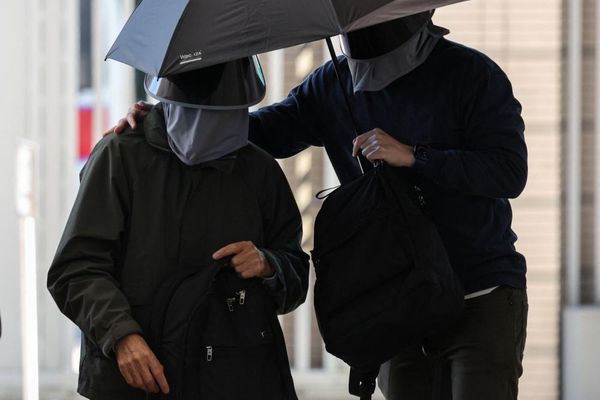
When he was 16, Ton* was convicted to five years in prison on charges of assault with intent to murder and possession of firearms. A dysfunctional upbringing, coupled with association with bad company, had put him on the path of constant run-ins with law enforcement since he entered his teens.
Now 21, the young man, who spent his formative years in confinement, found it hard to foresee a future outside a prison cell.
Just when he felt he was beyond redemption and had resigned himself to a life of crime, he heard about Baan Kanchanapisek Vocational Juvenile Training Centre for Boys, in Nakhon Pathom province, an establishment which uses a positive approach to youth rehabilitation by redefining juvenile incarceration. In short, it's a classic example of how understanding, empowerment and job training can go a long way to encourage wayward and impressionable young men to turn over a new leaf.
Ton, emotionally bruised by years of neglect by both society and his family, was glad when given the go ahead by authorities to serve out his sentence at Baan Kanchanapisek.
Founded in 2004, it is a governmental organisation under the Department of Juvenile Observation and Protection, Ministry of Justice, which housed just 30 children when it first opened. This number has gradually risen to 106, with the current age bracket 16-22. Currently, one out of two offenders residing at this centre have been convicted of murder and narcotics charges; rape and molestation cases are somewhat fewer.
"I once was serving my sentence in a juvenile detention centre where I had to resort to violence to survive," remarked Ton. "We had 100 inmates cramped in one cell and were treated like trash, it was survival of the fittest.
"I had heard Baan Kanchanapisek allowed offenders to serve out their sentences in a normal, home-like environment. However, I came here with no intention of rehabilitating myself. I had nothing to look forward to. When a person finds himself in a situation where he is stuck in hopelessness and is constantly having to use violence to survive, he can go on to do unimaginable things. That was the state in which I came to this home."
Fortunately, Baan Kanchanapisek became a beacon of hope for the wayward young man just when he had convinced himself that the system had failed him.
Ticha Na Nakorn, a human-rights activist, manages the centre where residents are not looked upon as prisoners, where officers behave more like dorm parents, and there is no barbed wire to signify it is a prison. Among the 19 juvenile training centres in the country, Baan Kanchanapisek is one that can claim to have redefined the meaning of what is a juvenile prison.
For most of the offenders, this is the first time they have felt loved and appreciated, let alone trusted with not running away.
Ticha, affectionately called "Pa Mon" (Aunt Mon), played a role in showing the teenagers their worth in society, that they are loved and appreciated, and that while they cannot change their past they could definitely make a better future for themselves.
The centre's approach, which involves limiting strict security like high fences or barbed wire and introducing a combination of activities to help positively change mindsets, builds self-esteem and trust in young inmates.
"This is not a prison, the staff are not guards, and the teens who come here are not prisoners," said the director in an interview. "They should learn here to see their own worth, to the point that they want to change their ways -- not because they're ordered to do so by anyone who has power over them.
"The principle is that these teenagers weren't born to commit crime. They have a good side in them, but they made the mistake of letting the dark side overpower their characters."
For Ticha, every effort is made to ensure emotional well-being for her young charges, so that each individual can play a positive role in society when they are released.
Ton, who describes his young life as a series of poor decisions, today enjoys reading the newspapers to share his take on the issues that make headline news. His analytical skills have also improved with activities where they watch a movie and discuss the implications of wrong decisions made by the main character.
"Baan Kanchanapisek is like a boarding school with rules that are not back-breaking," quipped the young man. "I came here with very poor self image. Gradually, I began to pick up the pieces of my life with the support of everyone here. If there is one thing I have learned from my experience here it's to be accountable for my actions.
"We are also encouraged to reconnect with our loved ones. This has been good for me as in the past I held on to a lot of bitterness against my mother for not being around for me much while I was growing up. We were able to reconcile our differences and have promised to be there for each other from now on."
Ton shared how he allowed himself to get entangled into a life of crime, all because he felt this would make his peers accept him. He points to a dysfunctional family environment which drove him to find solace outside the home. He used to stay with his mother, grandmother and youngest sister.
Being the eldest, he grew up before his age. The fact that the adults in the house showed no interest in keeping a channel of communication open between his sister and him put a strain on their relationship. His immaturity further fuelled his desire to lead a life that suited him best. In retrospect, Ton believes what led him to a life of crime was the search for someone to understand him. Today he is a new person, thanks to Ticha's love.
"A little love and acceptance goes a long way," said Ton. "I was once arrogant and selfish and quickly retaliated without much thought. Today, I am a far cry from my old self. I give the credit for my transformation to everyone at Baan Kanchanapisek.
"Today, I volunteer my time gladly for the betterment of society and share my past experiences freely so others will see the pitfalls involved in the type of lifestyle I once led. Most of all, I am happy to see my mother smile at the way I have become a new person."