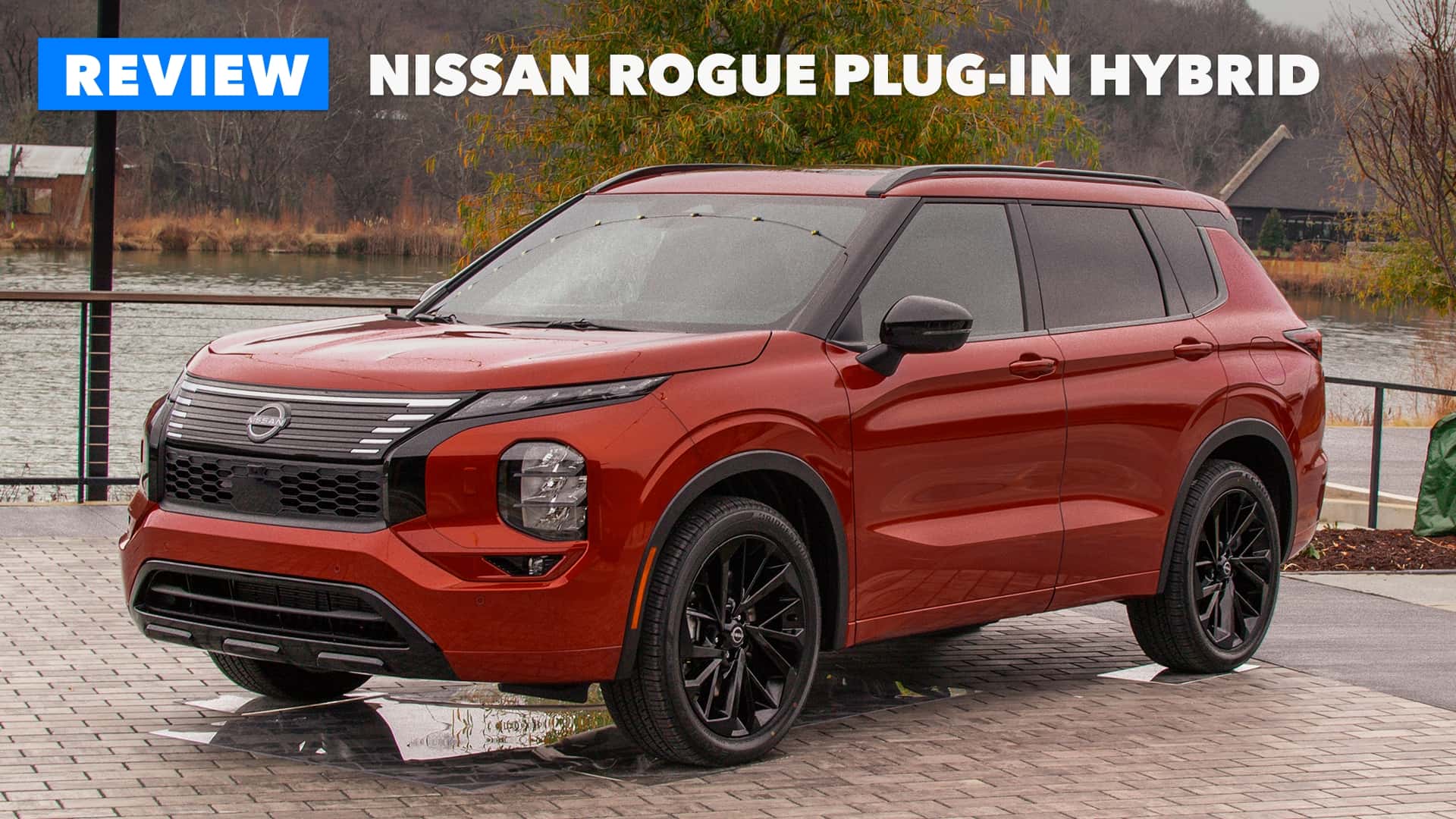
If the 2026 Nissan Rogue Plug-in Hybrid looks familiar, that’s because it's not really a new vehicle at all. Under the Nissan badge is a Mitsubishi Outlander PHEV, a crossover that the two companies developed as a way to fill a gap in their respective lineups until the next-generation Rogue Hybrid arrives. That should happen next year, which means the Rouge PHEV might just be a single-year model, depending on demand.
"Let's see how the market responds to this particular product," said Nissan Americas senior vice president and chief product officer, Panoz Pandikuthira, during a Q&A with media last week. According to Pandikuthira, the plug-in's all-electric range is useful to "a specific type of customer," and the company will decide next year whether to produce both models "in parallel."
Nissan's compact crossover was America's ninth-best-selling vehicle in 2024, but it suffered a 10 percent sales decline last year. The third-generation Rogue lacked a hybrid variant while several competitors already had or gained the powertrain option in recent years, making Nissan an outlier in both product and sales.
The Toyota RAV4 and Honda CR-V—two other top-10 best-selling vehicles with hybrid variants, one regular and one PHEV—saw their sales increase by 9 percent and 11 percent, respectively. And according to Honda, over half of CR-V sales were of the hybrid model, emphasizing their popularity with cost-conscious buyers. With that, Nissan hopes to make a dent with its latest—and first—Rogue plug-in.
| Quick Specs | 2026 Nissan Rogue Platinum Plug-In Hybrid |
| Engine | 2.4-Liter I4 Hybrid PHEV |
| Output | 248 Horsepower / 332 Pound-Feet |
| Fuel Economy | 64 MPGe |
| Electric Range | 38 Miles |
| Base | $44,000 (est) |

With sales slipping, the Rogue Plug-In can't arrive soon enough. Unfortunately, it might be too similar to the Outlander PHEV to make much of a difference. Mitsubishi has only sold 5,481 Outlander PHEVs through the first nine months of 2025, but a dash of Nissan charm (and a better dealer network) could help broaden its appeal.
The two SUVs share the same powertrain: a naturally aspirated 2.4-liter MMC 4B12 four-cylinder gasoline engine with one electric motor on each axle. The Rogue matches the Outlander's output of 248 horsepower and 332 pound-feet of torque.
The crossover's 20.0-kilowatt-hour lithium-ion battery delivers the same 38-mile electric range as the Outlander. Paired with the gas engine, that results in 64 MPGe with a total driving range of 420 miles. A Level 2 charger can refill the battery in seven and a half hours, which are the exact specs of the Mitsubishi.
The powertrain provides the Rogue with three distinct driving modes. One is a pure EV, with the battery powering the electric motors. In the series-hybrid configuration, the engine charges the battery pack, while the electric motors drive the wheels. Conversely, in a parallel hybrid setup, the engine directly powers the front axle, with the electric motors assisting.
Pros: Nissan Finally Has a Hybrid, Punchy Powertrain, Pleasant Cabin
That setup delivers a shockingly punchy driving experience that's far closer to that of a pure EV than a typical hybrid, and it alleviates the worry of finding a charging station. It even has one-pedal driving capability with e-Step, which you engage by moving the shifter from D to B. It also has the same seven drive modes as the Outlander: Normal, Power, Eco, Tarmac, Gravel, Snow, and Mud.
The gas engine isn't exactly quiet, but it never felt intrusive or overbearing. It never droned either, as the engine's revs correlated to the power demand in series hybrid mode. The Rogue PHEV isn’t fast, but the torque from the motors makes accelerating far more engaging, even if it handles and feels like a typical family crossover—and the Outlander.
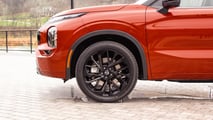
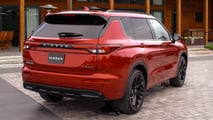
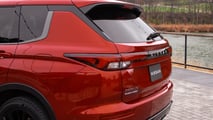
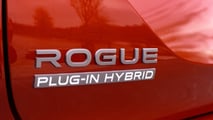
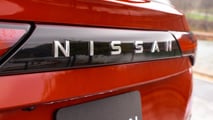
What differentiates the two hybrids is the Rogue's tweaked front grille and the branding, with Nissan badging inside and out, and that's it. It has the same 9.0-inch infotainment touchscreen and 12.3-inch digital instrument cluster, with the Platinum trim I drove also featuring a 10.0-inch head-up display.
There are only two trim levels, the other being the SL. Heated front seats and a leather-wrapped steering wheel are standard, and the cabin is a pleasant place to be, thanks to the laminated front glass—but it's the same cabin as the Outlander.
Cons: Too Similar to Outlander, Likely Priced the Same, May Only Last One Year
The Nissan Rogue might not be different enough to turn the model's sales decline around, but it certainly cannot hurt. Pandikuthira said many people go online, look for a Rogue Hybrid, and then don't even come into the showroom because Nissan doesn't offer one.
"At least we can claim we have a hybrid in our lineup," he said.
One aspect that remains a mystery is the Rogue's price. Nissan didn't disclose it, but it should cost just over $40,000 when it goes on sale early next year, which is on par with other plug-in competitors. The non-hybrid Rogue tops out at $40,485.
The Mitsubishi Outlander PHEV costs $45,325 to start and can reach $52,200 for the Platinum Edition S-AWC model. We wouldn't be surprised if the Rogue's pricing were similar—everything else is between the two crossovers.
Gallery: 2026 Nissan Rogue Plug-In Hybrid First Drive Review
Nissan Rogue Plug-In Hybrid Competitors:

Nissan Rogue