There is a moment in the final episode of the entertaining documentary series The Night Bus (Channel 4) that sums up why it could never quite be what it wanted to be. A French couple on the top deck talk furtively about the fact that they are on camera and imagine what it would be like if the film-makers translated their conversation using subtitles. The man even indicates where on the TV screen they might go, pointing at the space just in front of his chest. And of course, subtitles appear exactly there.
This level of awareness renders the careful rigging of several London buses with unobtrusive remote cameras pointless. Presumably, every passenger who steps aboard is warned they are being filmed and asked to sign a release form for use of their image. You might as well have had a full-sized crew on each deck complete with lights, boom mic and yards of cable.
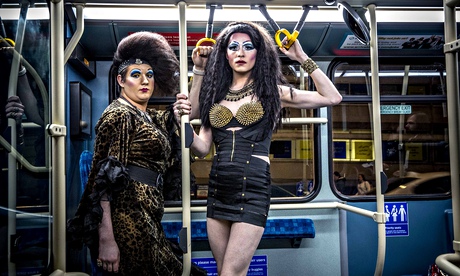
Unlike other rigged shows in the One Born Every Minute mould, the participants here are only on the bus for a brief spell. They don’t have time to forget the cameras and start behaving like realistic versions of themselves. With so many of the passengers either referring to the cameras or playing up to them, it is very hard for the director and editor to find those golden moments of truth. In this episode, two Scottish drag queens, Nancy and Vanity, head home to north London in full sequins and slap, gamely entertaining fellow passengers with risqué one-liners. It almost feels as if they’ve been put there to add comic relief. For a show that aims for fly-on-the-wall authenticity, it creates in its subjects the opposite behaviour, having more in common with Made in Chelsea’s format than it does with The Family.
Another couple, from Bulgaria this time, talk in Bulgarian about the weird things they’ve seen on the bus and the girl recalls a young couple having oral sex on the back seat. “No way,” replies her friend. “Too many cameras.” He could be referring to the CCTV, or the ones specially plumbed in for this programme. It often sounds as if foreign language-speaking passengers weren’t aware their conversations would be translated, making our earwigging feel exploitative.
Things turn nasty as one man tries to persuade another to return a phone he has just watched him steal. The phone thief tries to deflect the attention aimed at him and eventually buckles in the face of his very reasonable nemesis. It’s probably the most honest moment in the whole hour, as the thief clearly forgot he’s on camera. But he is reminded that the whole thing is being filmed, so he might as well hand the contraband over.
The biggest give away of all is the behaviour of the bus drivers, actively helping the homeless, politely telling confused customers when their stop is approaching and so on. If anyone in day-to-day life has encountered one of these Mother Teresas in a bus driver’s uniform, I’ll give them my Oyster card.
To counter all the recent flag-waving VE Day commemoration and deification of our cigar-chomping wartime leader, Churchill: When Britain Said No (BBC2) offers a less rosy portrait of the human bulldog who lost the general election only weeks after steering Britain to victory against Germany.
“Why had the British people turned so viciously on their great war leader?” asks Paul McGann’s pleasantly sullen voiceover. The British people went into the war divided by class but emerged from it wanting social change. Labour’s Clement Attlee offered it, while toffee-nosed Churchill represented the status quo and a return to everyone knowing their place. The programme paints a picture of an entitled Tory bossy-boots entirely out of touch with real people, bemused and infuriated when they questioned his leadership. It’s ringing bells.
In one ill-advised speech just before the election, Churchill compared a future socialist Britain to Nazi Germany and caused outrage among enemies and supporters alike. With that he stood, revolver in hand, a big smoking hole in his foot, wondering where all the bunting had gone.
Although something of a justified hatchet job, this documentary sticks to his postwar years and doesn’t mention his keen earlier interest in eugenics, his support for the sterilisation of the “feeble-minded” or his suggestion that they be employed in special labour camps. The footage of him and his wife Clemmie visiting Walthamstow Stadium in east London, jeered at and jostled by 30,000 spectators, gives a snapshot of a man finally realising the party is over. He does manage one final V sign out of the window though, just not of the victory kind this time.