If you think about it, the tight end position was at the forefront of the last schematic revolution in the NFL.
Consider the Tampa 2 coverage scheme. For those that need a refresher, this is a defensive coverage that plays with two deep defenders, but tasks a third – often an athletic linebacker – with defending the area between the safeties. This coverage is traced back to the Tony Dungy/Monty Kiffin teams, and it was implemented to protect that area of the field against receivers or, in many cases, tight ends.
Where TEs had previously been viewed as a sixth offensive lineman who could occasionally add something in the passing game, as more teams looked to these players in the passing game defenses needed a response. The Tampa 2 coverage was born.
As is usually the case, schematic advancements in football move in cycles. When more professional teams wanted athleticism at the tight end position, better and better athletes started playing the position. A new generation of tight ends was born, players like Jimmy Graham and Tony Gonzalez, who were dominant more for what they did as receivers than anything else. When these players started running away from linebackers, defenses needed to adjust again.
when I think about the league from a conceptual standpoint, i usually end up down a Bill Belichick-related rabbit hole. If you read and study the defensive mind over his years in the league, you will see that there is nothing Belichick considers more dangerous to a defense than a versatile tight end. If you want visual evidence of this fact, go back to the 2018 regular season meeting between the Kansas City Chiefs and the New England Patriots. Against an offensive featuring the explosive Tyreek Hill, it was Travis Kelce who found himself double- and even triple-covered at times.
If Belichick is worried about a position or a player, you better take notice.
Right now the league has a very solid class of talent at the position, including the aforementioned Kelce, who is as you would expect among the top of the class. But how does this group stack up?
As usual, we begin with the Honorable Mentions.
Honorable Mentions

We start with a player with tremendous potential, but who has yet to truly put it together. Evan Engram looked every bit the part of a future mismatch nightmare coming out of college – and those who saw his week of practices at the Senior Bowl would concur – but injuries and inconsistency has been the hallmark of his young career. If he puts it together he can crack a list like this. Hayden Hurst now looks to be the prime option at the position in Atlanta, and with Julio Jones and Calvin Ridley on the outside and Matt Ryan throwing to him, he is in a good position to excel in 2020. Jonnu Smith is stepping in as the main man for the Titans, and that play-action heavy offense is a good position for him to succeed. Gerald Everett might be the second TE option for the Los Angeles Rams, but Sean McVay has done creative things for him in the past and we can expect that to continue into 2020. Greg Olsen might have a TV gig waiting for him, but he can still be a factor for the Seattle Seahawks in 2020.
Then there is what is taking place in Tampa Bay. Rob Gronkowski is usually a mainstay on lists like this, but since he sat out all of 2019, he did not meet the snap threshold for inclusion. But he, coupled with O.J. Howard and Cameron Brate, are also names to watch.
Also, in a bit of “calling my shot,” look for Adam Trautman to be on a list like this sometime soon…
Best tight end groups

As more and more teams like the Philadelphia Eagles and Minnesota Vikings rely on multiple tight end packages, some great units are starting to develop around the league. Obviously with elite players like George Kittle and Travis Kelce, the San Francisco 49ers and the Kansas City Chiefs have solid groups by default. But in terms of a 1-2 punch, it is hard to top what Howie Roseman and Doug Pederson have assembled in Philadelphia. Zach Ertz and Dallas Goedert are two of the top TEs in the game, and as a result the Eagles implemented this package a staggering 52% of the time.
Not too far behind, however, were the Vikings. Under Kevin Stefanski the Vikings used 12 personnel on 34% of their snaps, and having Kyle Rudolph and Irv Smith Jr. in place certainly led to that usage. With Stefanski off to Cleveland, you might want to keep an eye on their group, which as of this moment consists of Austin Hooper, David Njoku and an intriguing rookie in Harrison Bryant.
Now, the Top 11:
11. Kyle Rudolph, Minnesota Vikings

2019 was another solid and steady season for the veteran tight end. After the Minnesota Vikings selected the promising Irv Smith Jr. in the 2019 NFL Draft, many thought that Rudolph would be on the outside looking in when the season began. But offensive coordinator Kevin Stefanski had a different idea, an offense built around both TEs and the implementation of 12 personnel.
Rather than being iced out, Rudolph was a big component of the Vikings passing game. He saw 55 targets last season, which was his lowest number since 2015, but he turned those into 45 receptions and seven touchdowns. Perhaps most notably was this number: 136.7. That was Kirk Cousins’ passer rating when targeting Rudolph, and that was the highest targeted passer rating of Rudolph’s entire career.
He also turned in two very memorable plays last season, first of which was this catch for a touchdown in the back of the end zone:
Then of course was this game-winner against the New Orleans Saints, when he beats a cornerback on a fade route for the walk-off TD:
(Yes, there was a bit of contact here…)
Blocking has never been a strong suit of Rudolph’s, but he was serviceable in that area for another season. Over 77 pass blocking reps last year he allowed one sack and four quarterback pressures.
10. Jared Cook, New Orleans Saints

Veteran Jared Cook might be on his fifth NFL team, but he is still producing at a very good clip at this point in his career, now with the New Orleans Saints. He enjoyed a career season with the (now Las Vegas) Raiders in 2018, and parlayed that into a solid new contract with the Saints. Back in 2018 he caught 68 passes on 99 targets for 896 yards – all career-high numbers – and six touchdowns.
Last season with the Saints he saw some of those numbers dip a bit, as you might expect with Alvin Kamara and Michael Thomas in the offensive huddle with him, but he managed to notch another career-high, as his nine touchdowns receiving was his best number since joining the league in 2009. In the spirit of some of the other names previously mentioned, Cook’s ability as a receiver to be that kind of matchup nightmare – especially with the players around him in that offense – makes him a true threat.
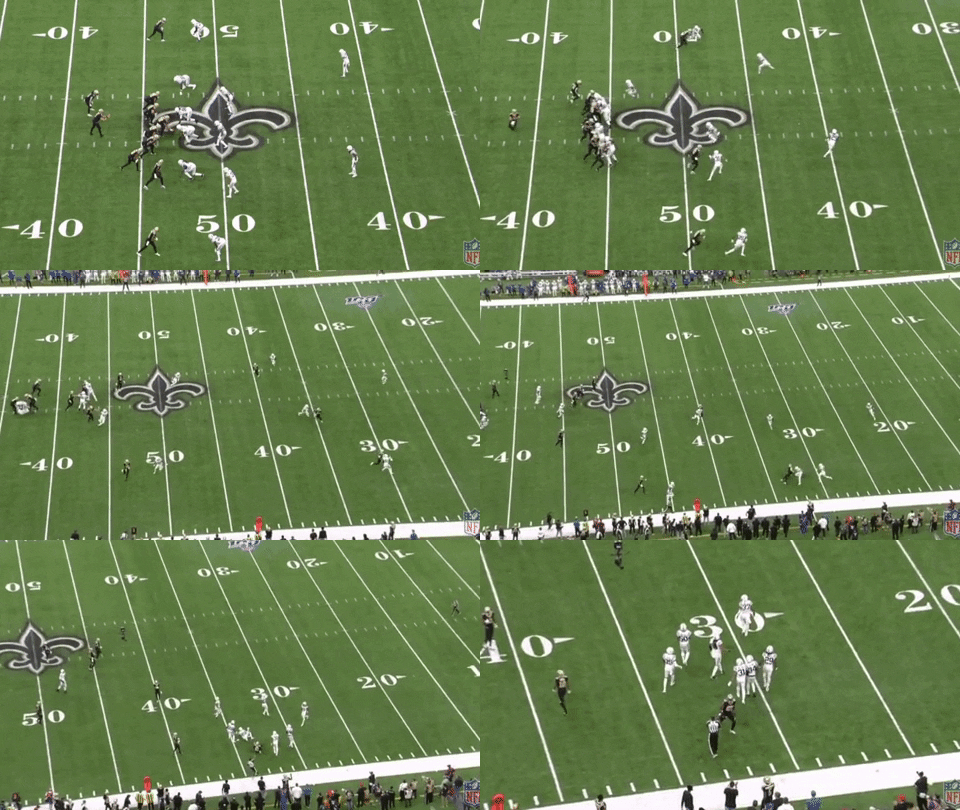
Cook is working against a cornerback on this play, but he gets separation on the route and makes a tremendous adjustment to the football. If he is doing this against cornerbacks, imagine what he does against safeties and linebackers.
So you can see the bind his presence puts defensive coordinators in.
What could make Cook even more dangerous in the season ahead is the presence of Emmanuel Sanders. With a duo of talented outside receivers in Sanders and Thomas, and the continued presence of Kamara, ask yourself this: If you are a defensive coordinator drawing up a gameplan to stop the Saints, what is your focus? It might take a while to get to Cook, which might mean even bigger production numbers for him in 2020.
9. Darren Waller, Las Vegas Raiders

Last year’s edition of HBO’s “Hard Knocks” gave the viewing world insight into the long and winding road Darren Waller traveled to get to the Las Vegas Raiders. Drafted in the sixth round of the 2015 draft by the Baltimore Ravens out of Georgia Tech, Waller struggled with substance abuse issues and suspensions. 2019 was his first real chance at an opportunity in the league, and he certainly made the most of it.
Last year Waller was a focal point of the Raiders’ offense, perhaps due in part to the departure of Jared Cook, and Waller flashed in a big way. He was targeted 115 times in the passing game (third-most among tight ends) and caught 90 of those passes for 1,146 yards and three touchdowns. Those 90 receptions were second only to Travis Kelce among TEs, and his receiving yardage was also second in the league at the position, again to Kelce.
What makes Waller unique, and a true threat in the passing game, is that he is more of a big wide receiver than a pure tight end. That makes him a matchup nightmare on the outside and even down the field. In this quick video package put together by the Raiders, you can see Waller making plays in space against defensive backs, but also underneath against linebackers and safeties:
As you look ahead to 2020, in the year ahead he’ll have rookie speedster Henry Ruggs III, Tyrell Williams, Bryan Edwards, Hunter Renfrow and Zay Jones outside of him. That, coupled with his skill-set and athleticism, is going to make gameplanning tough on opposing defensive coordinators.
8. Hunter Henry, Los Angeles Chargers

Hunter Henry has the potential to be one of the best tight ends in the league, but he certainly does not come without risk. If you believe the old saw that “the best ability is availability,” then Henry will be hit with a red flag in your eyes. His second season in the NFL ended early, with a knee injury and a kidney injury. He came back for OTAs the next year, but tore an ACL and missed the entire regular season, returning for the Chargers’ Divisional Round meeting with the Patriots. Then last year, Henry suffered a tibia plateau fracture to his left knee and missed five games. Those are some big question marks.
But when he is healthy, Henry is the kind of matchup weapon that offensive coordinators covet at the position. Despite missing five games last year, he still posted career-high numbers in targets (74), receptions (55) and yards (652). He also notched five touchdowns, and 36 of his 55 receptions, an impressive 65%, went for a first down.
Henry’s hands, route-running and athleticism make him such a threat in the passing game:
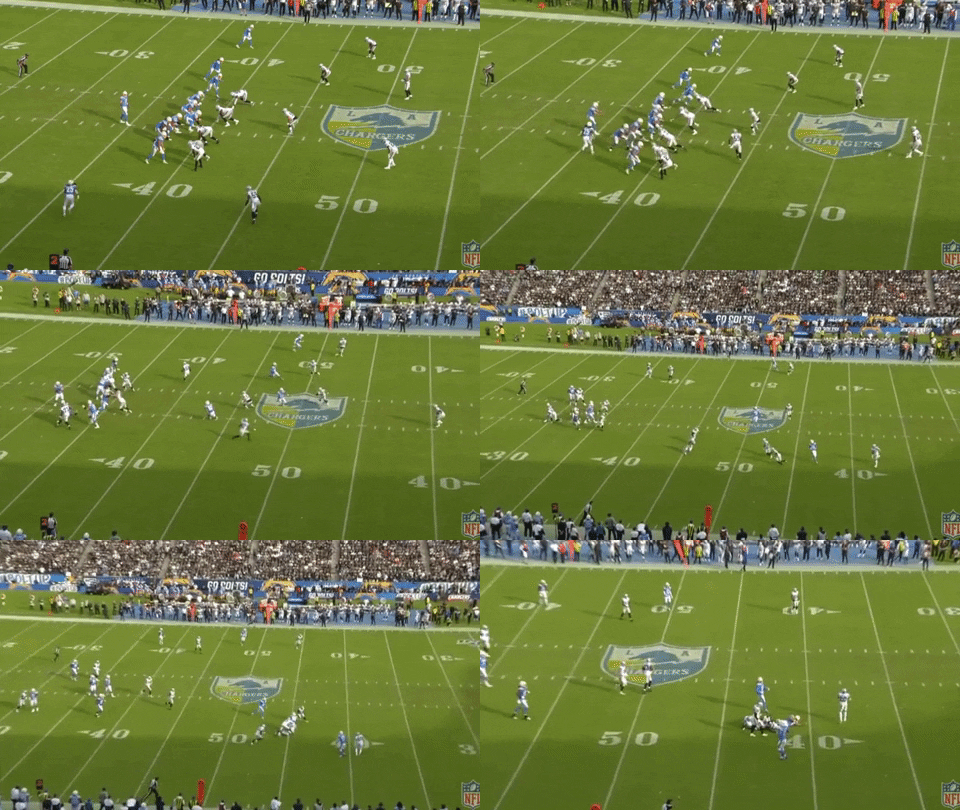
Henry runs a pivot route here and looks more like Julian Edelman than a tight end, both with the footwork on the route and the change-of-direction skills after the catch, as he makes a defender miss in the open field.
Obviously change is in the air in Los Angeles, as the Chargers are looking to a new quarterback in the first year post-Philip Rivers. But if he can stay healthy, Henry is the type of player who can make such a transition easier on the next guy, whether Tyrod Taylor or Justin Herbert.
7. Dallas Goedert, Philadelphia Eagles

Dallas Goedert was another darling of the #DraftTwitter community, coming out of South Dakota State at the FCS level. Unlike some tight ends, who struggle to acclimate to life in the NFL as a rookie, Goedert was able to contribute immediately during the 2018 campaign. In his first season Goedert was targeted 46 times, catching 35 of those passes for 354 yards and five touchdowns.
His numbers took a big jump last season, as he was targeted 86 times for 65 receptions. He turned those 65 catches into 680 yards receiving and another five touchdowns. Over his two seasons in the NFL, Eagles’ passers have a quarterback rating of 107.3 when targeting him in the passing game, a not too shabby number.
Along with Zach Ertz, Goedert gives the Eagles a tremendous 1-2 punch at the position, that enables the organization to rely heavily on 12 offensive personnel. This touchdown against the Green Bay Packers is a prime example of how this puts pressure on the opposition:
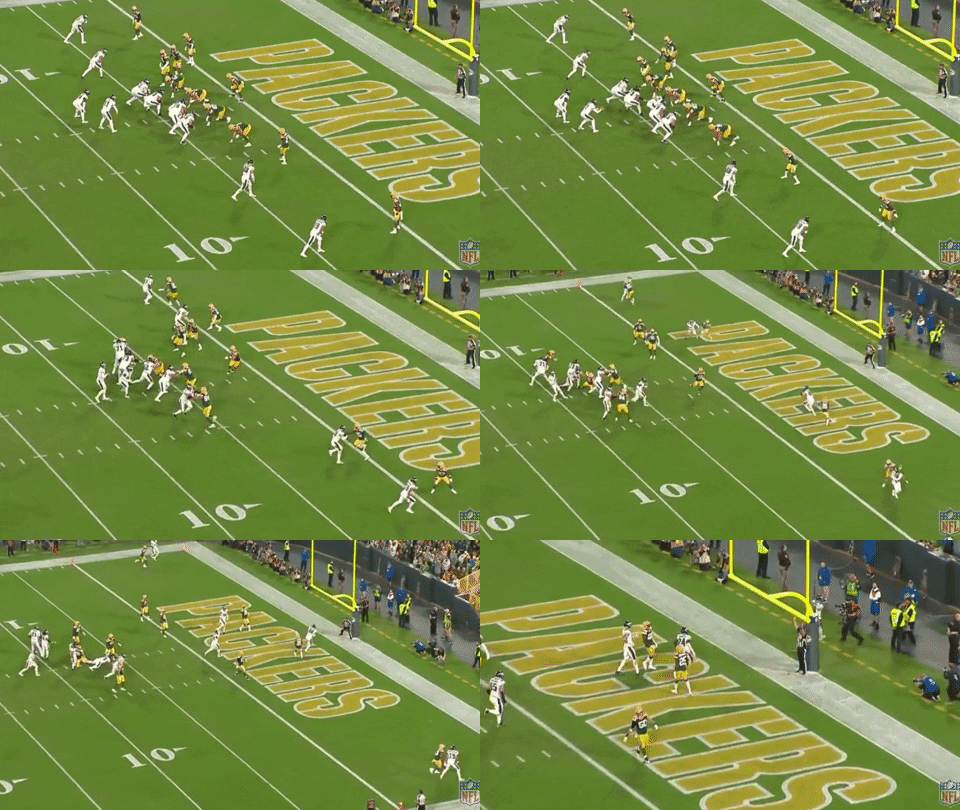
The Eagles break the huddle using 12 offensive personnel, but align both tight ends in the slot. Ertz is in the left slot while Goedert is in the right slot. The defense is forced to make some tough choices, and it results in reserve safety Will Redmond matching up with Goedert. But look at the route the TE runs, a quick slant, but he threatens the outside frame of the defender, getting Redmond to flash his hips open for an instant, but that is exactly when Goedert cuts under him and crosses the defender’s face. This route-running ability is what makes Goedert so dangerous.
6. Tyler Higbee, Los Angeles Rams

Tight ends face a difficult transition to the pro game, given the differences you often see between the two styles of play.
(Although, in the case of Dallas Goedert and perhaps Adam Trautman this season, tight ends that play at lower levels are asked to take on more NFL-like responsibilities, which eases their transition. But I digress…)
Higbee is another example of this in action. Higbee was considered a very intriguing prospect in the 2016 draft given the athleticism he showed at Western Kentucky, but he was arrested for assault 18 days before the draft. In that incident, Higbee assaulted a man of Middle Eastern descent while using some horrific racial language, and the assault left the victim unconscious and with a brain hemorrhage. Higbee pled guilty to the assault and avoided jail time.
During his first two seasons in the league, Higbee did not prudce at a high level. He caught 11 passes as a rookie in 2016, and 26 passes a season later. But over the past two years he has been more of a focal point for the Los Angeles Rams’ passing attack. In 2018 during their run to the Super Bowl he caught 30 of 36 targets for 347 yards and three touchdowns. Last year, he really broke out. Higbee was targeted 86 times and hauled in 69 of those throws – both career-high numbers – for three more touchdowns. He racked up 734 yards receiving (401 of those coming after the catch) and Jared Goff had a 109.0 NFL passer rating when targeting his tight end.
One of the things that stands out when watching Higbee is his body control. Watch the adjustment he makes on this throw from Goff, first to contort himself to reach the ball, and then to twist his feet into position to get both down in-bounds:
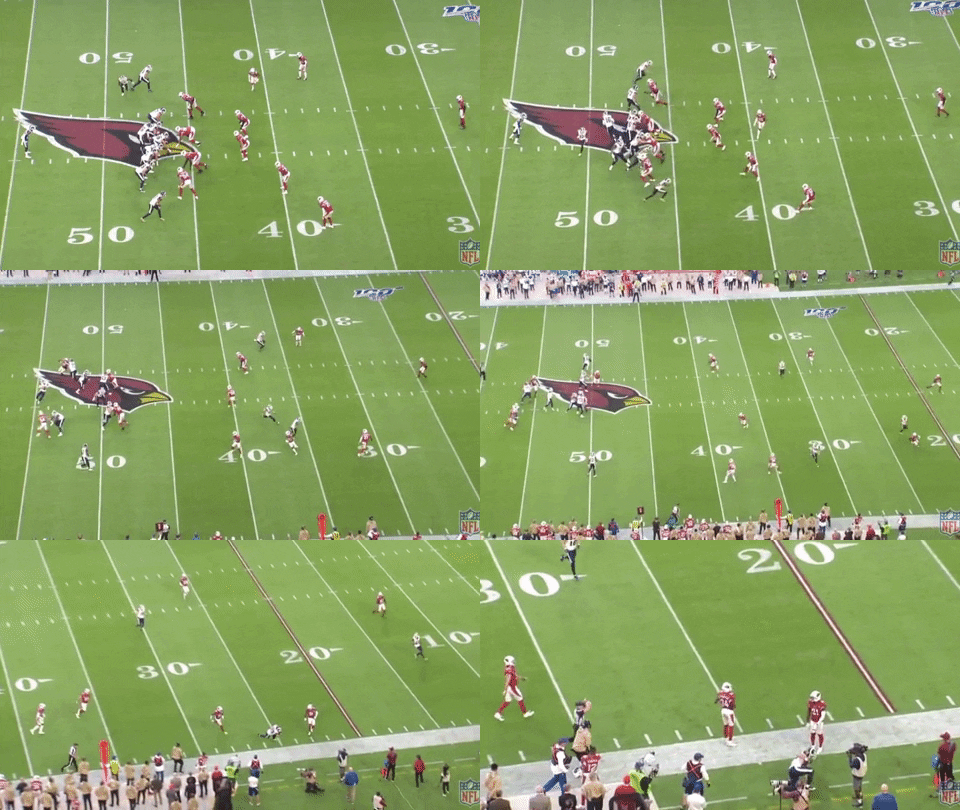
Then there is the YAC that he offers. On this play Higbee runs the “slam” route, showing a down block and then releasing to the flat. He makes the catch and is able to work away form the nearest defender using a stiff-arm, turning a short toss into a huge gain:
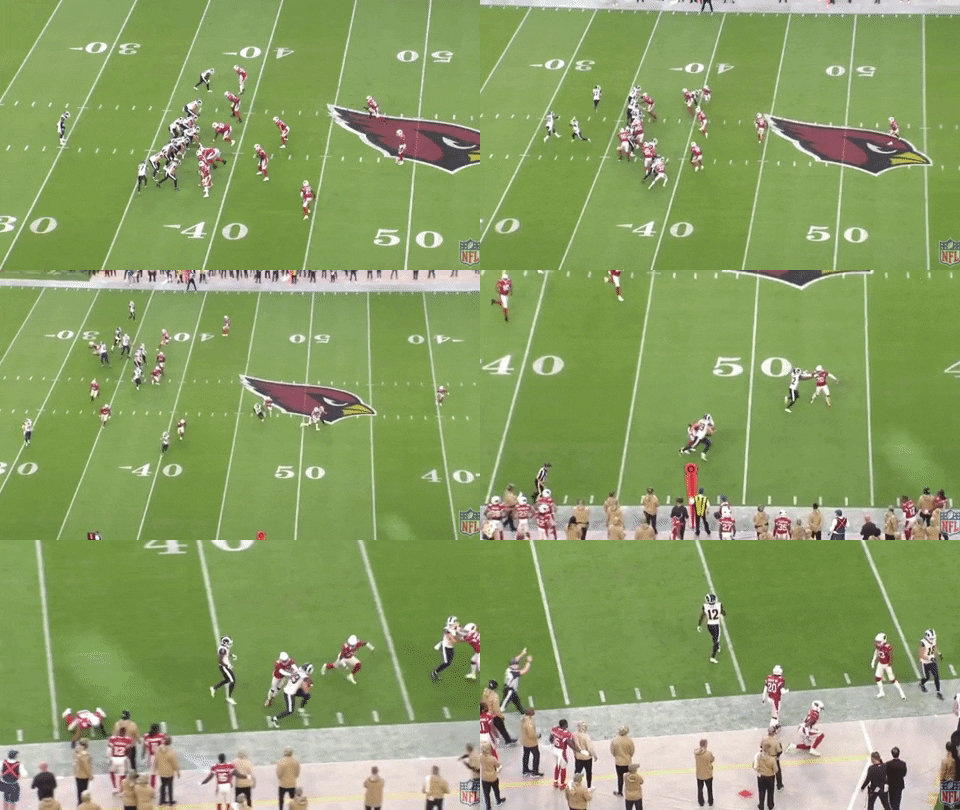
As the Rams look to reinvent their offense using more of an inside run approach, Higbee could play a huge role in the play-action plays that stem from those designs.
5. Austin Hooper, Cleveland Browns

I can hear some of the criticism about Austin Hooper’s game now. “He cannot consistently separate from man coverage. Most of his production comes on running over routes, usually off of play-action, and finding soft spots in zone coverage. He gets the benefit of a favorable scheme. He gets the benefit of having talent around him like Julio Jones.”
Given that these lists are somewhat forward-thinking in nature, what is he walking into in Cleveland? A play-action heavy offense that will rely on receivers running a bevy of over routes and finding spots in zone coverage. That’s why they drafted Justin Jefferson, and it’s certainly why Hooper was a big part of their plans. In addition, do the names Jarvis Landry and Odell Beckham Jr. ring a bell?
Besides that, the job of an organization is to identify what a player does well, and put him in those situations. Hooper is extremely adept at finding the soft spots in zone coverage, and has great feel for identifying and sitting down in those creases. He is a master at the “chip and release” game, and transitions from delivering the blow to an edge rusher to a receiver in the flat almost instantly. That gave Matt Ryan a lot of extra time in the pocket last season, and it might go a long way towards making Baker Mayfield more content to stay in clean pockets in 2020. For my money, Hooper was one of the best acquisitions this off-season and I would anticipate a huge year from him in the season to come.
4. Mark Andrews, Baltimore Ravens

Now we’re getting sporty.
We’ll get to a big piece of evidence in a moment in favor of the player in the third spot, but let’s dive into the Baltimore Ravens tight end first. After a solid rookie campaign Mark Andrews had a massive season in 2019 for the Ravens. He was targeted 104 times (fifth-most in the league among TEs) and caught 68 of those passes for 891 yards and ten touchdowns. He was the only tight end in the league to crack the double-digit mark in receiving touchdowns.
Andrews’ athleticism and frame make him so dangerous in the passing game, particularly in the red zone. Watch him on this touchdown against the Houston Texans. He runs a post route out of the right slot, and is working against Justin Reid, a solid safety for the Texans. Andrews gets a bit of benefit from the traffic created by the route concept, but Reid has almost no chance here:
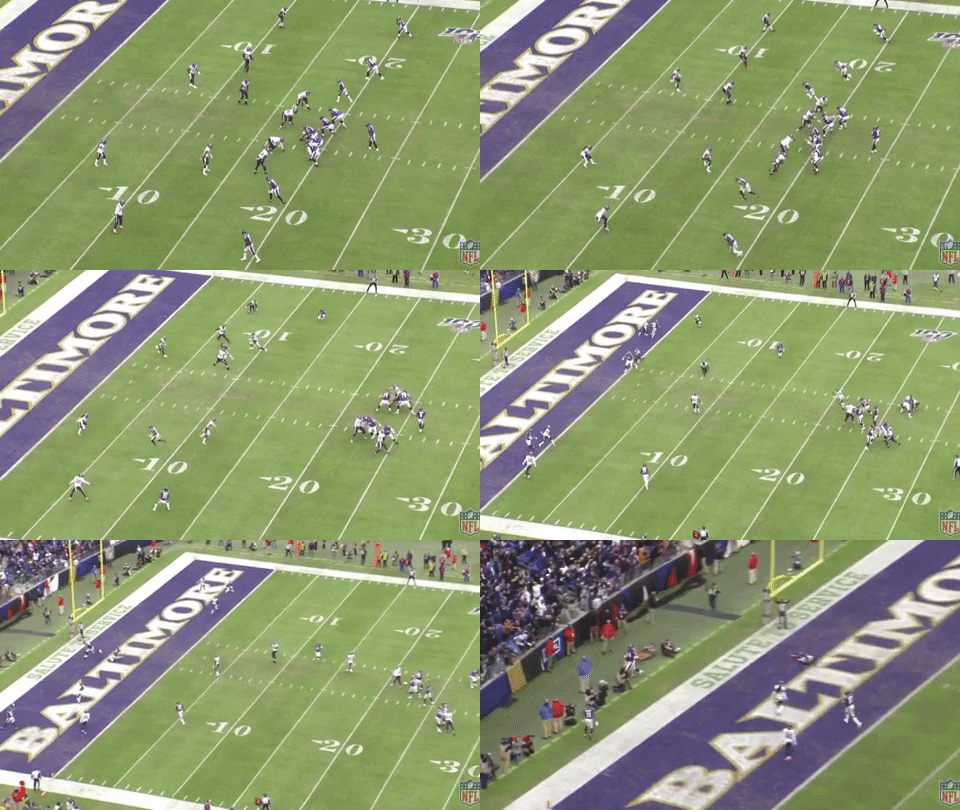
This offseason, the Ravens traded Hayden Hurst to the Atlanta Falcons, meaning Andrews will take on perhaps a bigger role in the offense in 2020. With his combination of traits and in a well-designed offense that relies on many multiple TE packages, he should be in store for another big year.
3. Zach Ertz, Philadelphia Eagles

I made an appeal to authority for breaking the tie between Zach Ertz and Mark Andrews. Perhaps the premier authority of them all.
Bill Belichick.
No no no. It’s not like I managed to get the greatest coach of all time on the phone to ask him which tight end he considered more dangerous. Although, you would think he’d be willing to answer a call from a fellow Wesleyan University football player. No, this answer is based on the film.
Last season, the New England Patriots faced both the Baltimore Ravens and the Philadelphia Eagles. Rewatching those two games this week I was reminded of an interesting schematic twist that Belichick put in place during that Eagles game.
Starting early in the contest on some critical third downs, and then increasing in volume over the course of the game, Ertz saw perhaps an unexpected face across from him in man coverage.
Stephon Gilmore, one of the NFL’s best cornerbacks and the Defensive Player of the Year a season ago.
When you see how Ertz puts defenders in a blender, like he does to Jeff Heath on this snap, you’ll see why Belichick wanted to put Gilmore on the TE:
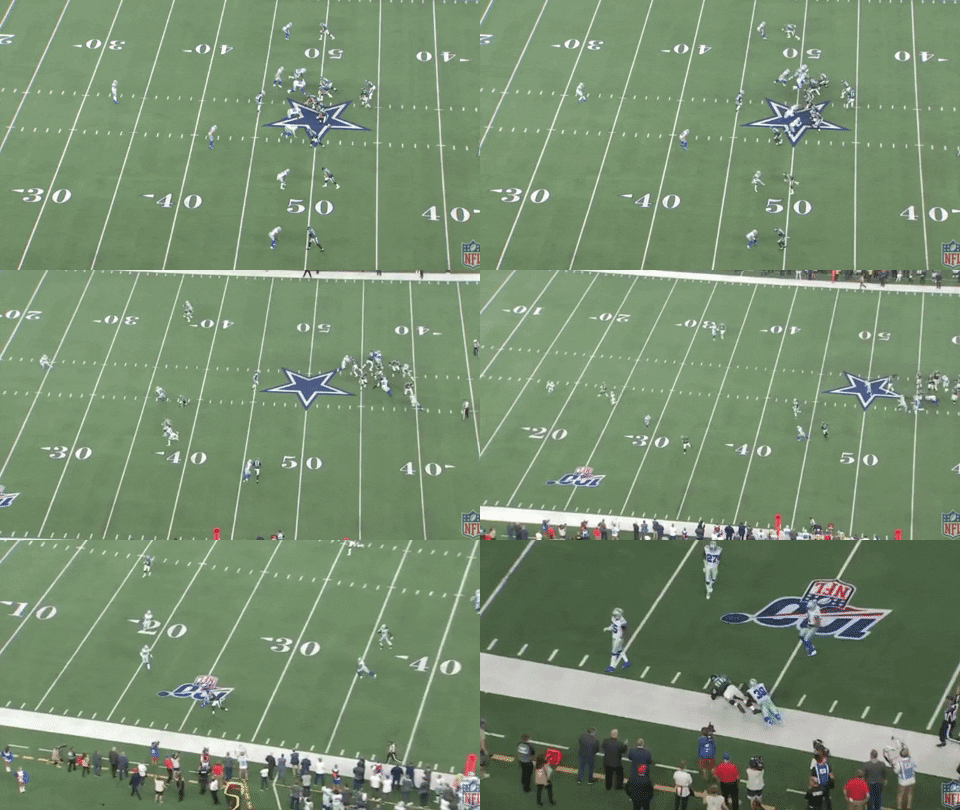
Ertz is a great route-runner for the position, and like many other players on this list he can also use his frame and wingspan to create matchup problems. Forcing Belichick – and perhaps other defensive coaches in the future – to go to interesting lengths to try and slow him down. That kind of respect shows you just how valuable, and dangerous, Ertz is as a weapon.
2. Travis Kelce, Kansas City Chiefs

“No. No I don’t want to. You can’t make me choose between them. I’m make this a tie, I swear I will.”
Okay, so that is not technically a direct quote from me to my editors when given this assignment, but it is pretty darn close.
Look, both Travis Kelce and George Kittle are transcendent players at the position. They both do everything you want and more from a tight end. For years, the knock on Kelce was that he was not a great blocker, but over his time in Kansas City he has worked mightily on his craft, and has become better in that facet of the game as well. Making this decision even harder is the fact that both players operate under coaches that put them in positions to be successful. Andy Reid and Eric Bieniemy put get Kelce a ton of favorable matchups, and having weapons like Tyreek Hill and Mecole Hardman certainly helps. Kyle Shanahan’s route designs do wonders for Kittle.
In the end, Kittle is four years younger, so he’s got more football ahead of him. A copout? Perhaps. But as these lists are also forward-thinking in nature, ask yourself this: If you could choose between the two to build an offense around for the next five years, which player are you picking?
But these are both great, great players. Kelce is such a weapon in the passing game that putting him atop this list is a certainly reasonable position.
1. George Kittle, San Francisco 49ers

George Kittle is the definition of teaching tape at the tight end position. In the San Francisco 49ers offense he does everything asked of him at an extremely high level. His numbers are fantastic. He gives you yardage after the catch (Kittle led tight ends with 7.3 YAC per reception as well as 621 total yards after the catch). He is a great blocker in both the run and the pass game. He is everything you want from a tight end, and he’s just 26 years old.
Hard not to appreciate him.