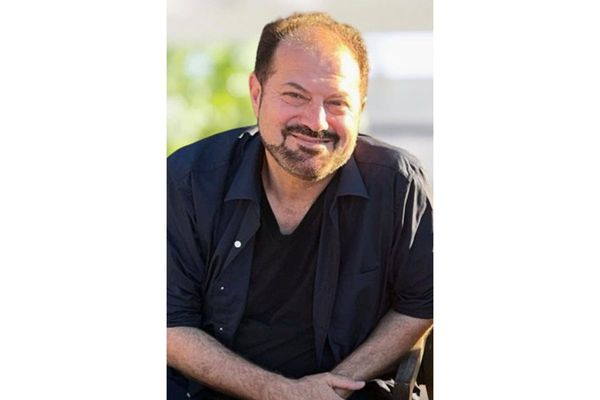
Craig Harrison rolls up his trouser leg to show the scars. “That’s after plastic surgery as well, believe it or not,” the former Crystal Palace and Middlesbrough defender says, picking up on the sharp intake of breath from across the table. “You don’t become squeamish when you see your own leg hanging off.”
That horrific career-ending injury, which happened almost 15 years ago to the day, frames Harrison’s colourful life story. He went to hell and back after sustaining compound fractures to the tibia and fibula in his left leg, and endured some dark and lonely moments before rediscovering his love of football through a “drunken conversation” with a guitarist.
It is quite a tale and, almost a decade later, Harrison is in the process of adding another chapter after writing his name into the world record books as a manager. He is in charge of The New Saints (TNS), who are running away with the Welsh Premier League and have just become the first top-flight club to win 27 consecutive matches in all competitions, eclipsing Ajax’s achievement, which stood since 1972.
“A few weeks before we did it, someone mentioned: ‘By the way, do you know that it’s a world record if you make it 27 consecutive games?’ I had no idea,” Harrison says, smiling. “And then people started speaking about Ajax in the 1970s and Johan Cruyff, and you think: ‘Wow, this is a bit surreal.’”

Talking for two hours in his office at the Park Hall stadium in Oswestry, Shropshire, Harrison, who is 39, comes across as a likeable and ambitious man who cannot get enough of the game that fuelled his dreams when he broke into Middlesbrough’s first team as a teenager, playing alongside Paul Gascoigne, Emerson and Fabrizio Ravanelli.
Yet it was not always that way. Struggling to come to terms with the devastating news he would have to retire at the age of 25, Harrison returned to his native north-east and went off the rails. Financially secure following an insurance payout but with no direction in his life or appetite for football, he endured depression, went on drinking binges and ended up craving solitude.
“I totally wasn’t interested in football. It took two to three years to go and watch a live game after the injury. And if someone had mentioned coaching or management to me at that time, it would have been the worst thing that I could think of. Looking back, I was completely lost. There were two Christmases where I stayed at home and had beans on toast on my own – because I wanted to.”

With the help of his parents and sister, and through meeting Danielle, who is now his wife, he eventually turned his life around. But he still had no desire to get involved in football, and it was a combination of fate and good fortune that brought him back to the sport.
Gareth Owen, the player-manager of Airbus UK Broughton, another Welsh Premier League club, was playing in the band Danielle booked for Harrison’s 30th birthday party. Owen saw the montage of photos Danielle put together from Harrison’s playing days and said he was seeking an assistant. “I thought he was just being polite. And, to be honest, I didn’t fancy it at all,” Harrison says.
Reluctantly and with plenty of encouragement from Danielle, Harrison got in touch a month later. He was offered the post and by the end of the season took over as the manager after Owen left. All of a sudden Harrison was signing up for coaching courses with the Football Association of Wales and immersed in football again. “It was like a switch had been flicked inside me.”

At the end of 2011, he accepted an offer to manage TNS, who were formerly known as Total Network Solutions. Five years later, he is on course for a third successive domestic treble with a club that attracts crowds of fewer than 300 but is enjoying worldwide media interest on the back of the 2-0 win against Cefn Druids, on 30 December, that broke Ajax’s record.
“There was a representative from Guinness World Records at that game,” Harrison says. “What they’ve basically said is that as and when the record finishes they’ll do something [to mark the achievement] because at the moment it’s still ongoing – and we want to keep it going. I said to the players straight afterwards: ‘Let’s not stop here. We’re on 27 now. Can we get to the 30s? That’s our next target.’”
Ajax tweeted their congratulations and television crews from far and wide have turned up in Oswestry, yet Harrison is aware not everyone is getting swept along with the story. As the only full-time club in the 12-team Welsh Premier League, TNS operate with the biggest annual wage budget (£500,000 for their players and staff) and, as a result, there is a degree of scepticism among some about their winning run.
“We have picked up on some of the negative comments and, strangely enough, a lot of that has come from people that support Welsh football,” Harrison says. “It’s pretty sad when you get supporters of the Welsh Premier League being critical of a team that is putting that same league on the map.
“Take away the domestic side, when you talk about world records, playing Scottish teams, as we have done in the Irn-Bru Cup, and taking part in the Champions League, we’re representing Wales as well as TNS. And I just think that could be embraced a bit more. We’d like people just for that one time to say: ‘We’re playing you next week and we’re going to hate you. But well done.’ But this is what happens with successful teams.”

Harrison is certainly not losing any sleep over it. It will take more than a few unfavourable remarks to unsettle a man who carries permanent reminders, both mental and physical, of the day when he played his last game as a professional footballer. The date is etched in his mind – 9 January 2002 – it was a reserve‑team fixture at Reading and Harrison was returning from a dislocated shoulder. A committed and physical left-back who occasionally played at centre-half, he “liked a tackle” and remembers becoming involved in a running feud with one of the Reading players that took on a more sinister edge.
“We both went into what would probably now be seen as a ridiculous challenge, I don’t think either of us got the ball, and there was probably a hundredth of a second in it as to whether it could be him or me. Unfortunately he went over the top and caught me right across my fibula and tibia. The bones came through the front and through the side. It was a very similar injury to David Busst,” Harrison says, recalling the compound fracture that the former Coventry City defender suffered at Old Trafford.
“I can still remember it as if it was yesterday, making the tackle and on the floor thinking: ‘There’s something wrong here.’ I could see my foot flopping about. I can also remember the reaction of some of the players, and the Palace physio, Clare Mussi, who was absolutely brilliant throughout, saying to them: ‘Shut up. He doesn’t need you to say that.’”
Harrison, who had joined Palace from Middlesbrough 18 months earlier, was taken to hospital and had surgery immediately, yet there were tendons severed as well as broken bones and it was always going to be a long road back. He eventually got to the point where he tried to run again but the pain was excruciating. “It felt like my shin was on fire,” Harrison says.
“Simon Jordan, the chairman, approved it for me to have a second opinion, and I don’t know why or how it happened but the fibula, which is the smallest bone, had healed before the tibia. So when I was running I was running on the smallest bone and I still had an inch gap with the big bone. It was the metal rod that had been inserted that was stopping me from collapsing – that was the pain.”

Harrison underwent further operations, including a bone graft, which was “taken off the hip and a nightmare”. But by that stage he was pretty much resigned to never playing again. When a surgeon confirmed that was the case, almost 15 months after the injury, there was an element of relief. “At least then I knew for sure what was I was dealing with.”
Yet the biggest battle was still to come. “I had a really bad spell for three or four years. I was suffering with depression, without doubt. I don’t want to over-dramatise this, but the best way I can explain this in my head is that it was like a bereavement. And I needed to do what I did to get to a point where I could move on with my life.
“I’m grateful to my mum and dad and sister and close friends. It could quite easily have been a story where I ended up in a rehab clinic because of drink. There were times when I’d go out for two or three days drinking – binges – to the point of not coming home, going to a shop, buying new clothes, staying in a hotel and going out again.”
Harrison looks back to those times now and, at a point in his life when he could not be happier, explains “it almost feels like someone else”. His playing days will always evoke happy memories, in particular the 31 appearances he made for Middlesbrough, with the majority of them in the team who won promotion to the Premier League in 1998. Gascoigne was playing then and Harrison would often pick him up on the way into training. “He had passed his best as a player and he was a very troubled individual, as we know now, but he was such a nice guy,” Harrison says. “It was pinch‑yourself time for me. To be with one of your all-time favourites – I still think about it now, that I went to the same [Redheugh] boys’ club as one of England’s best players and went on to play with him at the end of his career.”
The challenge for Harrison now is to get as far as he can as a manager, which at some point will surely mean moving on from TNS because it is hard to see what else he can achieve with a club who have won the title for the past five seasons. Regular forays into the Champions League qualification rounds bring in significant six-figure sums and generate excitement, yet everything would have to fall spectacularly into place to reach the group stage of that competition or the Europa League.
“I’ve made no bones about – I’m an ambitious person,” Harrison says. “What we’ve done here isn’t fly-by-night. There were great foundations beforehand, but it’s something I’ve brought together with coaching staff, sport science, match analysis, player recruitment and style of play – all things that can be transferable somewhere else and I think would be successful. All I’m looking for in the future is to get that opportunity.”
For the moment, however, his only focus is on extending a remarkable run and closing in on another two records in the process. TNS need another four league victories to surpass Celtic’s British record of 25 successive league wins. Then it is a case of chasing down Benfica’s European record for the most consecutive league victories, with 29. Whatever happens, Harrison will never get bored of celebrating at the final whistle. “Certainly not,” he says. “We could win 50 in a row and I’d still want more.”