An elasticated waistband, fleece lining, a roomy silhouette... once you’re in a pair of tracksuit bottoms, it can be quite difficult to get out. It starts with wearing them around the house. Then you’ve got them on in the supermarket. Suddenly, you can’t remember the last time you wore something with actual buttons. Notably, during the pandemic, our heels, handbags and blazers were all firmly furloughed in favour of pyjamas, tracksuits and leggings. Since lockdown lifted, officewear is still yet to return to its pre-Covid heights. The same can be said for airport fashion, where terminal outfits range from stylish athleisure to thinly disguised pyjamas.
Last month, one man decided enough was enough. “Things aren’t what they used to be,” declared US Transportation Secretary Sean P Duffy in a video advert for a new campaign demanding decorum in the airspace. “Let’s bring civility and manners back,” he preached to viewers following a montage of social media videos showing passengers putting their bare feet on seats, starting fights on planes and other unruly behaviour. “Ask yourself, are you helping a pregnant woman put her bag in the overhead bin? Are you dressing with respect?” he questioned. Well, come on, you lycra-clad reprobate, are you? Duffy demands to know!
“Whether it’s a pair of jeans and a decent shirt,” Duffy continued, “I would encourage people to maybe dress a little better, which maybe encourages us to maybe behave a little better. Let’s try not to wear slippers and pyjamas as we come to the airport.”
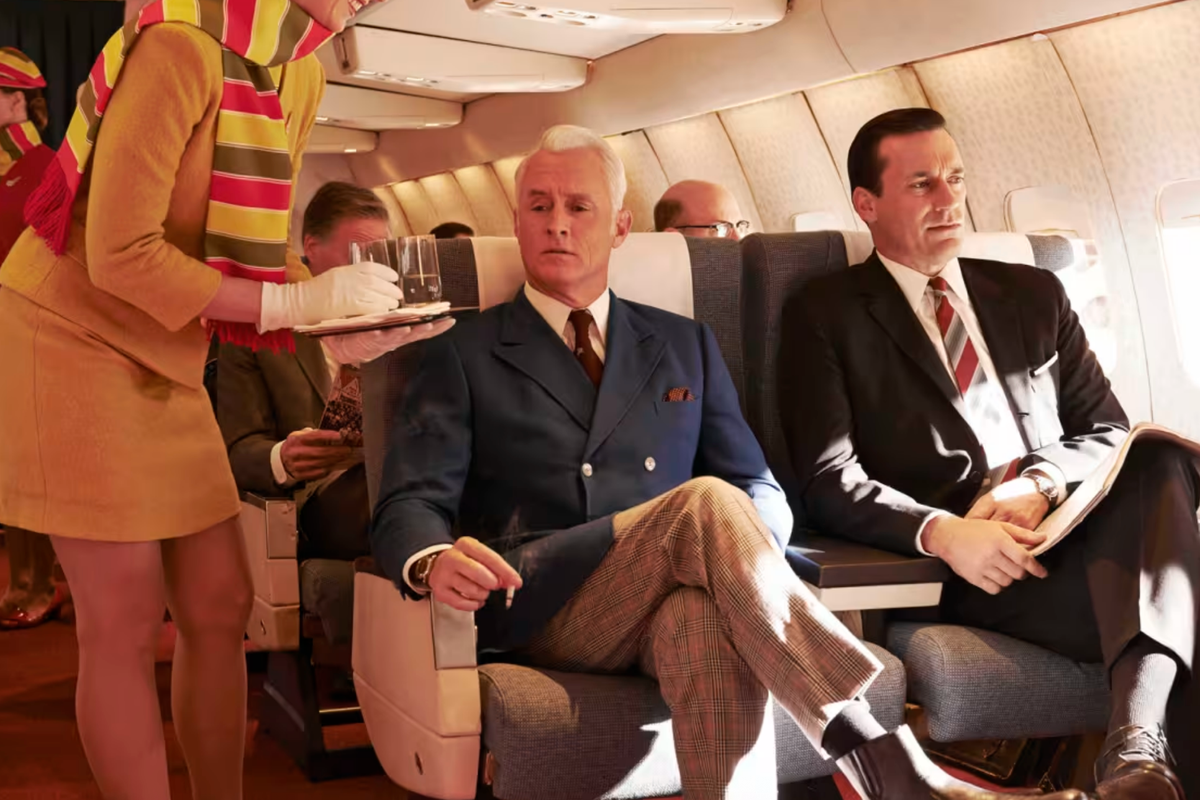
Predictably, so far, the US transportation secretary’s initiative has achieved exactly the opposite of what it set out to do. Rather than encouraging flyers to return to the so-called golden age of air travel that existed in the 50s and 60s – where passengers boarded planes in pillbox hats and skirt suits or single-breasted slim cut blazers – Americans have been retaliating by rocking up to the airport in sweatsuits and sleepwear. “Well, now I absolutely must wear my pyjamas to the airport!” one woman on TikTok wrote in response, tracksuit at the ready.
Where the US goes, the rest of the world often follows, meaning that airport civility may soon be suggested in the UK too. While America’s Federal Aviation Administration has reported almost 14,000 “unruly passenger incidents” over the past four years, the UK’s Civil Aviation Authority shared that it receives a “number of harrowing letters” every 12 months from passengers who witness “drunk and disruptive behaviour in-flight” – also known as “air rage”. It appears we have a problem. But are clothes really the way to fix it?
“People are not valuing air travel or seeing it as an occasion,” says fashion psychologist Dr Dion Terrelonge. “It’s become so accessible that it’s lost the thing that makes it special. In the same way that if someone brought you diamonds every single day, it wouldn’t be so special any more, the novelty wears off. As human beings, we respond massively to novelty,” she adds. “The fact you can now travel to mainland Europe for less than the price of a new pair of boots tells you a lot. Your weekly shop could cost you more than it does to get to the Costa del Sol.” At the time of writing, there’s a flight to Malaga for £23 – there and back.
Last year, Ryanair operated 3,044 flights a day on average, making it the most active airline, followed by EasyJet, according to the Eurocontrol performance review. During the Golden age era of air travel, before the introduction of budget airlines in 1970, there were fewer than half a million flights operated in an entire year, with only 195,000 operated in the whole of 1950. Perhaps somebody needs to remind the politicians that if they want their air travel rarefied, it must crucially first be rare – an argument that could aid both politeness and the planet.
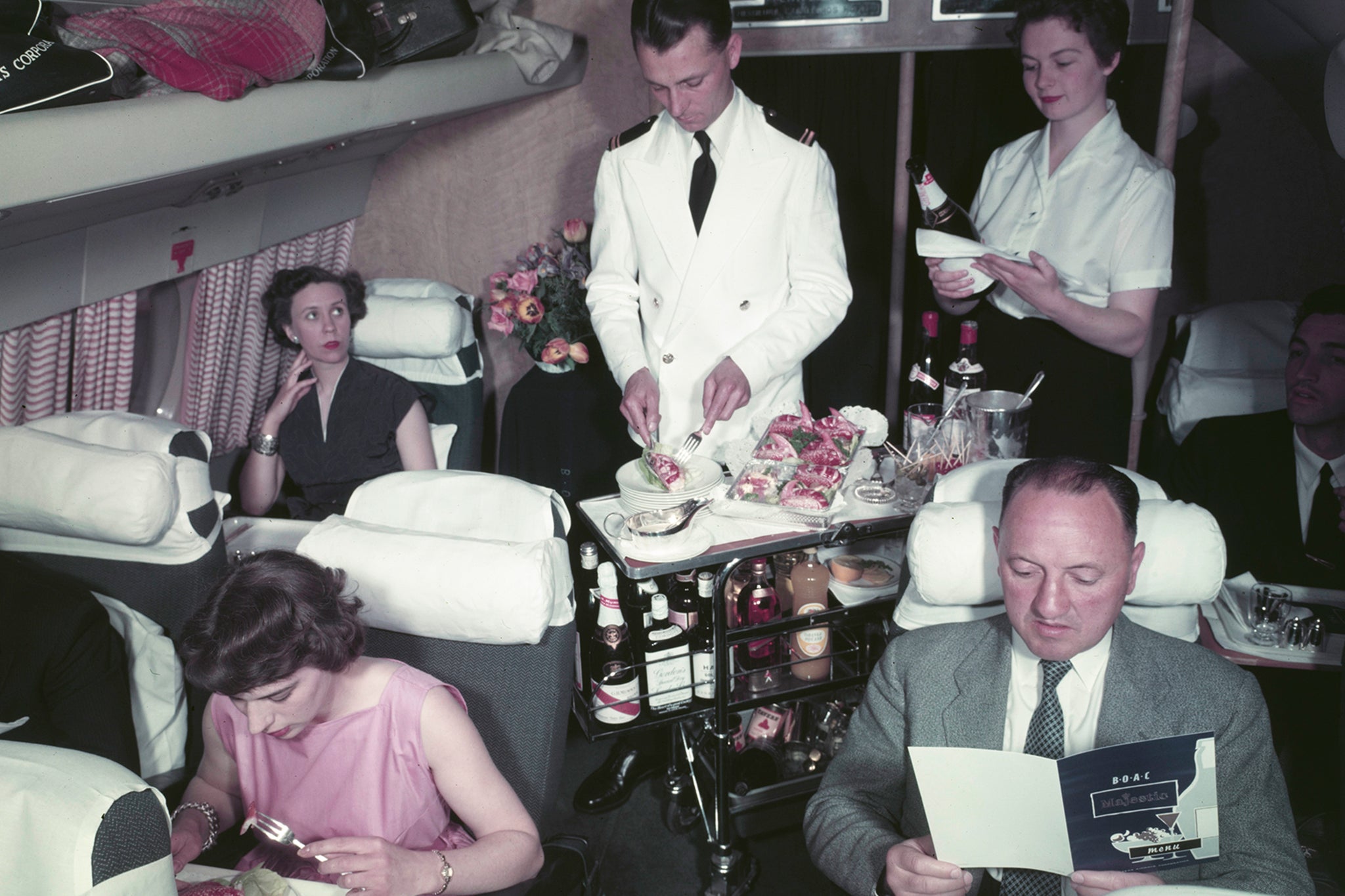
“We dress up for special occasions – birthdays, parties, even the work Christmas party only happens once a year,” Terrelonge explains. “Rarity, we know, increases the perceived value of something. Because of the accessibility of flying and the price, which is the outing’s perceived value, it’s less of an occasion. People see a flight as a flying coach.” Truly, there’s nothing chic about being blinded by a neon orange EasyJet Airbus A320.
Since the 50s and 60s, plane leg room has decreased, food has become less fancy, there’s no proper drinks service – and the interiors are awful. You wouldn’t put on your black tie to go to a Burger King. Similarly, nobody is going to wear a suit (or even jeans) to board a Ryanair flight. As humans, if we’re treated like cattle, we’re more inclined to act like them – cue bellowing, bare feet, and stinky snacks.
Although up in first class, things aren’t much better. It’s common now to see an influencer wrapped in overnight curl rods (for a tarmac-ready blow dry), with a hydrating sheet mask atop their face, and their feet out. Modern culture encourages this, with thousands of videos across the internet detailing “anti-airplane nighttime beauty routines”, which seem to suggest passengers have forgotten that the plane is not, in fact, their bedroom. The private shower in Emirates first class is, of course, the exception.
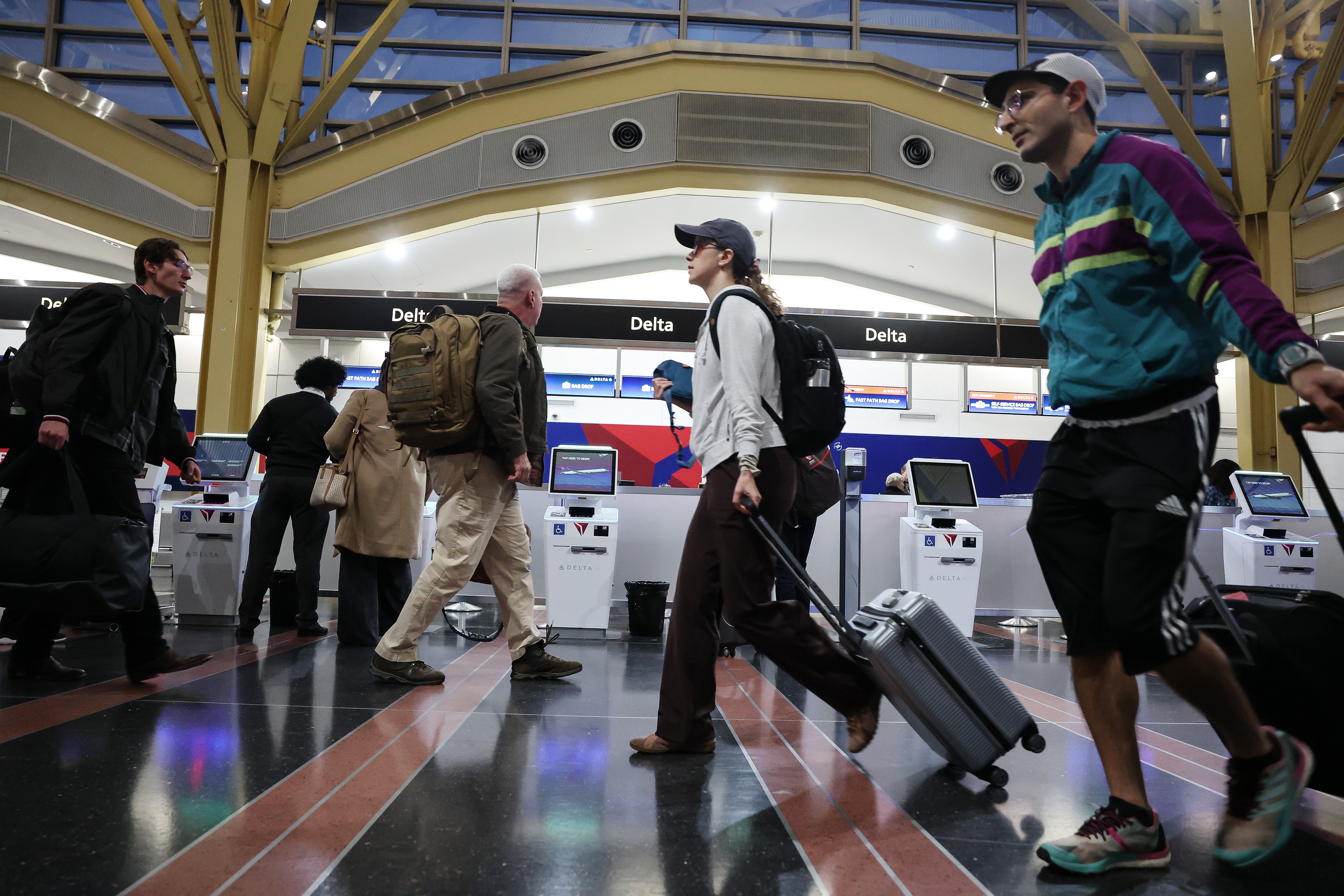
But personal stylist Manisha Sabharwal, in charge of dressing high-net-worth businesswomen who fly two to three times a week, says the entire flight clothing debate has fundamentally missed the point of what makes a so-called refined airline passenger in 2025. “There’s a huge psychological impact when we’ve made an effort. It changes the mood. But a suit, heels, it’s a bit try-hard. It’s like being the most overdressed person at the party. Why are you making so much effort?”
Instead, she says that travel chic has changed. It still doesn’t involve wearing pyjamas, but you don’t need to dress like you would for the office. “There’s a new travel dress code where people are prioritising comfort,” Sabharwal explains. “It’s elevated casual. For young people, it might be a cashmere set with a full face of makeup and a pair of Uggs. Women in their 40s, they’re wearing slightly more structured, close to the body, matching sets – and they might pair this with their favourite earrings and a gorgeous handbag from The Row. But people will always prioritise comfort. They’re not giving up on that.”
Her words are a reminder to never take fashion advice from politicians. Duffy might think it’s more appropriate for passengers to fly in jeans and a shirt instead of pyjamas and slippers – but what if they’re silk Victoria Beckham daywear pyjamas and slip-on mules from The Row?
In 2025, airport chic no longer requires a single button, and leaves Golden Age travel attire firmly in the past.
I’ve found the key to midlife career reinvention in a world run by young people
Miles Teller surprises wife by remaking wedding dress that got destroyed in wildfires
Beckhams among star-studded guestlist attending Holly Ramsay and Adam Peaty’s wedding
Dog treats recalled across seven US states over health risk
Researchers find new way to detect early signs of pancreatic cancer
Research may have found the secret to delaying chronic illness in old age