The new year heralds the start of legislation in several important policy areas. But not all the government’s hoped-for changes will begin on 1 January as key pieces of legislation have been stalled or thrown out altogether by a hostile and unpredictable Senate.
Here’s a list of some of the policy measures due to start and others that were left languishing.
Disability services
From 1 January, only commonwealth-appointed doctors will be able to assess new claims for the disability support pension in a move aimed at cracking down on welfare fraud.
“This measure … is not aimed at those who may never be able to work but rather people who can work with independent advice and the right support,” the social services minister at the time of the announcement, Kevin Andrews, said in December. “The government is committed to maintaining a safety net for those who cannot support themselves but many others remain on the pension longer than they need to.”
Overseas travel restrictions for people on DSP will be changed from six weeks a year to four weeks, saving the government $5m. Concessions for carers who travel with people with disabilities will also be reduced.
“The reality is that travel with a disability is complex and time-consuming and you can easily add an extra week other side of a family trip due to the logistical challenges,” said the head of People with Disability Australia, Craig Wallace.
“It is unclear that this measure will produce significant savings but, sadly, it adds to a false impression that people with disabilities are rorters and bludgers.”
The $100m More Support for Students with Disability scheme, which aims to help teachers and school communities help students with varied needs, will cease from 1 January. Young carers will be eligible for a bursary program of up to $10,000 which will help them study or undertake training.
Welfare
Changes to the indexation of family benefits will come into effect from New Year’s Day, and the primary earner income limit for the family tax benefit part B will be reduced from $150,000 to $100,000. Only families earning less than $100,000 will be eligible for the schoolkids bonus.
Untaxed superannuation income and accounts-based pensions will be included as part of the asset test for the commonwealth seniors card, and the income threshold for seniors to get the card will also be reduced.
But the Senate rejected the proposal to increase the pension age to 70 from 67.
“The changes to the pension that this government is proposing are unfair, and they’re also a broken promise from a prime minister who said very clearly ‘no changes to the pension’,” the acting Labor leader, Penny Wong, said.
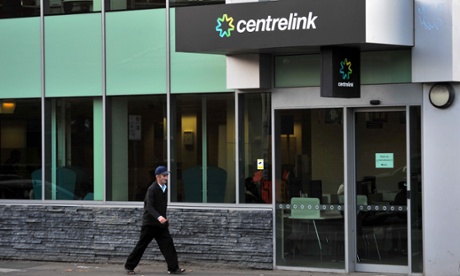
Centrelink support payments can be suspended for those who fail to attend meetings with potential employers, as the government tries to stamp out people who “game the system”. But its toughest measure – cutting off dole payments for under 30s for the first six months of their unemployment – was rejected by Labor and the Senate crossbench.
A number of national partnership arrangements that link school leavers with jobs in their desired industry also end on 31 December. Students will only be able to travel for six weeks before their support payments are cut off, and relocation scholarships for students who have to move between metropolitan areas to study will be restricted.
People on youth allowance payments will receive a little extra money, as the allowance increases by $6.20 a week. States will receive an extra $406m to ensure access to early childhood education programs.
Low-income earners will lose the clean energy subsidy from New Year’s Day.
Health
The federal government had proposed to increase co-payments for the pharmaceutical benefits scheme (PBS) from 1 January, but these measures were shot down by Labor and other crossbenchers. The increase would have seen general patients pay $5 more and concession holders 80 cents more.
“With parliament not due to sit again until February, this means the hit to patients is now on hold, but make no mistake, Tony Abbott only abandoned this deceitful hit on patients because Labor forced him to,” said Labor’s health spokeswoman, Catherine King. “For as long as the Abbott government remains in office, it will seize any opportunity to hit patients with its PBS price hike and GP tax.”
The legislation for the controversial GP co-payment has been altered and is yet to pass parliament. The government’s proposed medical research fund, which would have been funded with revenue from the co-payment, would have been due to start on 1 January.
In December the prime minister reiterated his support for the fund. “At the heart of the budget earlier this year was the medical research future fund,” he said. “Changes that the government announced [to the GP co-payment policy] make the realisation of the medical research future fund more sure and I know that is important to the medical research community of Australia.”
The government has announced it will fund an extra 300 training placements for GPs, and will continue its program of free flu vaccinations for Indigenous children aged up to five years.
Asylum seekers and immigration
On 5 December the Senate narrowly passed legislation containing a suite of measures. One of the changes was the reintroduction of temporary protection visas (TPV). The measure technically started on 16 December but is subject to operational adjustments so none had been granted by the end of the year.
Scott Morrison, as immigration minister, had been pushing for TPVs since before the last federal election. He said they would have come in sooner had Labor and the Greens supported the policy. “The frustration of what was a clear mandate at the last election on TPVs, I think, has created an unnecessary obstacle,” he said in September.
But Kon Karapanagiotidis from the Asylum Seeker Resource Centre said: “January 1 will usher in a year of great uncertainty and anxiety for 28,000 asylum seekers nationwide.
Karapanagiotidis said those who worked with refugees would be “under siege with the legal, mental health and welfare crisis that these new laws will usher in”.
The cost of partner visas under the permanent family migration stream has jumped 50% to nearly $7,000, and the cost of passports has also increased.
Small business and innovation
The government has introduced a code of conduct for franchising arrangements which will come into play on 1 January.
The code will act as a “prenup” between franchise owners and franchisees, and will give the Australian Competition and Consumer Commission the power to impose fines and mandate mediation.
“This gives small businesses more flexible and stronger options,” said the small business minister, Bruce Billson. “It’s the first really substantial code of conduct in this area, done with a high degree of collaboration.”
The $476m Industry Skills Fund commences on 1 January and will deliver 200,000 targeted training places and training support services, with a focus on small to medium enterprises.
Outstanding legislation in 2015
The Coalition has failed to make headway on a number of key measures introduced in the May budget owing to a hostile Senate.
Opposition to higher education reforms has already forced the backdown of $3.5bn worth of savings measures, including scrapping the planned increase in interest rates on student loans, freezing indexation on debts for low-earning parents, and a getting rid of the $100m structural adjustment fund to help universities move to the new system. The concessions were offered as sweeteners to the crossbench, many of whom oppose the broader changes.
The government also changed elements of its GP co-payment, instead opting to allow doctors to charge general patients $5 extra and set their own fees to make up any revenue shortfalls.
The assistant treasurer, Josh Frydenberg, has highlighted these two policy areas as priorities in the new year. He said the government was open to negotiation on budget measures halted in the Senate.
“We obviously have still a number of outstanding items from the 2014 budget, namely getting our Medicare co-payment through the Senate as well as changes to higher education where we are two votes short,” he said.
“The key point is when it comes to savings changes, this [budget] is about reducing the tax burden, not just on the current generation but the next one.”
The government must decide if it will reintroduce a number of welfare measures, including the controversial six-month waiting period for welfare recipients under the age of 30, into the parliament next year. Negotiation on those matters will fall to the new social services minister, Scott Morrison. He will be tasked with recrafting the paid parental leave scheme after elements of the old policy were abandoned in early December.
The creation of a new safe haven enterprise visa, which helped get the Palmer United party over the line to vote for the suite of asylum changes, will come into play some time next year, though no timetable has yet been established for their formal introduction. The new fast-track asylum process, which will leave applicants with little option for review of a negative decision, will also take effect some time in 2015.
Central to all the outstanding policies is the ability to negotiate with the Senate crossbench. The independent senator Nick Xenophon said Abbott must finesse his negotiating style.
“I just think it’s a bit curious that the prime minister’s approach seems to be identical to his approach as opposition leader,” Xenophon said. “That’s one of confrontation, it’s one of being incredibly negative.”
He labelled as Abbott “the author of his own misfortune”.