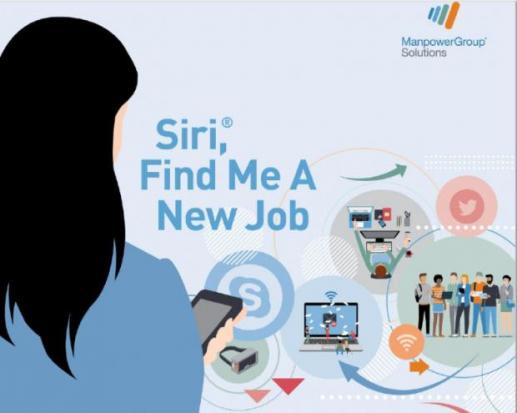
Artificial intelligence is making its way into the human resources (HR) field to help in areas such as analysing the resumes of job seekers. Technology has the potential to provide a better candidate experience as well, according to a new survey by ManpowerGroup, the multinational staffing, recruitment and assessment specialist.
These new trends are emerging at a time when employers in large businesses are struggling to fill jobs, as many have not yet adapted to the new ways that job seekers are using technology.
The ManpowerGroup 2018 Global Candidate Preferences Survey looked into the behaviour of the current candidate workforce, especially the channels and applications they use to search for information about employment. It interviewed nearly 18,000 people between the ages of 18 and 65 in 24 countries. In Asia, the survey covered India, Malaysia and Singapore.
The report also outlines practical steps that employers can take to attract and retain "right-skilled" workers. The research shows that technology has the potential to provide a better candidate experience but is no substitute for human interaction during the hiring process.
In fact, 26% of all candidates selected in-person interviews as their preferred recruitment method. This means that "high touch" -- human contact in other words -- will always be an essential part of the candidate experience.
Technology alone, however, can help automate many time-intensive tasks. Of those technologies, social media were the most popular channels for candidates to use when job hunting.
Therefore, finding the right balance of technology and personalisation is critical to attracting top talent. ManpowerGroup also found that technology combined with a personal approach is the top priority for job seekers.
The survey uncovered a significant number of candidates who have used two or more technologies in their job search during the past six months. The biggest tech adopters tend to be young, live in cities and seek tools that are fast, modern and responsive to current social needs. Most belong to Generation Z (age 18-21) or Y (millennials aged 22-34), and matching technology to these candidate groups is crucial for employers.
For example, job descriptions for almost all junior to mid-level positions are now listed extensively in online media. However, this happens less often for senior positions, which mainly rely on recommendations or recruitment by third parties. Therefore, global and Thai agencies or employers need to adjust how they publicise openings to ensure the postings match each labour group, so that they can attract and retain right-skilled workers.
The survey also shows how technology can help increase the number of job applications, which is not always a good thing. Quantity is no guarantee of quality in the candidate pool, and employers may not have the time to screen a larger number of applications. That has created a demand for technology such as AI applications that can help HR departments with ranking and screening.
India and Malaysia are two countries with the highest use of technology in the HR process, while Canada and Japan ranked the lowest. Young candidates prefer to use three technologies: social media advertising, mobile applications, and announcements or messages from organisations such as SMS.
For employers looking to find the right balance of high tech and high touch and improve the candidate experience, there are five things to consider when adopting new recruitment technology:
Define the problem.
Know the audience, so that the technology matches the candidates you're looking for.
Diversify the channels that match the target group.
Turn quantity into quality.
Incorporate human interaction.
The future of recruiting will always be human but will be increasingly augmented by tools and technology that will benefit recruiters and job seekers alike. HR departments must make the adjustments necessary for this new era.
As well, job applicants should learn more about how they can adapt, increase their skills and knowledge to meet employers' needs, as well as nurture the right skills and personality and know how to use technology appropriately.
To download the report, go to https://bit.ly/2mXVjsp