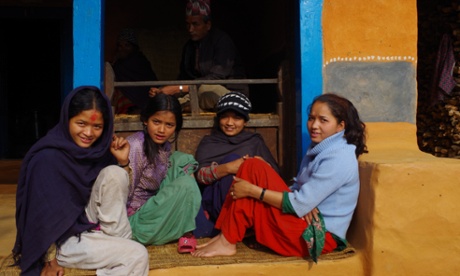
Suk Kumari’s experience isn’t unique. Globally some 2.5 billion people have no access to a clean toilet, that’s one in every three people. In rural Nepal, that figure can be much higher. An estimated 15 million still practice open defecation, making Nepal one of the world’s worst affected areas.
Sindhupalchowk, a district in eastern Nepal, is mountainous and parts of it are only reachable on foot. The region depends on agriculture but is not fertile and is prone to landslides. In 2009, the district’s sanitation coverage was only 31%.
The GSF programme in Sindhupalchowk was initiated in June 2012. Sanitation coverage has now reached 62% and more than 73,000 people have access to improved sanitation facilities.
Sindhupalcowk’s target is to achieve open-defecation free status by 2015. Today, the Global Sanitation Fund is working community by community to educate villagers about the dangers of open defecation and teach them how to build their own toilets.
Large-scale programmes funded by GSF in 11 countries have to date resulted in nearly 6 million people living in open-defecation free environments and more than 3.1 million people using improved forms of sanitation.
Investing in sanitation and hygiene using community-based approaches pays dividends, not only in the health sector, but also on livelihoods, the economy and greater human dignity.
This film was produced by UN Television for the programme “UN in Action”.
Find out more about the Global Sanitation Fund programme in Nepal.
Content on this page is paid for and provided by WSSCC sponsor of the Guardian Global Development Professional Network.