For those of us who work in the creative industries, the news that AI-generated portraits are now hanging in London's National Portrait Gallery might provoke a sinking feeling.
Haven't we been here before: a tech company swoops in, uses an artist's work to train a model, and takes the credit? It's a story that's played out across illustration, photography and graphic design, and the anger it's generated is typically justified.
At the same time, the National Portrait Gallery is a respected and thoughtful institution that's well known for supporting artists, not exploiting them. So what exactly is going on here?
What's happening?
The project is called A National Portrait for the National Portrait Gallery. It's a digital commission by Es Devlin, the British artist and set designer behind some of the most spectacular stage productions of the past three decades, from Beyoncé's Formation World Tour to the Super Bowl half-time show. (Full disclosure: I featured Es as one of the picks in my book, 50 Greatest Designers.)
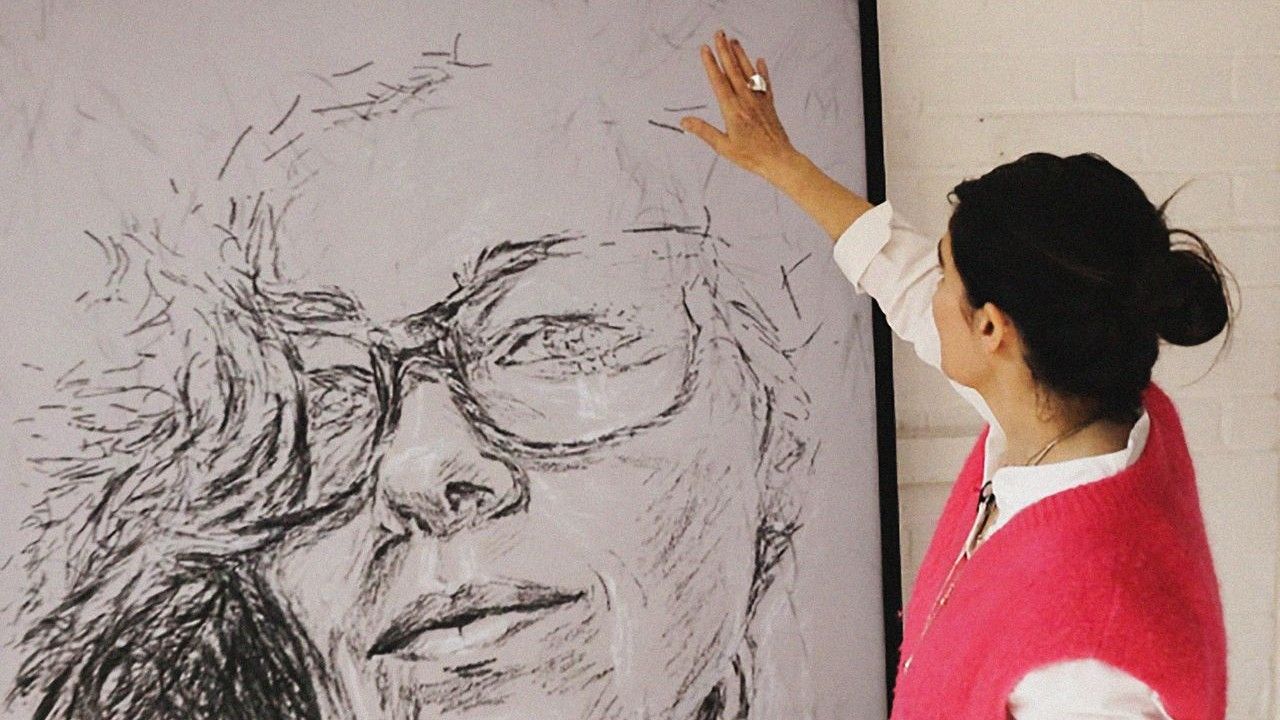
Created in collaboration with Google Arts & Culture Lab, the project's been running since 14 May. Here's how it works: you photograph your face, an AI model transforms it into an animated charcoal-and-chalk sketch, and that sketch joins an evolving collective portrait on display in the gallery's History Makers room. Thousands of faces, endlessly cycling. Your face, alongside kings and cabinet ministers.
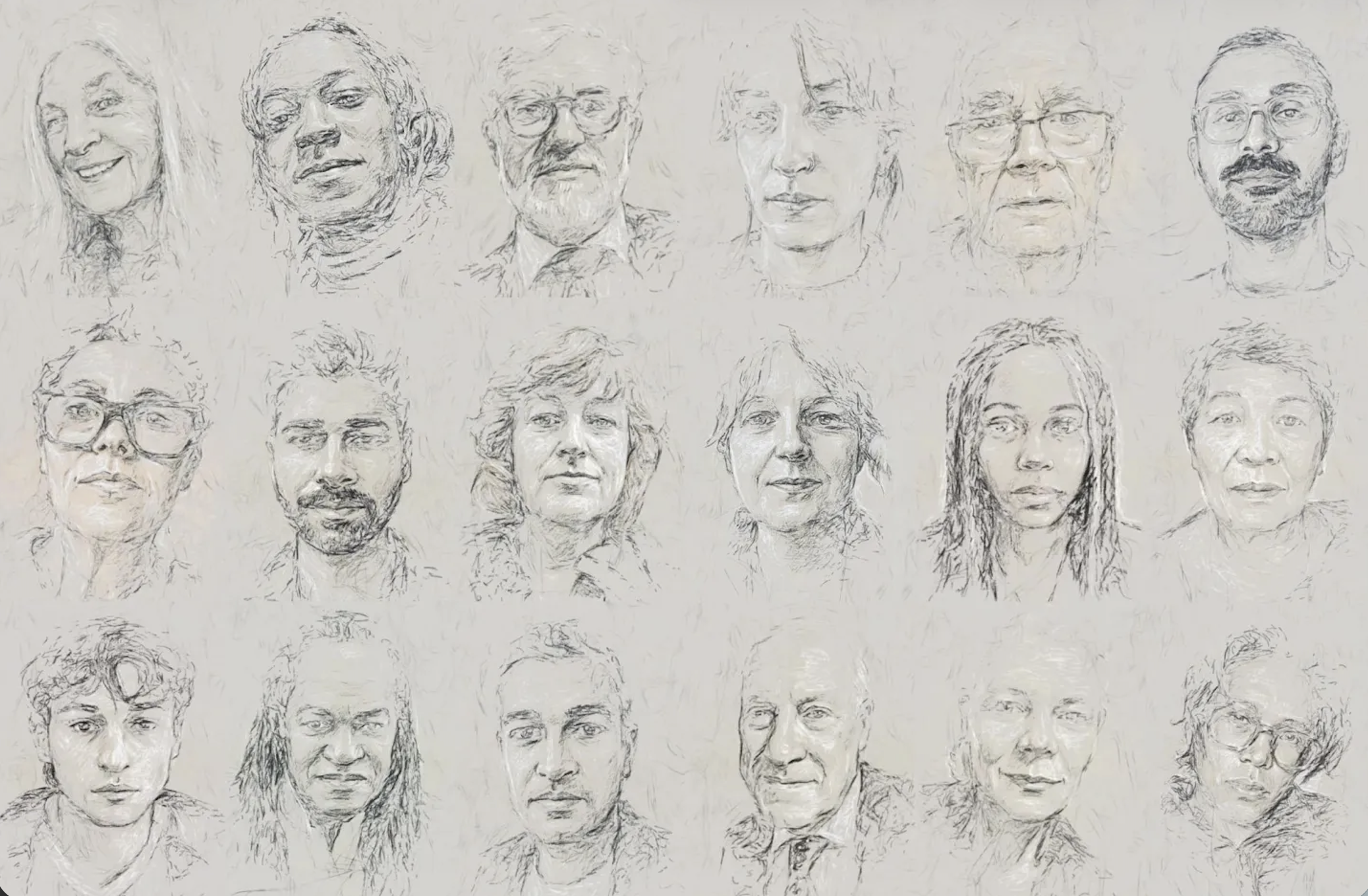
On the surface, it's easy to see this as another example of AI muscling in on the work of human artists. Portraiture is one of the oldest and most intimate forms of art-making, built on the relationship between two people in a room. Handing that process to an algorithm feels, at first glance, like sacrilege.
Here's why, though, I think it's worth looking more carefully. The AI model used in this project wasn't trained on images scraped from the internet without anyone's knowledge or consent. It was trained specifically on Es's own drawings, built to replicate the visual language she's developed over 30 years of sitting with people, looking carefully and putting marks on paper.
All of those hours of close observation became the dataset. Es didn't just lend her name to the project: she built it, she controls the aesthetic output, and she leads the drawing workshops that accompany it. Perhaps most importantly, she's named as the artist, not the algorithm.
That's a meaningfully different proposition from the unauthorised scraping that has caused such legitimate fury across the creative community. Whether you think it fully resolves the ethical questions around AI and authorship is another matter. But it does at least demonstrate that there's a way to use this technology that keeps the human artist at the centre.
What it's trying to achieve
The hard question, however, isn't whether this particular project is ethical (on balance, I'd argue it is). It's what it normalises. If a gallery as significant as this is putting AI-generated work on its walls, even work as thoughtfully constructed as this, it's moving the Overton window; the range of policies and ideas that the public finds politically acceptable at any given time. And maybe that could makes it easier for less scrupulous uses of the AI to follow.
Whether or not that's a good argument, I'm not sure. But I think the wider lesson is to keep asking the same questions this project (to its credit) actually answers. Namely: who trained the AI model, on whose work, with whose consent, and who is named as the artist at the end of it?
Because although the AI genie is already well and truly out of the box, maybe that's a useful place for creatives to try to hold the line.
The exhibition is on display in Room 33 at the National Portrait Gallery, London, until 27 October. Entry is free, and you can participate in the project at goo.gle/national-portrait. My thanks go to Benjamin Gulak, the founder of art matchmaking site NALA for bringing this issue to my attention.