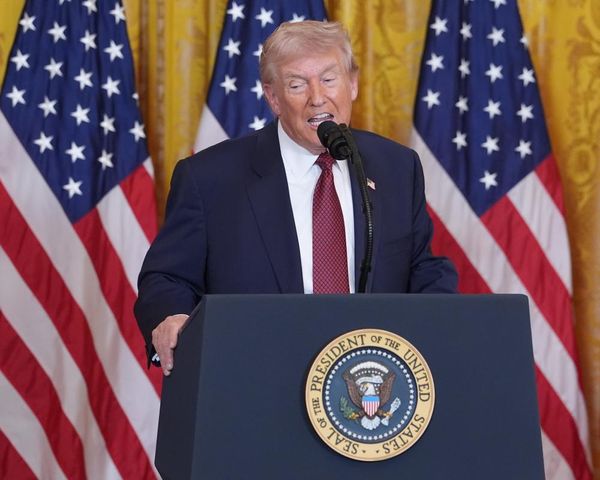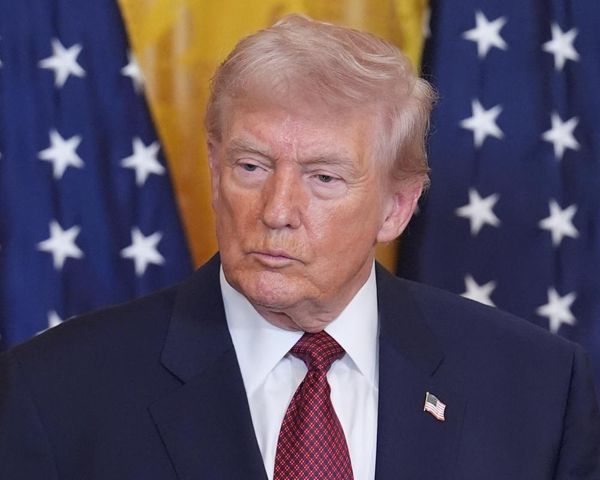
This was not the year of the first female president. It was, though, the year that women said #MeToo � and #Resist. The biggest single event occurred the day after President Donald Trump's inauguration, when more than a million women and their male supporters rallied in cities around the world, including Washington, New York, Chicago and Los Angeles. "We can whimper, we can whine, or we can fight back," Sen. Elizabeth Warren, D-Mass., told marchers in Boston. "Me, I'm here to fight back."
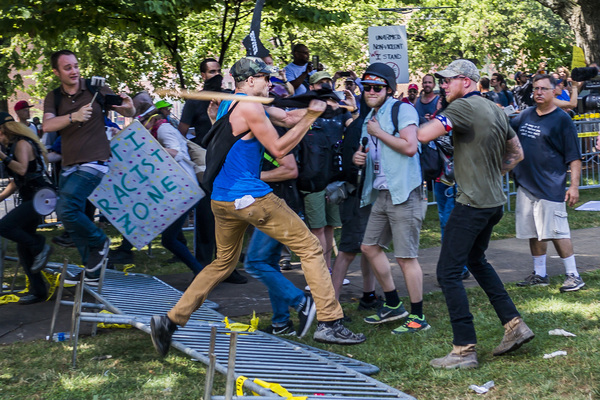
By their telling, white supremacists were emboldened by the election of Trump, who was slow to renounce them and embraced some of their social media memes during the campaign. That came to a head Aug. 12, when neo-Nazis and other white supremacists rallied in Charlottesville, Va., chanting "blood and soil!" and "white lives matter!" A woman died when she was run over by a car, whose driver, a white supremacist, was charged. An independent review of the events conducted by former U.S. Attorney Timothy Heaphy concluded that the City of Charlottesville had failed to protect public safety and the protesters' right to express themselves.
It was a hurricane season like no other. Hurricane Harvey slammed into the Gulf Coast of Texas Aug. 25, drove north and remained over Houston for days, bringing a deluge that flooded tens of thousands of homes. Statewide, more than 50 people died. Less than two weeks later, Hurricane Irma ran through the Caribbean before hitting Florida, causing widespread damage but far fewer deaths than feared.
Then came Hurricane Maria, which hit Puerto Rico directly, leaving most of the island without power or potable water _ but with plenty of anger over what was perceived as inadequate help from the Trump administration. More than two months after Maria tore through the island, much of the U.S. commonwealth remained crippled.
On the ground, it was a party. Thousands of people were spread out across a fairground, enjoying a country music performance as part of the Route 91 Harvest festival. High above them, a man with high-powered assault weapons was watching from a window of the Mandalay Bay hotel. Then he opened fire. Fifty-eight people died and more than 500 were injured in the worst mass shooting in U.S. history. The shooter apparently took his own life; his motive remains a mystery.
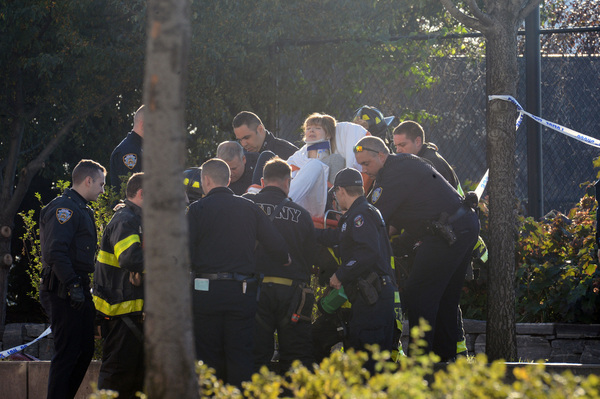
Authorities said he killed eight people by driving a rental truck along a popular bike path in Lower Manhattan. Sayfullo Saipov, in his hospital bed, said he "felt good about what he had done" and asked for an Islamic State flag to be hung in the room. Saipov, a legal immigrant from Uzbekistan, was yet another acolyte who had been radicalized by Islamic State online and allegedly took it upon himself to kill as many people as possible. New York refused to bow. The New York Marathon went ahead as scheduled the following Sunday.
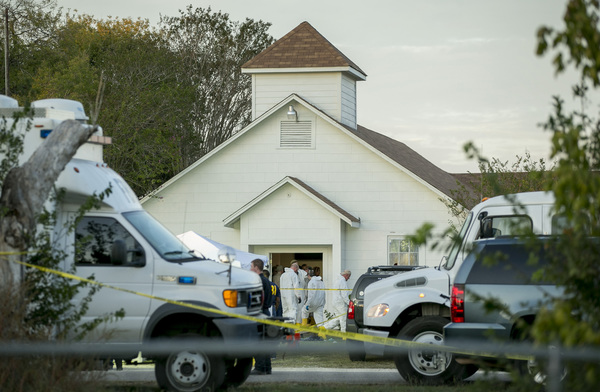
The killer was methodical, relentless. He marched through the church with an AR-15-style rifle and mowed down everyone he saw _ adults, teenagers, babies. His target was as "soft" as they come _ First Baptist Church of Sutherland Springs, Texas, a welcoming place whose congregants included the shooter's mother-in-law, with whom he was apparently having a dispute. In the end, 26 people were killed.
Scientists bade bittersweet farewell to Cassini, the NASA spacecraft that spent 13 years exploring Saturn. Cassini, whose breakthrough discoveries revolutionized the search for life beyond Earth, disintegrated in the ringed planet's cloud tops. NASA had extended the spacecraft's original four-year mission twice. And even in the final seconds before it burned up like a shooting star, it sent new data from deeper in Saturn's atmosphere than it had ever been before.
Moving along a 2,600-mile, 14-state path starting in Oregon and ending in South Carolina, a total eclipse of the sun Aug. 21 seemed to bring out everyone's awestruck inner poet _ or curious amateur scientist. Even in cities where the eclipse was only partial and the sky barely darkened, office workers clustered on street corners, using protective glasses to look. And for those who fell in love with the darkest moment of the celestial event, when they had the rare chance to glimpse the sun's fiery corona, it's not too early to plan for the next one in the U.S., in 2024.