From flooding and fugitive former prime ministers to murders, unexplained deaths and a bitter row over coal-fired energy, these stories made the headlines in Thailand this year By Paritta Wangkiat and Chaiyot Yongcharoenchai
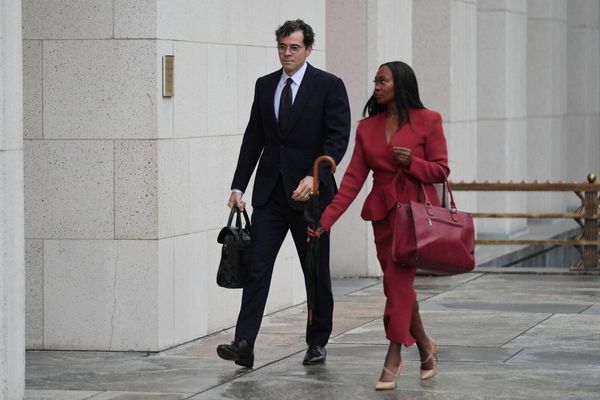
The whereabouts of Yingluck Shinawatra remains one of the largest mysteries of the year. On Aug 25, the former prime minister failed to appear at a Supreme Court hearing for the verdict of a long-running trial on her controversial rice-pledging scheme. Her lawyer told the judge Yingluck was having issues with fluid in her ears, which rendered her unfit for court.
News fast spread that the Pheu Thai Party leader had fled Thailand. Theories among media outlets proliferated -- some speculated she had left for Singapore, others said she had left to Dubai to visit her fugitive brother Thaksin Shinawatra, before finally flying out to London.
Yingluck's two passports -- one standard, the other diplomatic -- were promptly cancelled by the Foreign Ministry. She is now thought to be seeking political asylum status in the United Kingdom.
There is no clear proof indicating where exactly the former leader is now, but many speculate she will continue to keep a low profile until her status is settled.
Another theory posits that Gen Prayut Chan-o-cha's military government helped facilitate Yingluck's escape. It is thought that sentencing Yingluck, a popular leader in much of Thailand, could have led to large protests from her supporters akin to the political clashes seen leading up to the 2014 military coup. Her fleeing of Thailand would also justify the military's framing of her and the Shinawatra clan as "bad politicians" with corrupt legacies.

The Supreme Court's verdict, read on the rescheduled date of Sept 27, announced that an 8-1 ruling would have dealt Yingluck a five-year prison term for criminal negligence and malfeasance in her cabinet's government-to-government (G2G) rice stock sales. It indicated that while the former prime minister was aware of rice deal-related damage incurred by fraud due to alerts from state agencies, no-confidence debates and parliamentary inquiries, as well as appeals by media and politicians, she still failed to stop the plan's implementation.
According to the verdict, Yingluck, who also served as the chairwoman of the National Rice Policy Committee, had assigned Weerawut Wajanaphukka, the former assistant secretary to the commerce minister, to sit on several committees to determine the viability of the rice-pledging scheme. He was also found guilty in the G2G rice deal case.
The only judge who ruled in favour of Yingluck said there was simply no proof that she had assisted a company found to have illegally benefited from the release of state grain.
Following the verdict, the coup body, the National Council for Peace and Order, sent a legal official to file a police complaint against a former deputy chief of Metropolitan Police Division 5, Pol Col Chairit Anurit, accusing him of assisting Yingluck's escape in August.
He is believed to have driven Yingluck and her secretary in a Toyota Camry from Bangkok to Sa Kaeo. From there, they are said to have crossed the border to Cambodia in the pickup truck.
Pol Col Chairit was charged with violating the Criminal Code's Section 157 concerning malfeasance or dereliction of duty committed by state officials. He was among three police officers ultimately detained in September in connection with Yingluck's escape.
He was dealt an arrest warrant after failing to show up to acknowledge charges on Nov 10.

YEAR OF THE FLOOD
The weather seems to have grown more extreme over recent years. This year's flooding can attest to that, with climate change and poor water management cited as major causes.

In early January, the start of the dry season normally, southern Thailand was dealt heavy rainfall due to the strong monsoon. In that month alone, accumulated rainfall was 10 times higher than the area's average recorded over 30 years.
Over 1.21 million rai of land was flooded, leaving 1.8 million people affected and 95 dead.
In the second half of the year, heavy rainfall was reported in the North, Northeast and Central regions of Thailand as by-products of typhoons like Talas, Sonca and Doksuri sweeping across Southeast Asia.
In early October, the government reported that several dams across the country were nearly full and water needed to be discharged shortly.
As of Oct 24, the Royal Irrigation Department (RID) reported that accumulated rainfall in Thailand reached 1,771 millimetres. The calculated rainfall in the same timeframe in 2011 was similarly high at 1,798 millimetres.
As the rainfall figures rise, the government has been pelted with the same question repeatedly -- what will happen if Bangkok goes under water like it did in 2011?
The government has explained that it has a plan to drain excess water from the northern basin held in dams or reservoirs into rivers, making its way south to the Chao Phraya. From the Chao Phraya basin, the water will then be transferred to agricultural fields to harvest crops.
However, this plan has induced months of inundation across 23 provinces for some low-lying riverside communities. Bangkok and other major industrial areas have remained largely protected from this.
Over 327,000 people were directly affected by the floods, with at least 47 households evacuated and 24 people left dead.

At the peak of the flooding, Prime Minister Prayut Chan-o-cha was quoted saying that he felt sympathy for the locals and their communities who had sacrificed their safety. He added that his cabinet had a revised flood management plan that would reduce any losses and damages.
The plan created outcry when the public realised it would disrupt the livelihoods of communities outside the areas defined as key economic hubs. A reported lack of aid for these outlying communities lingers to this day.
Meanwhile, poor urban planning in Thai cities continue to block water flow.
Flooding has let up across the country by now, but those affected are already bracing for the next big one. Despite the government's assurances, low-lying communities remain highly vulnerable.
By the end of November, the South was slammed by another flood. As of Dec 15, 11 provinces and 1.64 million people were affected, with 35 counted dead -- a disaster with apparently no end in sight.

>> COAL PLANT FUELS DEBATE
Coal is at the centre of Thailand's energy debate. Throughout the year, the government has promoted two coal-fired power plant projects in Krabi and Songkhla. These have been met with fierce opposition from community members.

The project owner, the Electricity Generating Authority of Thailand (Egat), has been criticised for downplaying the power plants' negative effects and limiting public participation in the plan.
Egat has denied all allegations, continuing to list the project's economic benefits in response.
Protest leaders were temporarily detained by security officers after gathering in front of Government House in February. After the arrest, the 800-megawatt coal-fired power plant project was put on hold. Authorities said implementation would be delayed until health and environmental impact assessments were complete.
Meanwhile, in Songkhla's Thepha district, a 2,200-megawatt coal-fired power plant project has proceeded full steam ahead. This led to clashes between police and 50 residents who had submitted a letter protesting the project to the prime minister while he was visiting Songkhla in November.
The chaos resulted in the arrest of 16 people who have since been released on bail. They were charged on several counts, including obstructing traffic, resisting arrest, harming authorities and carrying weapons -- the latter referring to the protesters' sticks bearing anti-coal campaign flags.
They didn't get to speak to Gen Prayut, who later called the protesters' actions "violent".
These conflicts will continue into next year as other groups lend support to the locals' cause. Mara Patani, an umbrella organisation of insurgent groups in the deep South, published a letter in support of the protests after the clashes.
"We stand firm in solidarity with the people of Thepha and remind the government that to proceed against the wishes of the people and respond with iron fists will not only worsen the situation but may cause undesirable outcome similar to the Krisek (Krue Se) and Tak Bai incidences of 2004," read the Mara Patani statement issued on Nov 28.
The incidents referred to in the statement were major causes of resentment for the Muslim majority in the deep South towards Thai authorities in over a decade of unresolved conflict and violence.
ARMY CAPTAIN SUSPECTED OF MURDER
The disappearance of Juthaporn "Aoi" Oun-on, 37, director of the education division of Cham tambon administration organisation in Si Sa Ket, back in July remains a mystery to this day.

Gone girl: Juthaporn 'Aoi' Oun-on PHOTO: ARCHIVE
Police think the leading suspect, Capt Supphachai Phaso, 30, killed Aoi and resold her car using fake documents, but they are still struggling to determine what happened to the director.
Capt Supphachai, a member of the 2nd Infantry Battalion of the 6th Infantry Regiment in Ubon Ratchathani, denies any wrongdoing. He reported to Pol Maj Gen Suradet Dentham, chief of Si Sa Ket police, to address Juthaporn's disappearance and the suspicious sale of her car to a used-car firm.
The lack of knowledge over Juthaporn's whereabouts at the time meant that the initial charges laid were illegal detention, theft, document forgery and damaging another person's documents, said Pol Maj Gen Suradet.
Citing preliminary findings from the police investigation, he said she went missing some time after she dropped her child off at a school in Kantharalak district at about 7.40am on July 3.
She left the car at the school parking lot. The vehicle had a Chiang Mai licence plate -- No. Kor Sor 8201. She had planned to go to her office at the Cham tambon administration organisation, but she never arrived, nor did she pick up her child from school that day.
Investigations showed that Capt Supphachai contacted a woman named Suchawadi Pathum-in concerning the sale of Juthaporn's car at 3pm on the same day, said Pol Maj Gen Suradet. Investigators have also learned that Capt Supphachai, thought to be a close friend of Juthaporn, was the last person to be in contact with her on that day. The two were found to have some sort of financial arrangement.
When questioned by police about money transfers made from Juthaporn's bank accounts to his own, Capt Supphachai said the money was forwarded to pay off debts that she owed him.
Police have thought of several motives behind the disappearance of Juthaporn, including the possibility of a conflict at work, issues related to her assets and a troubled extramarital affair.
Adding further mystery to the story, the last post on Juthaporn's Facebook profile on which she goes by the name "Oil oil" was a post reading: "In short, [I] won't go back."
By late October, Capt Supphachai was called on by police to confront charges of abduction and premeditated murder of Juthaporn.
He is scheduled to meet the Kantharalak district police after a DNA sample from a skull found in a forest in Nam Yuen district of Ubon Ratchathani was determined to match Juthaporn's.
Capt Supphachai is a military officer based in the nearby Warin Chamrap district of Ubon Ratchathani.
Investigators think that Juthaporn and Capt Supphachai were together on July 3 shortly before the woman disappeared.
Capt Supphachai reportedly told police that Juthaporn had asked him to sell her car, a Toyota Vios sedan.
However, the signature in the car resale document purported to be that of Juthaporn may be fake, say police.
On Aug 11, Pol Maj Gen Suradet said there was strong evidence suggesting the army captain sold the car to a businessman against Juthaporn's will.
Evidence included a fake registration book for a Toyota Vios used for selling the car, which was later repainted.
Juthaporn's family held a religious rite on Oct 29 as they waited for the forensic lab results of the sample to come in. Juthaporn's mother Laem Oun-on said the rite was organised at the family's new house that is under construction in Ban Cham Meng of tambon Sao Thong Chai in Kantharalak district.
She says the new house had been paid for by their daughter and the family planned to enshrine her ashes there as a tribute.
When the DNA results confirmed the body belonged to Juthaporn, Ms Laem said she was relieved to have found her daughter after over three months of searching, although she still felt distraught.
Pol Maj Gen Suradet has ordered local police forces to be meticulous as they continue to collect evidence.
ACTIVIST SHOT DEAD BY SOLDIERS
On the morning of March 17, the life of Lahu rights activist Chaiyaphum Pasae, 17, was taken in an extrajudicial killing at a checkpoint just 10km away from his home village of Ban Kong Phak Ping in Chiang Mai.

Chaiyaphum was driving with his friend when they were stopped by soldiers. After inspecting the vehicle, they claimed to have found about 2,800 methamphetamine pills.
Soldiers allege that Chaiyaphum took out a hand grenade as he resisted arrest. The soldiers then fired at him in what they call "an act of self-defence".
His death spurred many questions. Those close to him say he was never a drug dealer and questioned the legitimacy of the killing. Police staunchly defend their actions on that day.
Later, CCTV camera footage of the shooting scene surfaced. It has yet to be revealed to the public.
Police filed the case in Chiang Mai court, insisting that Chaiyaphum and his friend were caught possessing drugs. The first trial was held in September, but the court is still processing the case.
Still, there is no real clarity on what happened on that day.
The ethnic Lahu group have suffered many decades of stigma left by the drug war of Thaksin Shinawatra's government in 2003. Human Rights Watch reported 2,275 extrajudicial killings across the country in the first three months of the Thaksin government's campaign.
The death of Chaiyaphum has dredged up some of these upsetting memories, drawing attention to the lack of trust between ethnic minorities and security forces.
"We want to know if [Chaiyaphum's] dignity can be recognised," says Maitree Chamroensuksakul, an ethnic activist and a close friend of Chaiyaphum's. "If he's a wrongdoer, we will admit that. But regardless of whether he was right or wrong, killings like this shouldn't happen so easily."
The search for truth carries on.
PREAW COURTS PUBLIC SPOTLIGHT
The face of Preeyanuch "Preaw" Nonwangchai was splashed all over front pages, TV channels and social feeds this year. In July, Thailand witnessed its first high-profile female murder suspect, grabbing people's attention with her good looks and ugly crime.

After the news of Warisara "Am" Klinjui's murder broke, widely followed Facebook page administrators started writing their own analyses of the case. Preaw was leading the suspect pack.
Mainstream media proceeded to leap on the story that would become known as the "Preaw Phenomenon".
The suspect grew up on a farm in a broken family in Khon Kaen before dramatically transforming her appearance with plastic surgery and becoming a bargirl.
After having a conflict with friend Warisara, 22, Preaw is alleged to have murdered her. She is accused of concealing the victim's identity by cutting up her body before placing the parts in a barrel and burying it under ground in Khao Suan Kwang district.
According to police, Preaw confessed to strangling Warisara and dismembering her body. The victim's body parts were recovered from the shallow grave on May 25. She insisted that the murder was not premeditated.
National police chief Chakthip Chaijinda said the death of Warisara Klinjui was not apparently connected to any organised drug rings, but the result of a feud and unpaid debt. Preaw claimed Warisara had owed her up to 40,000 baht for over a year.
Alongside two other women, Kawinta Ratchada and Apiwan Satayabundit, Preaw was charged with premeditated murder, hiding a body and theft. A crime re-enactment was held by police at around seven locations around Khon Kaen.
The suspects were not present at a press briefing led by the national police chief. They were flown from Chiang Rai to Bangkok, then back to Khon Kaen province to be further interrogated by investigators.
The trio were also said to be accompanied by two other men.
On May 25, the day Warisara's body was found, the three fled across the border to Tachileik, Myanmar.
Pol Gen Chakthip revealed that Preaw's husband had been arrested on drug-related charges. He is now in jail.
Preaw apparently told police she only wanted to teach Warisara a lesson.
The trio were taken to Khon Kaen Provincial Court in August to submit a request for a third detention period after the second period ended in June.
Khao Suan Kwang police chief Pol Col Parkpoon Pissamai said the extended detention was sought as police needed to question more witnesses and wrap up the case for prosecutors.
As for the two other suspects, Jidarat Promkhun and Wasin Namprom, accused of assisting in dismembering Warisara's body, Pol Col Parkpoom said they were in police custody at Khon Kaen Central Prison and Khon Kaen Special Correctional Institution respectively.
Pol Col Parkpoom said that police have almost finished collecting evidence and witness accounts.
They are still waiting for the forensic evidence to be analysed.
According to police, the suspects confessed to all allegations, except for Ms Jidarat who denied all charges against her.
CADET'S DEATH DEEMED OUT OF LINE
The public's trust in the Thai military was tested again with the controversial death of Pakapong "Moei" Tanyakan, an 18-year-old cadet, at an army camp. Media abroad and at home have questioned the autopsy procedure of the young cadet, with some signing a petition for the military to take responsibility for the tragic incident.

Bangkok Post reporters spoke with a colonel educated in military schools in Thailand and abroad about the series of tragedies blighting Thai military academies in recent years.
While pushing cadets' physical limits is part of the job, major injuries, attacks and death are never acceptable, said the colonel who asked not to be named.
"In military schools, to make a man the best he can be, they [trainers] will try to push the limits," he said. "The challenge is that the limit of each person is different."
Cadets are trained in both physical and mental strength. They must perform their exercises in thick uniforms in the heat. They must tolerate fatigue, physical strain and hunger, he said.
Social media has been flooded by debate about military-style punishments. Military officials themselves have said that if somebody is not physically and mentally strong enough, they shouldn't join the army in the first place.
Pakapong's family has lodged a complaint with Nakhon Nayok police against the elite military Armed Forces Academies Preparatory School he attended over his suspicious death after refusing to meet soldiers on Dec 18 to address the military's findings.

Relatives of the cadet declined to offer more details, saying they want to stay quiet for now.
However, a source close to the family said their complaint centres on doubts over the death of Pakapong on Oct 17 after a Royal Thai Armed Forces Headquarters panel concluded it was the result of a heart attack.
Supicha Tanyakan, Pakapong's elder sister, said that the military's findings were not new. She added that she still trusts the investigation process of the police.
Deputy Nakhon Nayok police chief Niphon Phanitcharoen said the conclusions of the Royal Thai Armed Forces Headquarters are "not relevant" to police work.
The military performed an internal inquiry to determine whether somebody within the organisation had committed disciplinary violations and in turn broke the law, he said.
Pol Col Niphon said the police investigation is now 70% complete. They are currently waiting on a laboratory analysis of Pakapong's internal organs by the Justice Ministry's Central Institute of Forensic Science (CIFS). The institute said earlier that it couldn't start work until it extracted DNA from the organs to confirm they belonged to Pakapong. This could prove difficult, however, as the organs were kept in preservation formalin for very long, they added.
The family secretly removed Pakapong's body from a temple where it was being prepared for funeral rites on Oct 24 so that the CIFS could perform an autopsy. The procedure found that some of his organs were missing.
The military hospital later said that they had removed his organs without his parents' knowledge. They returned them for further analysis. n