CHICAGO _ Tucked away in a Ziploc bag in Carol Blocker's bedroom are 12 orange prescription bottles with her daughter's name printed neatly across each one.
The labels have faded. The pain has not.
Melanie Stokes, Thiothixene, 5 MG. Melanie Stokes, Lorazepam, 0.5 MG. Melanie Stokes, Remeron, 30 MG.
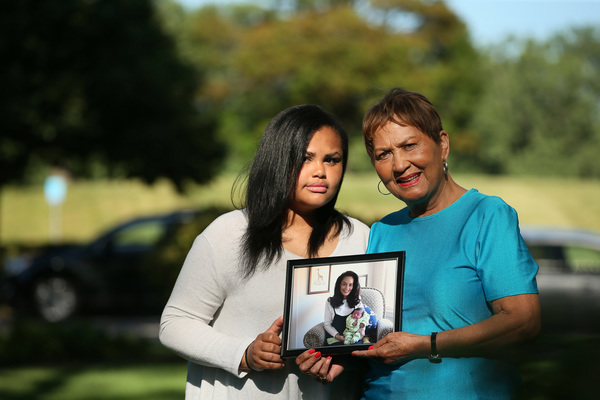
Fifteen years after Stokes gave birth to the daughter she had named decades before, after she fell into a depression so profound doctors prescribed her the cocktail of pills, after she slipped away from her family to jump to her death from the 12th floor of a Chicago hotel, Blocker clings to the medication as a symbol of how little the world knew about the illness that claimed her daughter's life.
Stokes' public death, along with the suicides of three other women who gave birth only to take their own lives shortly thereafter, turned the spotlight on an illness that had been shrouded in mystery and stifled by stigma.
The past 15 years have proved to be somewhat of an enlightenment period for understanding postpartum depression and psychosis, though researchers and clinicians admit they still have a long way to go. The onset of smartphone technology and apps combined with more conventional hotlines and support groups have reached women who felt as though there was no way out of the darkness.

With increased awareness, the shame that for too long prevented countless women from reaching out for help is gradually receding.
Stokes, a pharmaceutical sales manager, and her husband, Sam Stokes, a doctor, had spent almost three years trying to have a baby. When Melanie realized she could be pregnant, she rushed to buy a pregnancy test and took it in the store bathroom. The joy carried through her pregnancy, but when Sommer Skyy was born in the winter of 2001, the postpartum psychosis took over almost immediately. Melanie was hospitalized three times in seven weeks before falling to her death.
Now 15 and soon to be a sophomore at a private school in Chicago, Sommer recently told the Chicago Tribune that she grew up understanding why her mother wasn't around.
"I understood at a pretty young age that I didn't have my birth mom and that I would never have a birth mom again," Sommer said. "I understood that she died because of a disease, and I understood that other women get that disease as well."
Postpartum depression affects 10 to 20 percent of new mothers and is believed to be linked to the sudden change in hormones after childbirth. The sadness, anxiety and mood swings are more intense and last longer than "baby blues," which up to 80 percent of mothers experience. Stokes suffered from postpartum psychosis, the rarest and most severe of the disorders. It affects 1 to 2 of every 1,000 mothers and is marked by paranoia, hallucinations and delusions.
Sommer was still in elementary school when she learned that women should be screened for postpartum disorders after giving birth. Understanding the mental illness, she said, kept her from harboring anger at her mother for leaving when she was 3 months old.
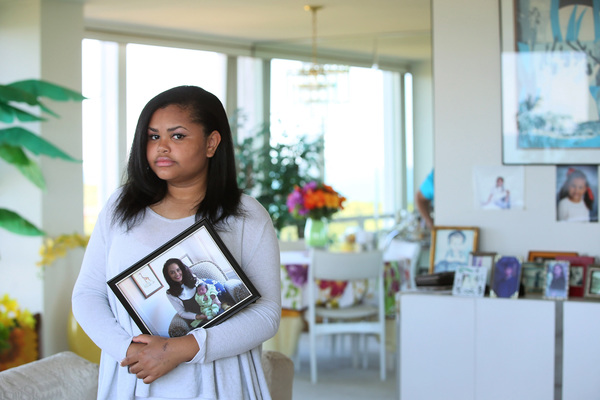
"I know she loved me," Sommer said. "I don't know the extent that she loved me, but I know that she loved me."
In a lot of ways, Sommer's life mirrors that of many of her peers. She speaks quickly, does well in school, plays the piano _ though she doesn't practice as often as her great-aunt Joyce Oates, with whom Sommer lives, would like. She's obsessed with Harry Potter and cringes when she remembers just how infatuated she once was with One Direction.
With her high cheek bones, deep brown eyes and determined spirit, she is her mother's daughter. Sommer's father, who lives downstate, is a steady presence in her life. Blocker, the grandmother who has advocated for postpartum depression awareness and reform from the moment of her daughter's death, is affectionately referred to as Sommer's "protector."

"I have a lot of love in my life," Sommer said. "A lot of people helped raise me. Not having a mom is hard. There is no stronger bond than mother and child. But the heartache has helped me help other people."
Melanie Stokes was one of two women featured in a 2003 Chicago Tribune series on postpartum disorders after a cluster of suicides in the Chicago area. Jennifer Mudd Houghtaling, whose postpartum depression led her to jump in front of a Red Line train nearly three months after her son was born, was the second.