Same process, new habits
On an average day we use mobile for longer than we use any other device (Source: Millward Brown AdReaction, 2014). By next year two-thirds of our internet consumption will come through smartphones and tablets (Source: Enders Analysis UK Forecast), so it makes sense that mobile will continuously change how we shop for the everyday essentials. The basic shopping process has stayed the same, but mobile has impacted each stage in very different ways.
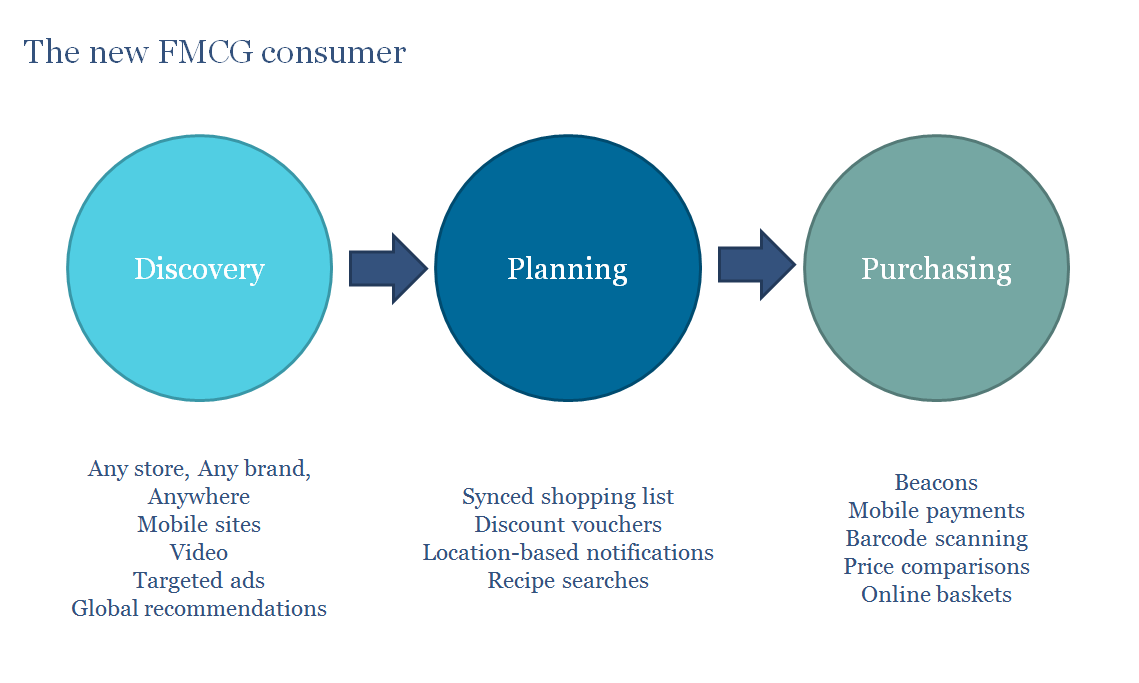
Discovery: Mobile has removed barriers from shopping; we can now buy any brand from any store, wherever we are. We have access to endless user reviews and opinions, which research shows, are the most trusted form of advertising.
Planning: Mobile allows us to plan our weekly shop whilst doing other things. We can sync shopping lists across devices meaning we are always able to remember new brands and products.
Purchasing: Buying has been impacted in two distinct ways; first the ability to buy goods directly through mobile, and second, mobile is now the last contact point when we are in-store.
Mobile optimised sites
Access to internet and brand information is better than ever, yet last year's audit by the IAB showed that only 56% of the top 50 FMCG brands had a site optimised for mobile. This is vital for discovery, allowing consumers to interact and share own branded content. Research shows that trust in owned brand websites is on the increase, and smartphones see similar levels of interaction with branded content compared to desktop. With Google's latest algorithm change benefiting mobile optimised sites, the need for FMCG brands to get up to speed in this area has never been more urgent.
Brand apps build loyalty
A report from NinthDecimal reveals that 86% of mobile users say they use their mobile to prepare for grocery shopping. Apps seem to be particularly useful for consumers at this stage as they prepare shopping lists and save discount vouchers to use in-store.
Apps are useful for brands too, they create a fantastic opportunity to interact with the most engaged customers who are likely to be brand advocates, and consumers want to interact with FMCG brands in this way. Of people that have downloaded a grocery app, the second most popular type by usage was FMCG brand apps with a third saying they use them (Source: NinthDecimal, 2014).
The last touchpoint
59% of mobile users say that they use their mobile in-store, with a quarter of people saying they use their phone to look up brand information (Source: NinthDecimal, 2014), again highlighting the importance of our old friend the mobile optimised site!
Mobile has also started to revolutionize the way we pay for FMCG goods. We've already talked about paying with mobile devices in a previous blog, but FMCGs represent the perfect category to get consumers used to paying with mobile apps and NFC. Beacons too will become a useful tool for FMCG retailers if they can convince customers to use the technology, but they might prove more useful targeting weekly shoppers rather than someone dashing in for a few items.
The future for mobile and FMCGs?
Last month, Amazon launched a service which offered us a glimpse of how mobile could work with FMCG purchasing in the future. The Amazon Dash Button (which forms part of the wider Amazon Dash service) allows users to place Wi-Fi buttons around their house and program them to order goods from Amazon with a single click. It's designed to be used on those everyday essentials you constantly remind yourself to buy when you see your supply running low - think toothpaste, washing-up liquid...toilet roll. It's a brilliant idea, convenient, yet not intrusive and of course, all set-up and controlled via your mobile device.