The Missing (BBC1) | iPlayer
Intruders (BBC2) | iPlayer
Baby P: The Untold Story (BBC1) | iPlayer
Vanishingly rare in real life, vanishing children are almost a commonplace in fiction. The appeal, particularly to thriller writers, is obvious. Child abduction plays to a deep-seated fear that almost all parents – and many children – will have experienced at some point, and it makes for tense physical and psychological drama.
But that drama still has to be realised – you’ve got to capture the haunting sense of the unknown and unforeseen stealing in from the shadows. Perhaps the novel is the ideal medium in which to do so, because it makes collusive use of the reader’s imagination. In any case, I doubt that a scene of abduction has ever been more powerfully achieved than in Ian McEwan’s The Child in Time, where a toddler is snatched in a supermarket.
The tendency of a visual medium such as film or TV is to show too much, when what the situation calls for is not quite enough. One of the many strengths of the opening episode of The Missing, an eight-part thriller about a child’s disappearance, written by brothers Harry and Jack Williams, is that it understood that what we’re most troubled by is what we can’t see.
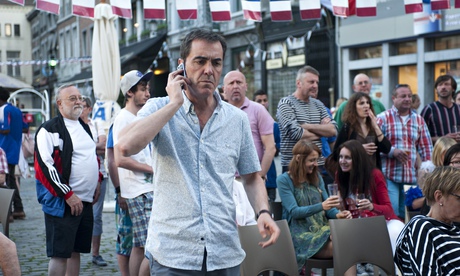
One moment in the summer of 2006 five-year-old Olly was holding his father Tony’s (James Nesbitt) hand in a French holiday resort, where a World Cup match was being watched by a lively crowd. The next moment, he was sucked silently away.
Nesbitt graduated rapidly and convincingly through mild concern, disbelief, shock, despair to existential desolation. Perhaps best known for his slightly cheeky comic roles, the Irishman was an intelligent piece of casting. He made for a buoyantly indulgent father on holiday with his wife Emily (Frances O’Connor) and their child. But there is something passionately brittle about Nesbitt’s charm, the kind that says you’re either with me or against me. So the semi-drunken, near deranged and single figure we encountered eight years on felt like a properly organic development.
With the boy still missing, Tony returned to the scene of the crime. As he searched for clues, the viewer was met with a series of enticing mysteries. The original lead detective in the case, now retired, had been wounded in the leg. How? His second-in-command was in prison. Why? Emily was getting married to the police liaison officer. What had happened? And there was a slightly sinister journalist sniffing around in the background.
The obvious inspiration here was the Madeleine McCann abduction, yet this was an atmospheric creation that owed little to that ongoing tragedy beyond the initial crime. It was a confident piece of drama that grabbed hold of you from the first frame. You weren’t invited to enter another world, so much as irresistibly pulled into it.
But as any detective will tell you, it’s easier to lay out the details of the crime than to solve it. The first episode was a masterclass in the art of introducing a story. If the next seven are able to maintain that standard in seeing it through, then it will prove to be appointment TV at its most enthralling.
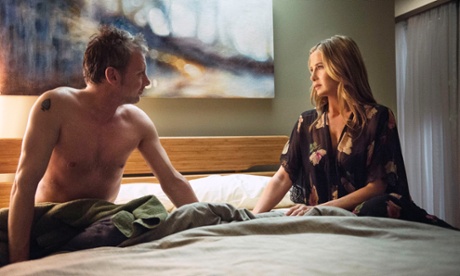
What’s the opposite of appointment TV? I’m washing my hair TV? I’m going out – somewhere, anywhere – TV? Or maybe it’s just disappointment TV, in which case Intruders, which in its double opener also featured a child’s disappearance, is a flagrant example.
If The Missing was intriguing, then Intruders was simply baffling, and it was as if its makers couldn’t understand the importance of the distinction. As far as I could make out, a character played by the ever-good John Simm (complete with American accent) had lost his wife (Mira Sorvino), who may or may not be a former dead person from tsarist Russia. Also, a young girl, who may once have been a man, is on the run from a relentless assassin, who may be immortal.
That summary, however, suggests a level of comprehension I can’t pretend to possess. There were, to be sure, some beautifully shot scenes, but it was wilfully resistant to being made sense of.
That can be bracing in the hands, say, of a surrealist like David Lynch. But Intruders doesn’t seem to be a rejection of linear narrative. Rather its puzzles and opacity suggest an overarching story, above and beyond earthly reality, in whose existence the viewer is meant to believe. Alas, life is short and the TV schedules are long. It won’t get a third chance.
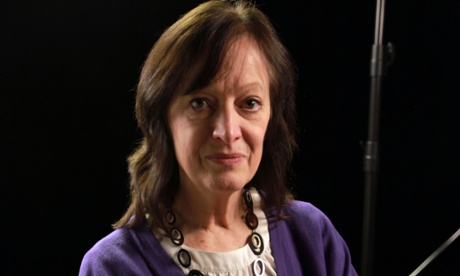
If child abduction by strangers is extremely unusual, child murder by parents or guardians is not. There have been 261 young children murdered in this country since 3 August 2007 by people they know. Their names are not familiar to us, with one exception – that of the boy who was killed on that date: Peter Connelly or “Baby P”. Exactly how and why we came to know of Peter, but not the other 260, was one of the questions explored in Henry Singer’s excellent Baby P: The Untold Story.
As someone who wrote about the case, I’ve long thought that the demonisation of the social workers involved was an ugly act of misplaced aggression. What I hadn’t realised, until last week, was just how cowardly and calculated that campaign of vilification had been.
Sharon Shoesmith, the head of Haringey’s children’s services, was hung out for public scorn and humiliation by the Sun’s Rebecca Brooks, before being fired live on TV by the then secretary of state for children, schools and families, Ed Balls. Shoesmith said she considered suicide. The consultant paediatrician working in a dysfunctional unit, who may have been falsely accused of missing Baby Peter’s broken back, suffered a mental breakdown.
Balls maintained he did the right thing, in following the advice of an independent Ofsted report – which was completed in a couple of weeks under, it is said, tremendous political pressure. The problem was that, owing to another trial, the mother and step-father of Baby Peter, who were found responsible for his death, could not be named after their convictions. So in the absence of identifiable culprits, others had to be found.
Social workers who had spent their careers trying to protect children had to be sacrificed so that the media, the politicians and the public could “move on”. The truth was abducted and now finally it’s been released.