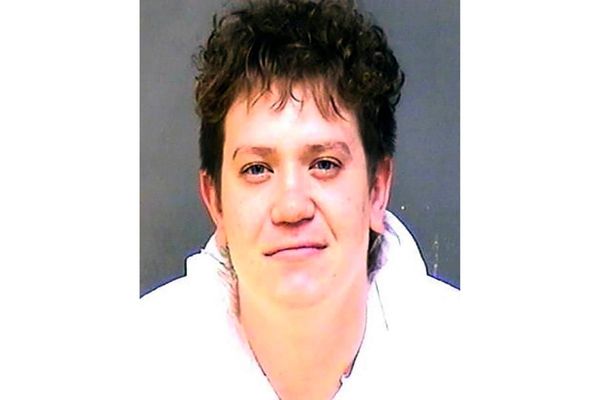
Should a murderer be allowed to serve as a minister of the church? Is such a person suitable to conduct marriages, open coffee mornings and suffer little children to come to them? Such were the questions facing the Church of Scotland in 1984, when a licence was sought by James Nelson, who after his release from prison on parole, having served a 10-year sentence, had studied divinity at St Andrews and taken up preaching. With the tabloids closely following the story (Nelson, not averse to publicity, had given an interview to the Glasgow Herald the year before), the Kirk’s General Assembly knew it would be criticised, whatever its decision. But after a three-hour debate, by 622 votes to 425, with a courage it’s hard to imagine today, they gave their approval to Nelson, thus making him, it seems, the first convicted killer to be ordained into the Christian church.
The Nelson case is the core of Stuart Kelly’s fascinating book. But it ranges widely, digressively, Shandyesequely even, to encompass so much more: theology, philosophy, literary criticism, the nature of evil and Kelly’s own intellectual development and struggle with faith: “Nelson for me is the keyhole through which I can see issues and ideas that have troubled and intrigued me for decades.” A horribly pious, “asthenic, asthmatic and bespectacled child”, Kelly knew the Bible back to front by the age of 11 and still owns “an admittedly excessive 21 Bibles in 10 different translations, not including commentaries”. His knowledge is impressive; one chapter methodically (almost hilariously) tots up the number of murders in the Bible. Only one kind is missing, he finds: matricide, the crime of which Nelson was guilty.
He was 24 when he killed his mother, battering her over the head, dragging the corpse into the garage (where it was found by his father and sister), and disappearing for two days, before returning to hand himself in. The murder, he later said, was inexcusable but not inexplicable: when his mother called his girlfriend “a dirty whore”, he lost it. His father would have made a more deserving victim; he’d been a nasty bully – “a church saint and a house devil” according to Nelson’s sister. Perhaps that explains why Nelson never asked for his father’s forgiveness. “I’ve forgiven myself,” he said, and that was more important.
Had he any right to forgive himself, Kelly asks, before embarking on a conceptual trail that leads him to (among other things) Sophocles, Plato, Kant, Nietzsche and his (Kelly’s) divorce: “My own capacity to forgive was a thin, ungracious thing. I nursed my hurts and savoured my grievances.” The notion of forgiveness goes to the heart of the Nelson debate. Supporters argued that he’d done due penance in prison and deserved the chance to atone by serving God. Opponents replied that a minister should be morally superior to his parishioners – a paragon of virtue – and that Nelson’s crime automatically disqualified him. His own brazenly self-justifying view (which Kelly rightly broods over) went as follows: “I should have thought that being a convicted murderer would have placed me in a unique position to advise on the pitfalls of life.”
Nelson died in 2005, aged 60; Kelly wasn’t able to interview him in person. But he travels to the parish where he served for two decades, Chapelhall and Calderbank, and finds opinion there divided: to some, Nelson was dedicated, dutiful, a good preacher; to others, sarcastic, peremptory and snide. He also wrote to Nelson’s first wife Georgina, who declined to be interviewed but emphasised that the murder cast a shadow from which Nelson never escaped. Her tone is remarkably lacking in sourness, given that he left her for another woman, Nancy Ross, a widow and divorcee, whom he married in 1997. Nancy arrived for the wedding in a Rolls-Royce, he in a Mercedes. As a young man, before killing his mother, he’d been called flashy, and – though the photos of him as a minister show a more sober side – his later years were sometimes flashy too. In 1998, he appeared on a Channel 4 chat show about murder alongside Lord Longford, Patricia Highsmith and the daughter of Ruth Ellis, the last woman to be hanged in Britain.
Kelly can’t make up his mind about Nelson: he’d like to think of him as a genuine convert but wonders if he wasn’t a clever fake. The Church Assembly was divided too, as he points out: though they voted in Nelson’s favour, they weren’t saying he was fit to be a minister, but rather (a double negative) that they couldn’t definitively say that he was not. A literary critic to the end, Kelly embraces such ambiguities, and his book is the richer for it. It’s richer for its range of idioms, too, which include both old dialect words (“cowps”, “shoogly”, “stooshie”) and recent neologisms (“sousveillance” as a description of modern methods of surveillance). The book demands patience, concentration and even forgiveness. But it’s worth the effort.
• The Minister and the Murderer: A Book of Aftermaths is published by Granta. To order a copy for £17 (RRP £20) go to bookshop.theguardian.com or call 0330 333 6846. Free UK p&p over £10, online orders only. Phone orders min p&p of £1.99.