The Mary Rose museum berths in Portsmouth – in pictures
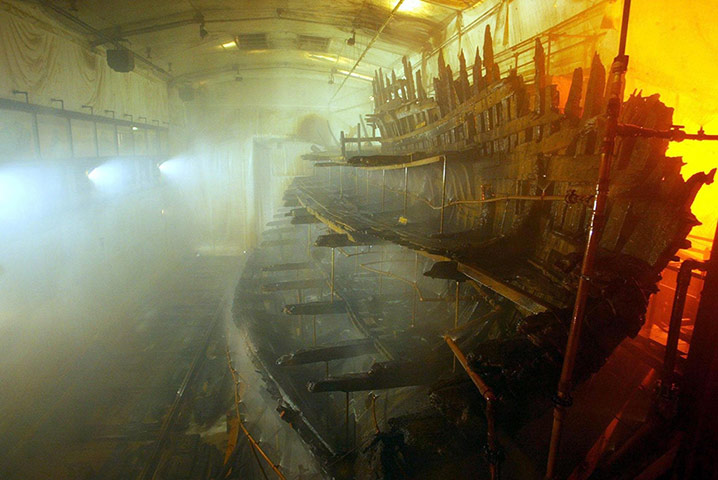
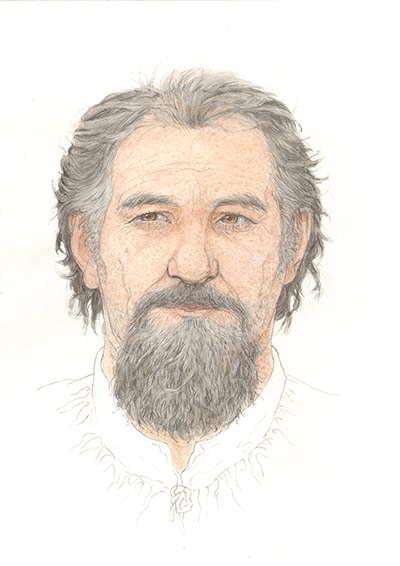
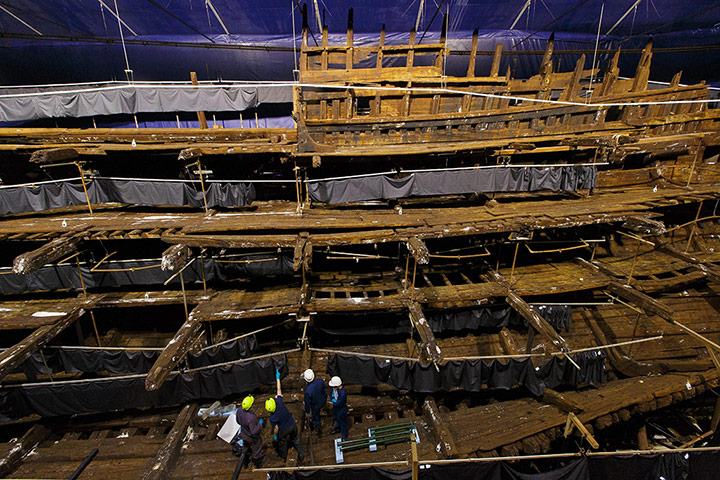
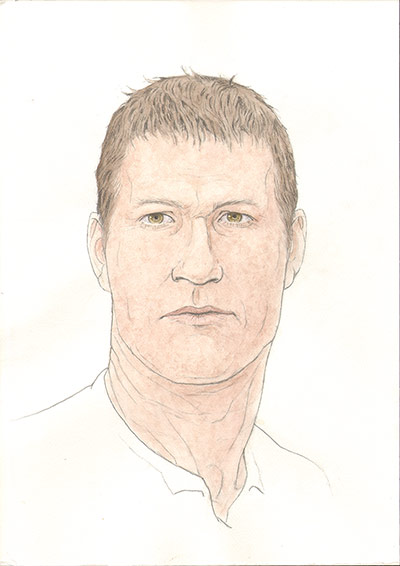
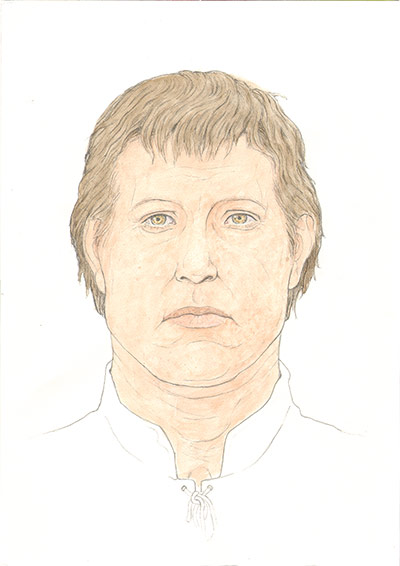
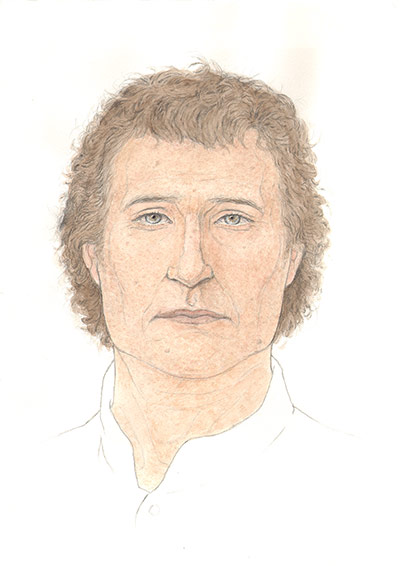
The new Mary Rose museum in Portsmouth's historic dockyard in Hampshire. The museum, designed by Wilkinson Eyre, will open to the public at the end of MayPhotograph: Chris Ison/PAThis photograph from 2002 shows the wrecked timbers of Henry VIII's warship Mary Rose as it sits in an atmospherically controlled dry dock in Portsmouth's historic dockyard before the move to the new museumPhotograph: Chris Ison/PABosun: This is a reconstruction based on evidence from the remains of one of the men who drowned when the ship sank. He was in his late 30s or early 40s, 1.63 metres tall (5ft 4in). Like many others he had bad teeth, with decay, tartar and abscesses, especially in the molars. We can tell from his bones that he did manual work when he was younger. But he was found with a silver call – a whistle. Officers carried a call to give orders, because it could be heard clearly around the deck. So this man must have risen in rankPhotograph: Oscar Nilsson facial reconstructions/Mary Rose Trust
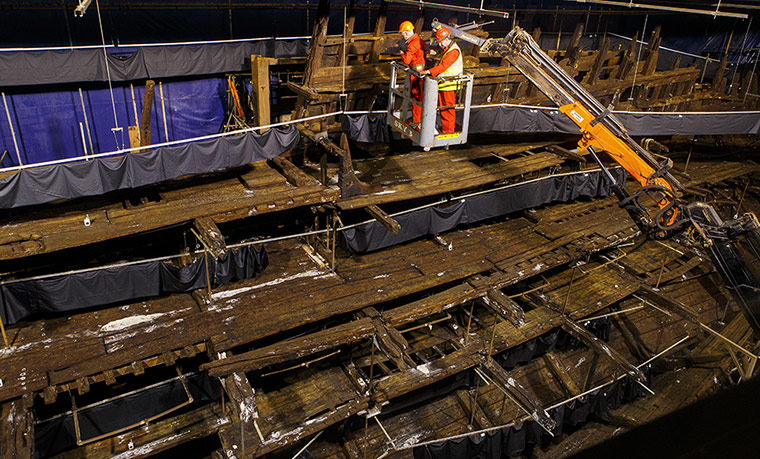
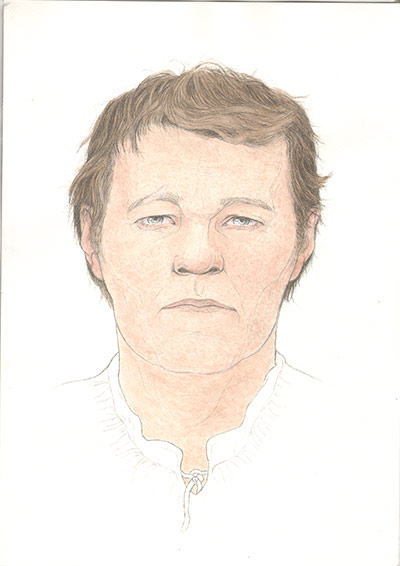
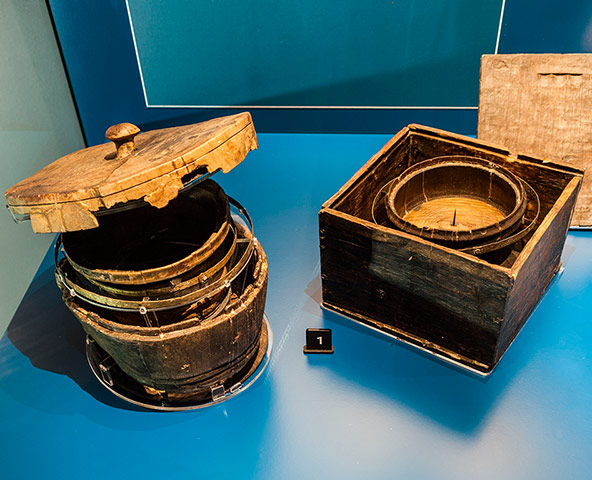
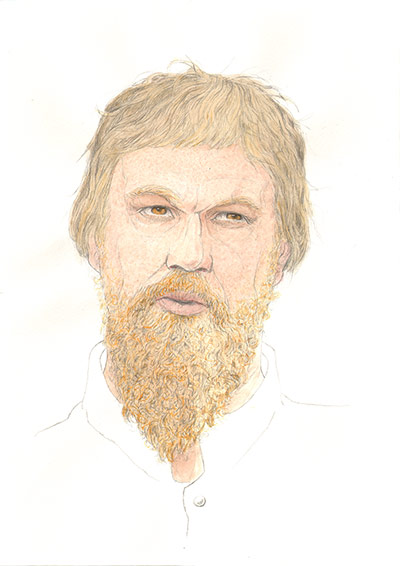
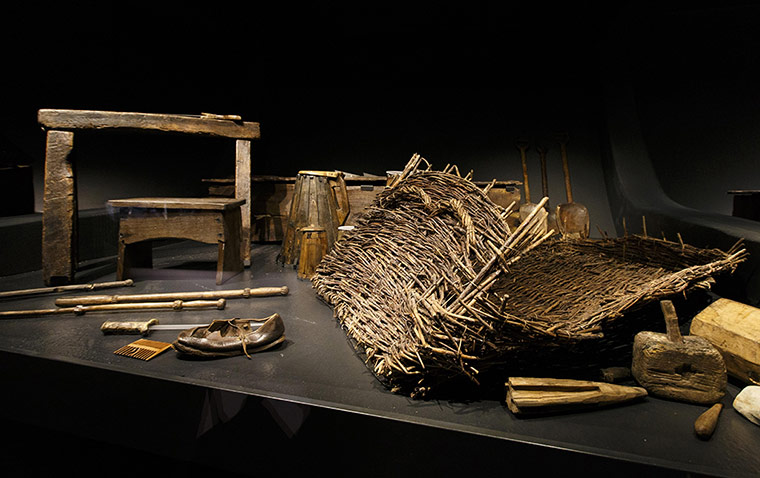
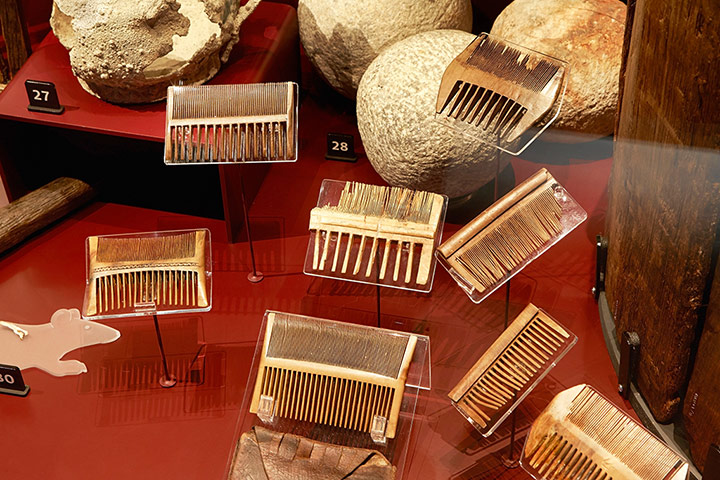
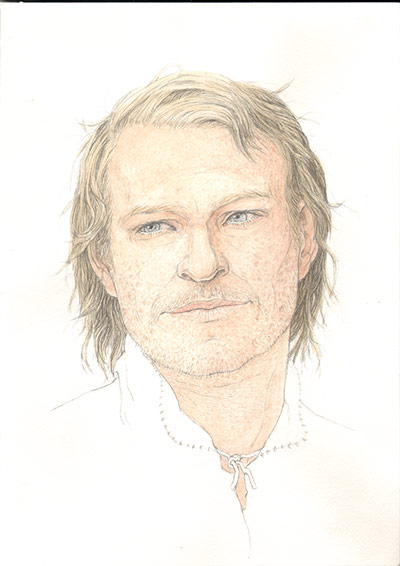
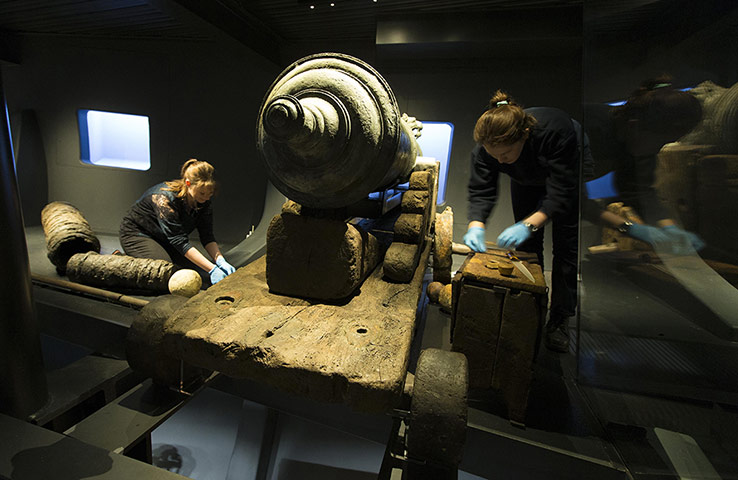
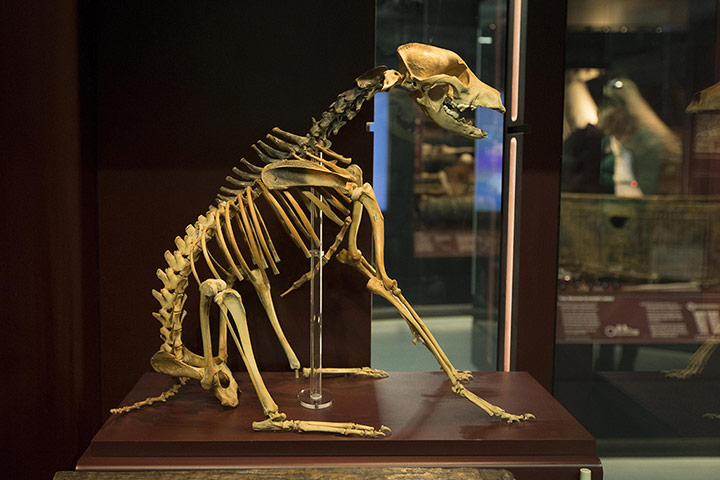
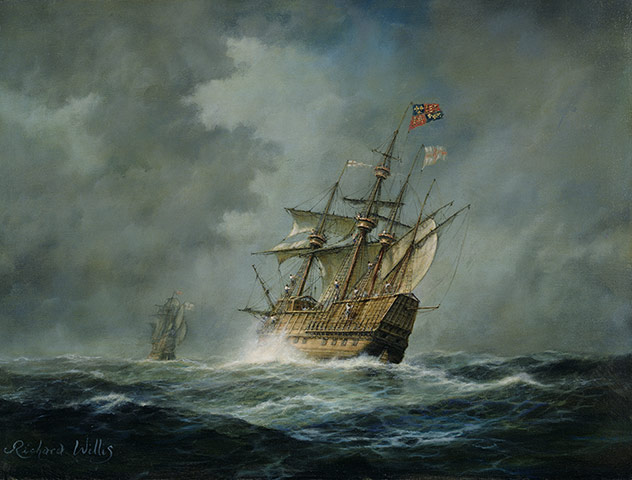
Inside the museum, conservator engineers carefully erect ducting around the hull of the Tudor warshipPhotograph: Chris Ison/PACarpenter: This is a reconstruction of the face of a man found on the orlop deck, immediately below the master carpenter’s cabin. A number of woodworking tools were next to him. Analysis of his remains shows that he was probably in his mid-to-late-30s. He was just over 1.72 metres tall (5ft 7in) and was a strong, muscular man. His teeth were poor, with a buildup of tartar. An abscess in his upper jaw meant he could only chew on the right side. He also had arthritis in his spine and ribs. It's known from historical sources that a carpenter would be stationed below deck during battle so that he could repair any damage to the ship immediatelyPhotograph: Oscar Nilsson facial reconstructions/Mary Rose TrustHere, conservators stand inside the hullPhotograph: Chris Ison/PACook: This is a reconstruction based on the skeleton found closest to the galley. His ladle, comb, knives, shoes, spoon and coins were found nearby. The cook’s skeleton is virtually complete. It shows us that he was a man in his 30s, about 1.68 metres tall (5ft 6in) and with heavy, strong bones. Evidence from his ribs and backbone suggests he spent much of his working life bent over. The cook was paid the same as the master carpenter and master gunner, and was responsible for feeding over 400 men and preparing more elaborate meals for the officers. He worked in the galley, which was in the lowest level of the ship. Nearby were hundreds of bowls and cooking tools. Some graffiti found on a bowl and a tankard suggests that the cook was named Ny Cop or Ny CoepPhotograph: Oscar Nilsson facial reconstructions/Mary Rose TrustA gimballed compass from the ship, which uses a magnetised iron needle sitting in a case suspended on gimbals, which are pivots made of brass. These enabled it to swing freely with the motion of the ship, keeping the compass levelPhotograph: Gareth Gardner/PAMaster gunner: This is a reconstruction of the master gunner’s face. He was 1.70 metres tall (5ft 7in) and in his late 20s or early 30s. He had very bad teeth: 11 were missing before he died and most of those left were badly decayed, leaving abscesses in his jaws. His skeleton reveals that although he had strong, muscular legs, his neck bones had degenerated and the base of his spine was compacted. This may be the result of years of hauling guns into position and lifting the heavy gunpowder chambers, a task which took a team of four or six men. He also had a healed fracture of his left handPhotograph: Oscar Nilsson facial reconstructions/Mary Rose TrustMore artefacts brought from the seabed of the Solent, preserved and on displayPhotograph: Chris Ison/PAPurser: This is a reconstruction of the face of the purser. He was a robust, strong and muscular man, with good teeth and an old head wound which had healed. A study of his skeleton reveals that he was in his 30s and about 1.70 metres tall (5ft 7in). The top of his leg bones and his hip joints are flat, so he must have walked with a rolling gait and would not have been able to straighten his back. With this physique, he could not have been an active member of the crew, which again suggests that he was the purserPhotograph: Oscar Nilsson facial reconstructions/Mary Rose TrustCombs and cannonballs from the wreck of the Mary RosePhotograph: Hufton and Crow/PARoyal archer: This is a reconstruction of the face of an archer from the study of his skull. A study of the man's skeleton reveals that he was in his early 20s and about 1.78 metres tall (5ft 10in). He was taller than many of the crew and well built, with particularly strong legs. The middle of his spine is twisted, a feature we see on other skeletons found with archery equipment. One of his right finger bones has grooves on the inside, forming a ridge. This could have been made by repeatedly pulling a longbow stringPhotograph: Oscar Nilsson facial reconstructions/Mary Rose TrustArtefacts are placed into the permanent displays in the new museumPhotograph: Chris Ison/PAStranger gentleman: This is the reconstruction of the face of a man in his mid-20s who was trapped behind a chest. His skeleton reveals that he was 1.63 metres tall (5ft 4in). His spine shows that he was used to lifting heavy objects. He may have been a gunner – the gun beside him was being reloaded as the ship sank. But he also had features in his shoulder blades often found in archers, and a longbow and arrows were also found herePhotograph: Oscar Nilsson facial reconstructions/Mary Rose trustThe bones of Hatch, the ship's dog, await visitors to the new museumPhotograph: Chris Ison/PAA painting of the Mary RosePhotograph: Richard Willis/Getty Images/The Bridgeman Art L
Sign up to read this article
Read news from 100's of titles, curated specifically for you.