Persevering against the odds, national head coach Supot Pengpoom has dedicated 25 years to shape Thailand's Paralympic Games racing heroes.
The lack of sponsors hasn't deterred the former national athlete-turned coach in his bid to build a team of medal-winning racers.
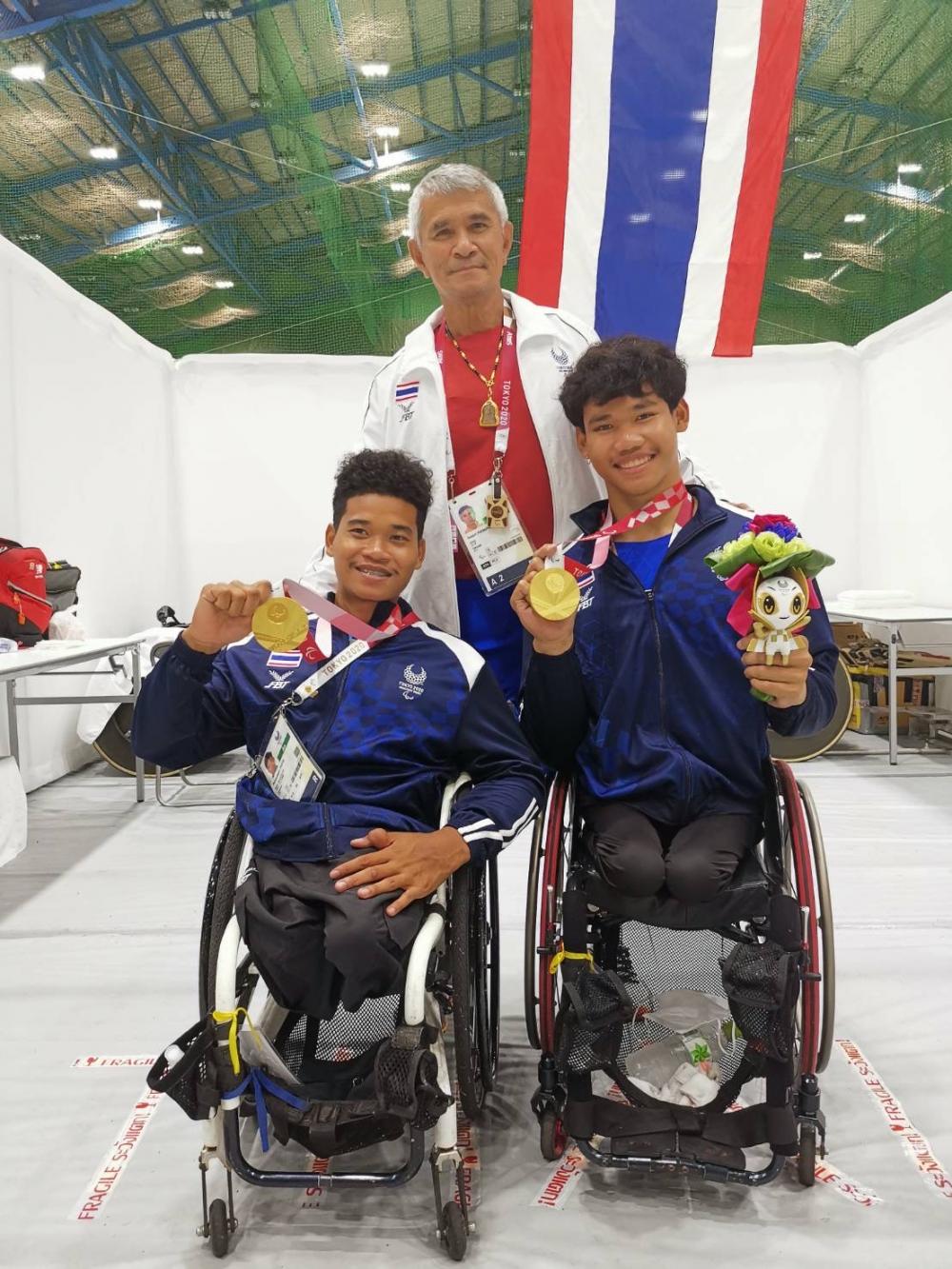
Two of his brightest talents at the 2020 Tokyo Paralympics came in the form of Pongsakorn Paeyo, 23, and Athiwat Pang-nuea, 18, both talented gold medallists who beat global talent to achieve their goals.
Under the watchful eye of Supot and his team, Thailand won a total of nine Paralympic medals this year; four gold, two silver, and three bronze.
Over the years, Thai wheelchair racers have done exceptionally well at global sporting events for the physically challenged thanks in part to his relentless dedication towards equipping them with the latest know-how.
To make this happen required hours of research and information gathering which helped hone Thai racers' skills and build their confidence to enable them to achieve Paralympic excellence.
Supot, who has a unique ability to connect with athletes at a personal level, said that while sponsorship is a vital component in building talent and keeping the national side motivated, a bad experience with a potential sponsor years ago put him off asking for help.
While not divulging the name of the company, he said it was brought to his attention that they were keen to throw support behind wheelchair racers after seeing that they had done well at the Paralympics in Athens.
"I arrived at 9am as scheduled and they had me wait until 3pm before I was able to speak with the man in charge. When I eventually sat in his office, he told me that the company did not have any sponsorship programmes for wheelchair racers but thanked me for the honour they had brought the country. I was speechless and left their office with many unanswered questions. The entire experience was a real downer. Just the manner with which I was treated left a bitter aftertaste. I wasn't there to beg for sponsorship. It was the company that initially showed interest in supporting us, so it was hard to wrap my head around what had transpired that day.
"Since then, no one has stepped up to sponsor us. That is why we [athletes and coaches] decided that instead of waiting for outside support, we would pool 10% of the prize money we get from competing to support ourselves to train fresh talent and for the upkeep of the racers' wheelchairs."
Explaining why government support wasn't enough to cover expenses, he continued: "For the Tokyo Paralympics, the government only supported our team for three to four months before the competition. The financial backing is also only for the athletes that have qualified for the event and not for the growth of young talent.
"This is the reason why the team was fully on board to pool in a fraction of their hard-earned money for the future of the sport in Thailand. Of course, if someone decides to sponsor us today we would be very glad. However, I am not hopeful and will not wait on bated breath for this to happen.''
Supot said his work with the national side goes beyond being a trainer. He is also a fatherly and elder brother figure to many of them. He said most of the team come from poor and dysfunctional families and in some instances to the point that their emotional baggage interferes with their ability to set goals and execute them.
Supot's ability to motivate brings out a fiery determination in the athletes to eventually succeed.
Racers that display a good chance of winning a medal are offered one-on-one with him where he comes up with strategies on how they can get to not only clinch a first-place podium finish but also break world records.
"With the physically challenged, one has to create a flexible programme so if a certain method has to be adjusted, it can be done without losing the initial purpose. We have to be ready to go back to the drawing board when racers are not able to accomplish the goals we set for them. This can be time-consuming as there are many details to consider during a race.
"Besides tactical training, we also prepare them psychologically for the race. The emphasis on breaking records during events is a crucial part of this. They need to get psyched up to achieve the impossible from the very beginning.''
Supot said wheelchair racing is a very competitive sport, so Thais have to work hard on their game to remain in contention. He said nowadays, one has to qualify by being ranked in the top five to stand a chance at making an impression.
"Confidence and an air-tight tactical game wins races today,'' said the veteran coach. "Pongsakorn is an example of a well-rounded racer. However, to get to where he is today took dedication and hard work by both the young man and a team of coaches.
"When athletes first come to us, they are a diamond in the rough. While there is no question about their talent, we have to work on refining them with patience, love, and a strong hand. This generation of racers are highly talented and confident, however, we have to create the right balance for them to succeed."