Was Harley Granville Barker a better dramatist than George Bernard Shaw? It is currently the fashion to say so. But watching Sam Walters' revival of Granville Barker's last play, which kicks off a season devoted to Shaw and his contemporaries, I began to have my doubts. For all his many virtues, the younger man had Shaw's loquacity without his music, and his preachiness without his charm.
The pleasure of this 1910 play lies in seeing Granville Barker comprehensively air the question of sexual equality. The plot revolves around the determination of Philip Madras to sell off the detested haute couture business he has inherited, and stand for London County Council. But issues dominate action. The first act exposes the domestic enslavement of the hero's six unmarried cousins, the second the inequity of the "living-in system" that chained workers to their employers, and the third the blatant sexism by which mannequins are paraded like cattle. Finally, Philip and his testy wife decide the only way forward is for the sexes to treat each other with mutual respect.
Along the way, Granville Barker offers as much information about Edwardian life as an HG Wells or Arnold Bennett novel. He pulls off a great theatrical coup in the third act with the arrival of Philip's father, the founder of the firm, who turns out to be a convert to Islam.
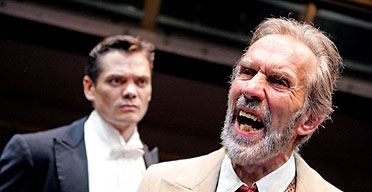
But even Granville Barker's friend William Archer suggested the play would benefit from cutting and, by the last act, we feel as exhausted as the subject. It says a lot for the excellent Timothy Watson as the coldly reformist Philip and Catherine Hamilton as his neglected wife that they keep our interest alive. I can't wait, however, to see what the same actors make of Shaw's much meatier Major Barbara.
· Until October 14. Box office: 020 8940 3633.